



By Stephen Faircloth
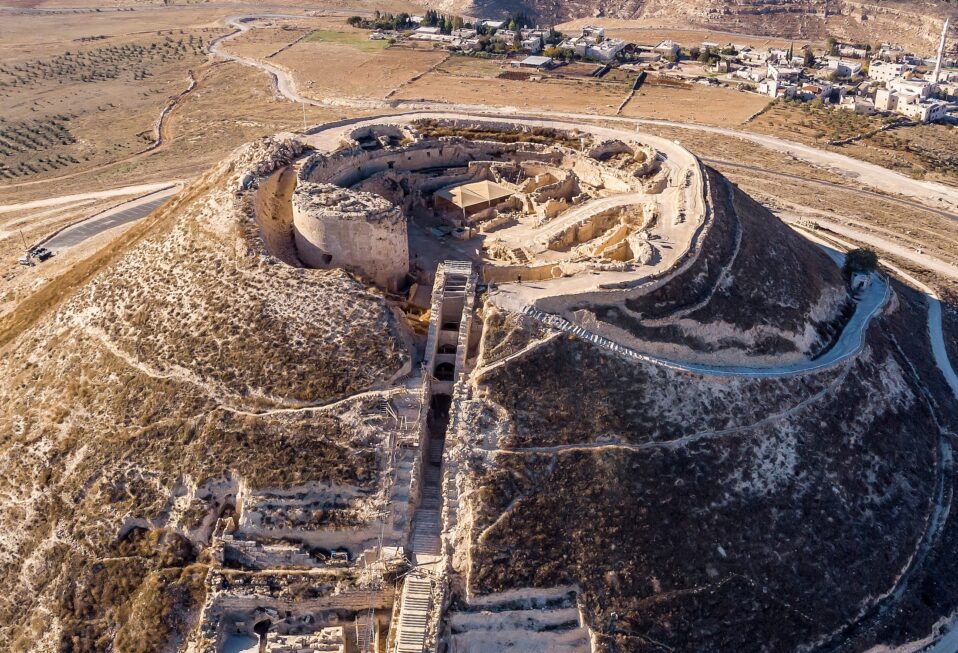
Three miles southeast of Bethlehem rises Herodium, an artificial mountain built by Herod the Great. Its massive silhouette stood watch over the very fields where shepherds received the angelic announcement of Christ’s birth. While Bethlehem welcomed a humble child laid in a manger, Herodium proclaimed the power, ambition, and pride of an earthly king. Two kingdoms, two ways of ruling, stood face to face on that first Christmas night.
Herod built Herodium to celebrate a military victory over Mattithias Antigonus, the final Hasmonean ruler. After overcoming his enemies near this very hill, Herod transformed the landscape itself, shaping a cone shaped mountain and crowning it with a lavish palace fortress. From here, he guarded the routes that stretched from Bethlehem into the Judean wilderness and toward En Gedi. Herodium announced Rome’s dominance and Herod’s authority to anyone who passed below.
Inside the circular double walled fortress, Herod created a world of royal splendor: a private bathhouse, ornate dining halls, reception rooms, and comfortable living quarters. Archaeologists have uncovered its monumental entry gate, as well as the remains of its towers, including the great eastern tower that once surveyed the region. A lower palace and immense pool complex spread across the base of the mountain, complete with Roman style bathhouses where warm, cool, and tepid rooms reflected the luxury of the imperial world.
Herodium, however, played a role far beyond Herod’s lifetime. Rebels during the First Jewish Revolt converted his dining hall into a synagogue, and fighters in the Bar Kochbah Revolt also used the fortress. Letters from their leader, Shimon ben Kosiba, were discovered in caves near the Dead Sea, showing the strategic importance of this site long after Herod’s reign.
Josephus recorded that Herod was buried at Herodium. In 2006, archaeologists uncovered his mausoleum along the northern slope, along with the shattered fragments of his once elaborate sarcophagus. They also discovered a Roman theater nearby, likely constructed for the visit of Marcus Agrippa, a friend of both Herod and Caesar Augustus, the emperor named in the Nativity story.
Yet the most striking truth of Herodium is not its engineering or grandeur. It is the contrast between Herod’s kingdom of power and the kingdom born beneath its gaze. The fortress that boasted of human greatness towered over the fields where angels proclaimed, “Glory to God in the highest,” announcing a Savior who would rule not by force, but by love. While Herod sought to preserve his throne through violence, even ordering the massacre of Bethlehem’s young boys, Jesus came to bring peace to the humble, healing to the broken, and salvation to the world.
Herodium reminds us that every Christmas invites a choice. Will we live by the values of Herod’s kingdom, striving for control, status, and security in what we build? Or will we follow the way of Christ, who descended in humility so that we might be lifted up? One kingdom is built on pride and fear. The other is built on hope, sacrifice, and the faithfulness of God.
The mountain of Herod still stands, but the kingdom of Jesus is the one that endures forever.
Stephen Faircloth is the President of CBN Israel, an initiative dedicated to sharing the true story of the Jewish nation and inspiring a global community of Christians to stand with Israel and support her people in need. Our vision is to reshape the global conversation about Israel by fostering understanding, hope, and healing between Jews and Christians around the world. For more than 50 years, the Christian Broadcasting Network has supported Israel. By joining CBN Israel, you become part of this enduring legacy, transforming lives today and strengthening Christian support for Israel for generations to come.







Post a comment