



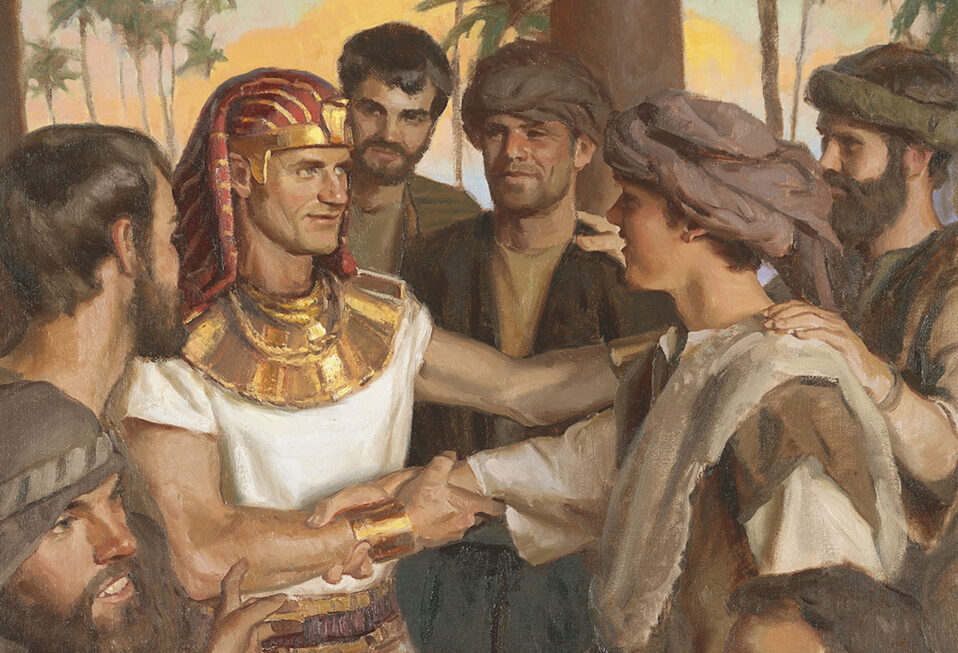
This week’s Torah reading is Parashat Vayigash (Genesis 44:18-47:27). Read on Shabbat, December 27, 2025 / 5 Tevet 5786. The following is a special devotional drawn from this week’s reading.
Then Judah went up to him and said, “Oh, my lord, please let your servant speak a word in my lord’s ears, and let not your anger burn against your servant, for you are like Pharaoh himself” (Genesis 44:18).
Parashat Vayigash opens with a courageous moment of approach. Judah steps forward, no longer speaking with fear or resentment, but with responsibility and humility. He offers himself in place of Benjamin, willing to bear the cost so his brother and father may be spared. This act of self-giving love marks a turning point in the story of Joseph and his brothers. What was once marked by betrayal now becomes shaped by repentance and mercy.
As Judah speaks, Joseph can no longer restrain himself. The walls of secrecy fall, and reconciliation begins. Joseph reveals his identity and speaks words that reshape the past: God sent me ahead of you to preserve life. In that moment, years of suffering are reframed within God’s greater purpose. Pain is not denied, but it is redeemed. God’s hand is seen not only in rescue, but in the long road that led there.
This portion teaches that reconciliation often begins when someone chooses to draw near rather than withdraw. Healing requires honesty, courage, and a willingness to take responsibility for others. Judah’s transformation shows that people can change, and that repentance opens the door for restoration. Joseph’s forgiveness reminds us that God’s purposes are larger than the harm done to us, and that grace can rewrite the story.
Many of us carry unresolved tension, broken relationships, or lingering guilt. Vayigash invites us to step forward rather than hide. God meets us when we approach with humility and truth. Drawing near does not erase the past, but it allows God to bring healing into what was once fractured. Even long separated family members can find reunion when hearts are softened.
Those who are in positions of strength or authority can learn from Joseph’s response. He chooses mercy over revenge and provision over punishment. Those who feel burdened by regret can learn from Judah, whose willingness to sacrifice becomes the pathway to forgiveness. God honors both repentance and grace, using them to bring life out of brokenness.
As this Shabbat arrives, consider where God may be inviting you to draw near. Perhaps it is toward a difficult conversation, a long-avoided apology, or an act of forgiveness. Trust that God is present in these moments. Let your approach be marked by humility, truth, and hope, believing that God still works through reconciliation to preserve life and restore relationships.
PRAYER
Lord, give me courage to draw near where I have held back. Teach me humility, compassion, and truth. Help me trust that You are at work even in painful histories, bringing healing, reconciliation, and new beginnings. Amen.







Post a comment