



By Stephen Faircloth
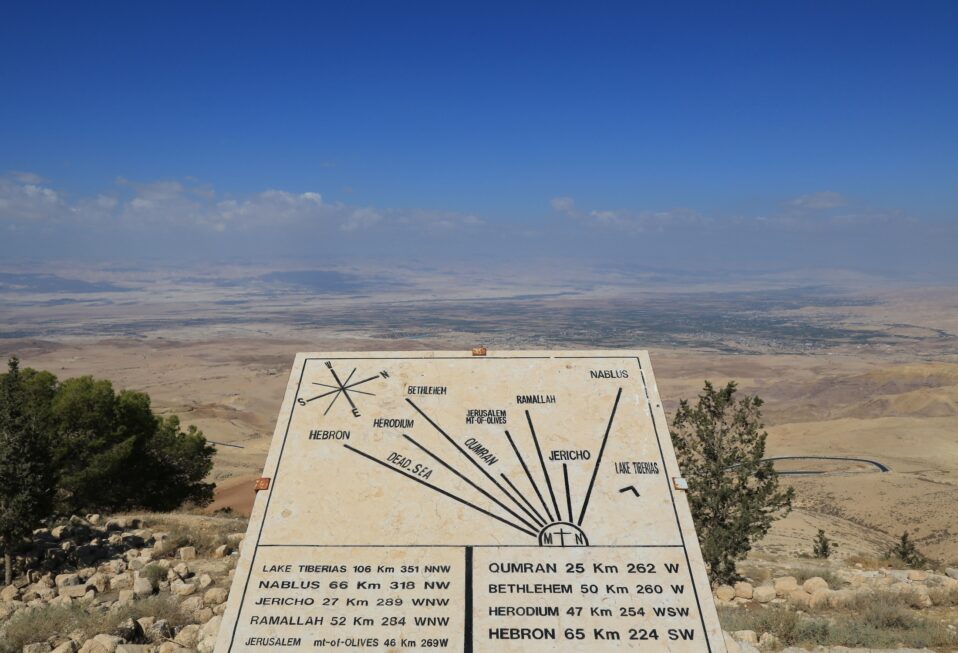
Mount Nebo rises in the land of Moab, east of the Jordan River, within what the Bible calls Transjordan. From this mountain, Moses was given a final, breathtaking view of the land God had promised to Israel. He saw the Jordan Valley, Jericho, the Dead Sea, and the hills stretching toward Jerusalem. It was a moment filled with beauty, fulfillment, and also deep poignancy, because Moses would not enter the land himself.
The reason is sobering. Years earlier, in the Wilderness of Zin, Moses acted in disobedience to God and struck the rock instead of speaking to it as the Lord commanded. Because of this, God told him he would lead the people to the edge of the land, but he would not cross over with them. On Mount Nebo, Moses saw the promise clearly, but he experienced it only with his eyes, not with his feet.
Scripture tells us that God Himself buried Moses there, and no one knows the location of his grave. This detail speaks quietly of God’s care and closeness to His servant. Moses did not die abandoned or forgotten. He died in the presence of the God he had served, the God who allowed him to see the fulfillment of a promise even if he could not fully share in it.
Mount Nebo stood on the borderlands, sometimes claimed by Israel and at other times by Moab. It belonged to a region often contested, just like many moments in our own spiritual journeys where obedience and failure, hope and disappointment, stand close together. Near the mountain lay a town also called Nebo, whose preserved name helped later generations identify the site. By the Byzantine period, pilgrims traveled there regularly, drawn by the memory of Moses and the power of his final moments.
The mountain itself is framed by deep valleys to the north and south and opens westward toward the Jordan Valley. Its peaks rise more than two thousand feet above sea level, offering wide and commanding views. Two main summits, Siyagha and Mukhayyat, show evidence of human presence stretching back thousands of years. From both, the land unfolds like a living map of biblical history.
Later generations built churches and monasteries on these heights. Mosaics and stone walls remain as testimonies that Mount Nebo became a place of reflection and worship. Pilgrims came not only to see the land Moses saw, but to remember that faithfulness is not always measured by personal arrival. Sometimes it is measured by trust, endurance, and obedience to the very end.
Mount Nebo invites us to ask hard questions. Can we trust God even when we do not experience every promise personally? Are we willing to remain faithful when our role is to prepare the way for others? Moses never entered the land, yet his obedience shaped the destiny of a nation.
Standing on Mount Nebo reminds us that God’s purposes are larger than any one life. Even when we only glimpse the promise from afar, God honors faith that endures, and He remains faithful to complete what He has spoken.
Stephen Faircloth is the President of CBN Israel, an initiative dedicated to sharing the true story of the Jewish nation and inspiring a global community of Christians to stand with Israel and support her people in need. Our vision is to reshape the global conversation about Israel by fostering understanding, hope, and healing between Jews and Christians around the world. For more than 50 years, the Christian Broadcasting Network has supported Israel. By joining CBN Israel, you become part of this enduring legacy, transforming lives today and strengthening Christian support for Israel for generations to come.





Post a comment