



By Stephen Faircloth
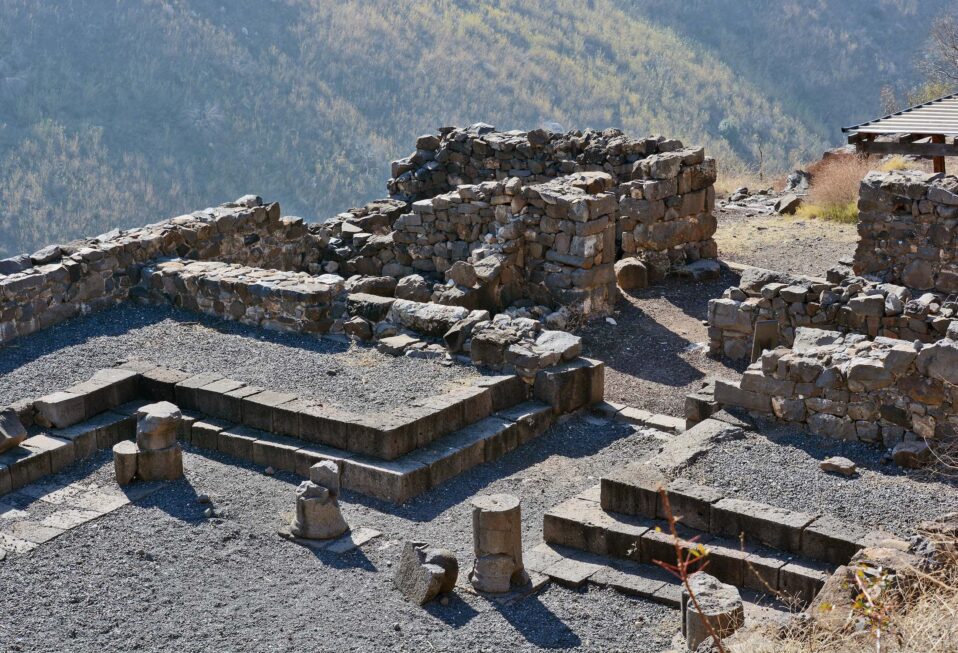
In the central Golan Heights, about six miles east of the northern Sea of Galilee, lie the ruins of the ancient village of Gamla. The town once stood on a narrow ridge between two deep valleys, visible from the Bethsaida Valley below. Although the Gospels never mention Gamla, Jesus and His disciples would have known this village on the horizon.
Gamla offers a remarkable glimpse into Jewish life during the first century. When Roman forces destroyed the town during the First Jewish Revolt in A.D. 67, it was never rebuilt. Because of this, the site preserves a rare snapshot of a Jewish community from the time of Jesus.
The settlement began earlier as a Hellenistic fortress before becoming a Jewish village in the centuries leading up to the New Testament period. Excavations reveal that the people farmed the surrounding land and produced olive oil, an important product in the region.
Archaeologists discovered large olive presses at the site, including one connected to a ritual immersion bath. This suggests the villagers sought to maintain ritual purity even in their daily work. Evidence also indicates the growing of grain and grapes in the nearby fields.
One of the most significant discoveries at Gamla is its synagogue, the largest urban synagogue from the Roman period found in Israel. Benches lined the walls so the community could gather around the center of the hall where the Scriptures were read and explained. A niche in the wall likely stored the sacred scrolls, and a small room nearby may have served for study.
Other discoveries reveal that some residents enjoyed prosperity. Decorative plaster fragments and jewelry such as rings and gemstones point to homes of wealth. Yet alongside this prosperity were ritual baths and stone vessels, showing the people remained committed to observing their faith.
Gamla also bears the marks of a tragic end. Arrowheads, ballista stones, and a breach in the city wall confirm the fierce battle described by the historian Josephus. The destruction of the town preserved it as a kind of time capsule from the first century.
Standing among the ruins today reminds us that earthly cities do not last forever. Communities rise and fall, and even thriving towns can disappear. Yet the devotion of those who worshiped God there still speaks across the centuries.
Gamla invites us to reflect on our own lives. The villagers built homes, worked the land, gathered to hear the Scriptures, and sought to live faithfully before God. Their story reminds us that what matters most is not how long our cities stand, but how faithfully we walk with the Lord while we are here.
Stephen Faircloth is the President of CBN Israel, an initiative dedicated to sharing the true story of the Jewish nation and inspiring a global community of Christians to stand with Israel and support her people in need. Our vision is to reshape the global conversation about Israel by fostering understanding, hope, and healing between Jews and Christians around the world. For more than 50 years, the Christian Broadcasting Network has supported Israel. By joining CBN Israel, you become part of this enduring legacy, transforming lives today and strengthening Christian support for Israel for generations to come.







Post a comment