



By Stephen Faircloth
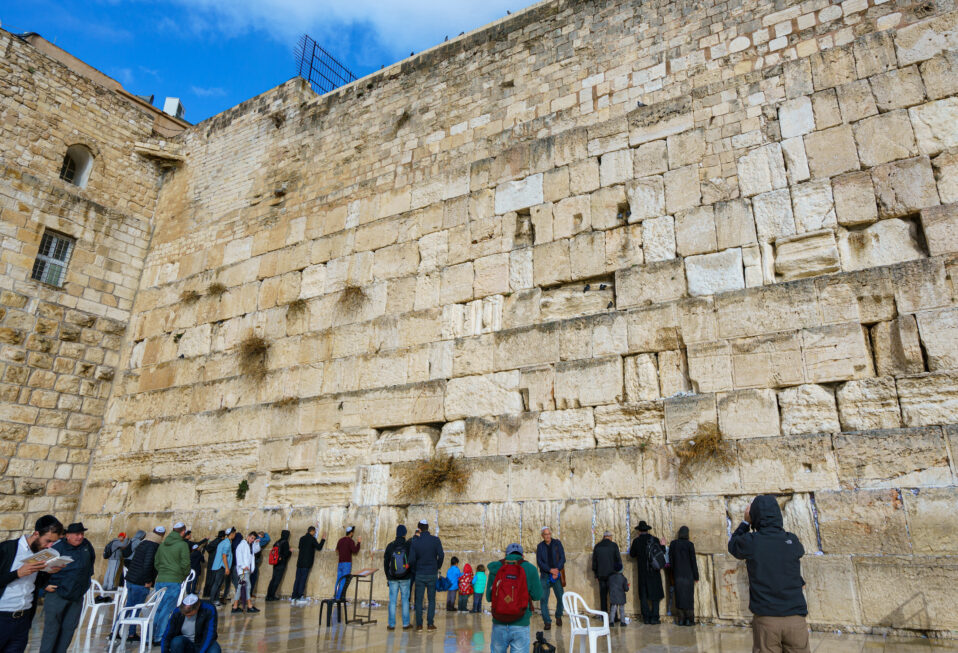
The Western Wall is the last visible remnant of the great platform that once supported the Temple Mount, the place where the people of Israel gathered to worship the Lord. In the first century, this wall faced the city of Jerusalem and served as a gateway between everyday life and the presence of God. Pilgrims walked the streets below and ascended through its gates to appear before the Lord in His house.
In the days of the Temple, the Western Wall was not itself a holy site. It was a structure that upheld something greater. Yet after the Temple’s destruction, when access to the sacred courts was taken away, this wall became a place of longing. What once supported worship became a place where worship continued in the only way still possible, through prayer, tears, and hope.
Today, the Western Wall stands as a powerful reminder of what was lost and what still remains. Jews from around the world come to stand before these ancient stones, pressing written prayers into the cracks, lifting whispered cries to God. It functions as an open-air synagogue, a place where grief and faith meet, where sorrow over destruction is joined with trust in God’s promises.
Walking along the length of the Wall reveals layers of history and devotion. Beneath the city streets, tunnels follow the hidden portions of the wall, exposing massive stones laid during the time of Herod the Great. These stones remind us of human effort and grandeur, but also of how fragile even the greatest works can be. Nearby, fallen blocks lie where Roman soldiers hurled them down during the destruction of Jerusalem. The broken pavement beneath them bears witness to judgment, loss, and exile.
And yet, prayer did not end. Faith did not vanish. God was not defeated by destruction. The Western Wall teaches us that even when the visible structures of our faith collapse, our relationship with God can endure. When access is taken away, longing deepens. When certainty is shaken, prayer becomes more honest.
The people who come to the Wall today are not simply remembering the past. They are expressing a deep hope that God still hears, still sees, and still remembers His people. The Wall stands as a testimony that God’s presence is not confined to buildings, and that His covenant faithfulness outlasts stone and mortar.
For believers, the Western Wall invites us to ask where we go when life feels broken. Where do we turn when what once gave us security is gone. Do we withdraw in despair, or do we press closer to God with humble hearts.
The stones of the Western Wall remind us that God meets us not only in glory, but also in loss. He listens not only in celebration, but also in lament. And even in ruins, He calls His people to pray, to hope, and to trust that redemption is still possible.
Stephen Faircloth is the President of CBN Israel, an initiative dedicated to sharing the true story of the Jewish nation and inspiring a global community of Christians to stand with Israel and support her people in need. Our vision is to reshape the global conversation about Israel by fostering understanding, hope, and healing between Jews and Christians around the world. For more than 50 years, the Christian Broadcasting Network has supported Israel. By joining CBN Israel, you become part of this enduring legacy, transforming lives today and strengthening Christian support for Israel for generations to come.





Post a comment