



By Stephen Faircloth
Four miles north of Nazareth, in the Beth Netofa Valley of Lower Galilee, stood the bustling city of Sepphoris. In the early first century A.D., when Jesus was a boy growing up in Nazareth, Sepphoris served as the capital of Galilee. A major east west road ran through the valley, linking the Sea of Galilee to the Mediterranean coast at Akko. Traders, officials, soldiers, and craftsmen passed through its gates. It was a place of culture, commerce, and influence.
Sepphoris rose on a hill divided into an upper and lower city. Archaeological discoveries reveal that people lived there as far back as the Late Bronze and Iron Ages. From the Persian period onward, settlement appears to have been continuous for centuries. During the Roman era, parts of the upper city were distinctly Jewish. Ritual immersion baths have been uncovered, along with oil lamps decorated with menorahs. These finds point to a community that maintained its identity and faith while living within a broader Greco-Roman world.
The city also contained features common to Roman urban life. A theater carved into the northern slope of the hill overlooked the valley below and could seat thousands. In the lower city, archaeologists uncovered a cardo and decumanus, the main north south and east west streets typical of Roman planning. Colonnaded sidewalks lined these streets, and public buildings and markets bustled with activity. Sepphoris was not an isolated village but a thriving urban center shaped by imperial culture.
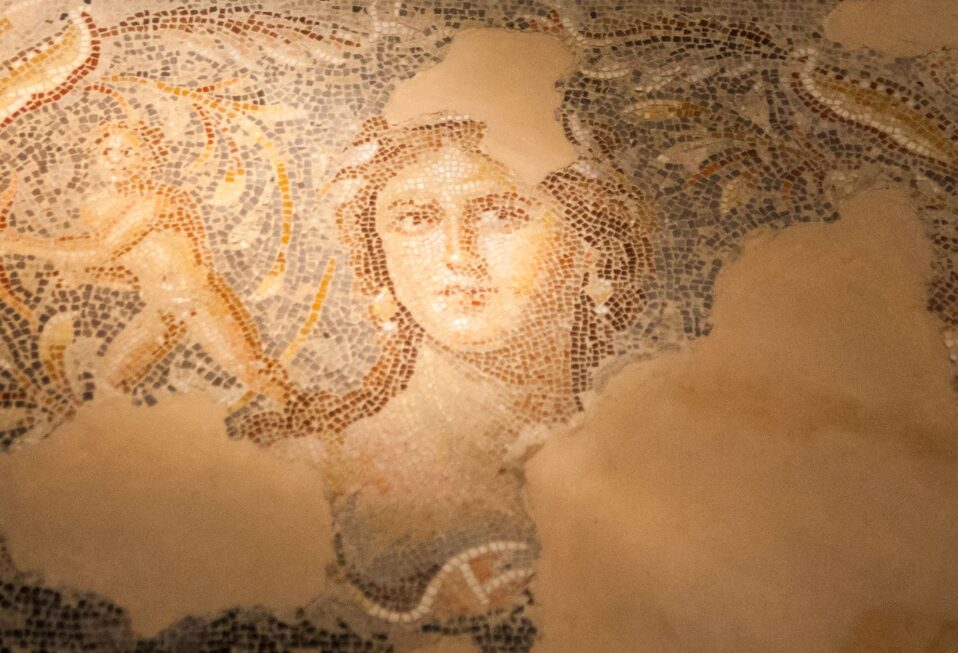
One of the most striking discoveries is a third century Roman villa adorned with elaborate mosaics. In its dining room, scenes from Greek mythology portray Dionysius and other figures associated with revelry and celebration. Nearby mosaics depict hunting scenes and images drawn from the natural world. These works reveal the aesthetic tastes and cultural influences that shaped the city in later centuries.
Yet Sepphoris was also a center of Jewish learning. In the late second century A.D., Judah the Prince compiled the Mishnah there, preserving and organizing rabbinic oral traditions in Hebrew. A synagogue discovered in the lower city, dating to the fifth century, contained a mosaic floor that combined biblical imagery with symbolic motifs common in the ancient world. Even within a cosmopolitan setting, devotion to Scripture endured.
Sepphoris reminds us that Jesus grew up near a crossroads of cultures. Nazareth may have been small, but it lay within walking distance of a vibrant city filled with wealth, artistry, politics, and competing worldviews. The world Jesus entered was not simple or sheltered. It was layered and complex, shaped by both faith and foreign influence.
This setting deepens our understanding of His ministry. He spoke of kingdoms, coins, vineyards, and banquets to people who lived amid both Jewish tradition and Roman power. He called His followers to faithfulness not in isolation but in the midst of cultural pressures and public life.
Sepphoris stands as a reminder that God often forms His servants in ordinary places near busy crossroads. We, too, live surrounded by competing values and loud influences. The challenge is the same as it was then. Will we remain rooted in faith while engaging the world around us? God’s purposes unfold not far from the noise of society, but often right beside it.
Stephen Faircloth is the President of CBN Israel, an initiative dedicated to sharing the true story of the Jewish nation and inspiring a global community of Christians to stand with Israel and support her people in need. Our vision is to reshape the global conversation about Israel by fostering understanding, hope, and healing between Jews and Christians around the world. For more than 50 years, the Christian Broadcasting Network has supported Israel. By joining CBN Israel, you become part of this enduring legacy, transforming lives today and strengthening Christian support for Israel for generations to come.





Post a comment