



By Stephen Faircloth
“It was now winter, and Jesus was in Jerusalem at the time of Hanukkah, the Festival of Dedication. He was in the Temple, walking through the area known as Solomon’s Colonnade” (John 10:22-23).
Each winter, Jewish families around the world gather to light candles that tell a story far brighter than their flames. For eight nights the glow of Hanukkah fills homes and streets, reminding people everywhere that God sustains, preserves, and strengthens His people in their darkest moments. Though Hanukkah is not mentioned in the Old Testament, the New Testament records Jesus Himself in the Temple during this festival, honoring a moment of rededication and hope.
The celebration of Hanukkah reaches back to the second century B.C., when Judea was under the control of the Syrian Greek Seleucid Empire. Their ruler, Antiochus IV, attempted to force pagan practices on the Jewish people. Sabbath observance was forbidden, reading the Scriptures was outlawed, circumcision was banned, and the Temple in Jerusalem was defiled and dedicated to the Greek god Zeus. The people of Israel faced severe pressure to abandon the faith of their fathers.
In the village of Modiin, a priest named Mattathias refused to bow to these demands. He and his sons fled to the Judean hills and began a small but determined resistance. Before his death, Mattathias appointed his son Judah as their leader. Judah came to be known as “Maccabee,” drawn from the Hebrew phrase that means, “Who is like You, O Lord?” It was a declaration of trust in God’s power and a reminder that He fights for His people.
The Maccabees were greatly outnumbered, yet they won one victory after another. They eventually reclaimed Jerusalem and purified the desecrated Temple. On the twenty fifth day of the month of Kislev, in 139 B.C., they rededicated the sanctuary to the God of Israel. This act gave the holiday its name. The word Hanukkah means “dedication.”
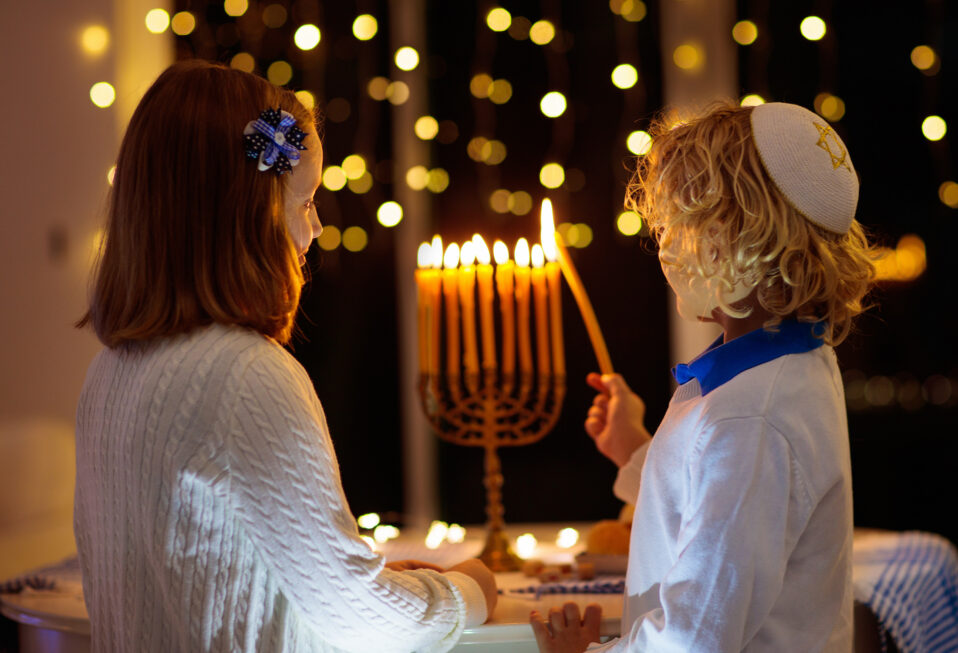
According to a beloved tradition, the priests found only a single small container of consecrated oil, enough to keep the Temple menorah burning for just one day. Yet the oil lasted for eight full days, long enough for new oil to be prepared. For this reason, Hanukkah is celebrated for eight nights. Each night an additional candle is lit on a nine branched menorah called a hanukkiah, until by the final evening all the lights shine together.
The story of the Maccabees also held meaning for early Christians. Archaeologists have found evidence that believers in the Byzantine period honored the memory of these Jewish heroes. The books of the Maccabees, preserved in the Catholic and Orthodox biblical canons, reflect this early Christian respect for their courage and devotion.
Today, families celebrate Hanukkah by lighting the hanukkiah, eating traditional foods fried in oil such as latkes and jelly doughnuts, and giving gifts to children. These customs recall the miracle of the oil and the joy of rededication.
Yet the heart of Hanukkah carries a deeper message. It speaks of perseverance, faithfulness, and trust in the God who keeps His promises. It reminds us that even when the world feels hostile and uncertain, the light of God continues to shine.
As Jerusalem resident Rebecca Spiro reflected, “Civilizations have risen and fallen, yet the Jewish people are still here. No matter what happens, our candles burn bright.” The Festival of Lights assures us that God’s light has never been extinguished, and it never will be.
Stephen Faircloth is the President of CBN Israel, an initiative dedicated to sharing the true story of the Jewish nation and inspiring a global community of Christians to stand with Israel and support her people in need. Our vision is to reshape the global conversation about Israel by fostering understanding, hope, and healing between Jews and Christians around the world. For more than 50 years, the Christian Broadcasting Network has supported Israel. By joining CBN Israel, you become part of this enduring legacy, transforming lives today and strengthening Christian support for Israel for generations to come.







Post a comment