



By Stephen Faircloth
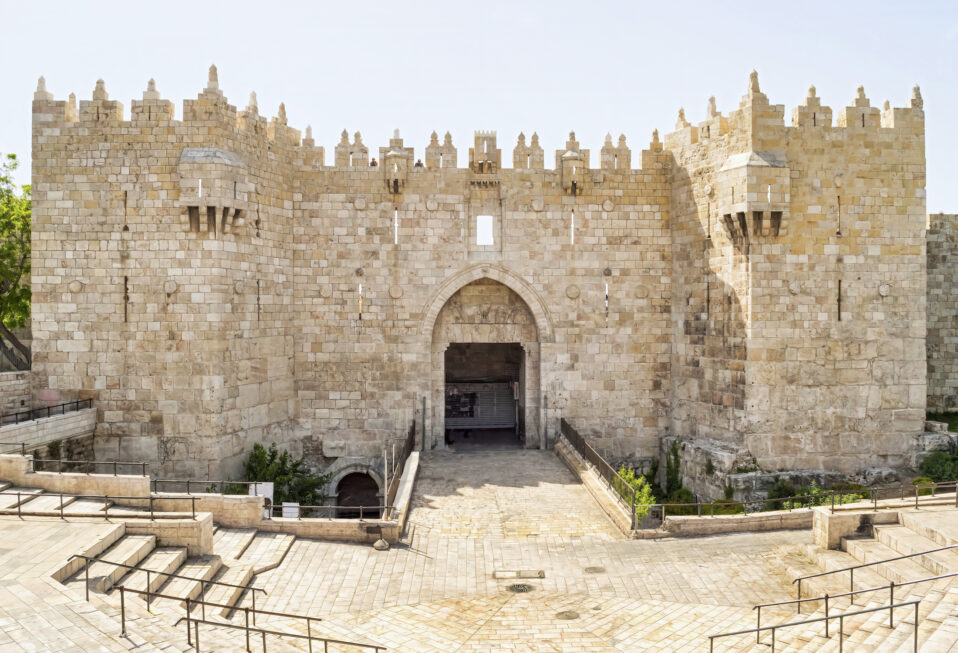
The Damascus Gate stands on the northern side of Jerusalem’s Old City and has welcomed travelers for centuries. Like the other gates that pierce the city walls today, it was constructed during the Ottoman period, yet its foundations reach much deeper into Jerusalem’s past. Beneath the stones walked by modern visitors lie traces of Roman streets, arches, and plazas that once marked the entrance to a very different city.
Gates in the ancient world were never merely architectural features. They were places of transition. To pass through a gate was to move from one realm into another, from outside to inside, from journey to destination. The Damascus Gate took its name from the road that led north toward Damascus, one of the great cities of the ancient world. In Hebrew it was known as the Shechem Gate, named for the road that led to Shechem in the hill country. This gate connected Jerusalem to the wider world beyond its walls.
After the Roman destruction of Jerusalem in A.D. 70, the city was rebuilt and reshaped. Emperor Hadrian renamed it Aelia Capitolina and constructed a monumental triple arch gate at its northern boundary. Those arches opened onto a large plaza where the city’s main streets met. A column once stood there, likely crowned with an imperial statue, announcing Roman authority over the city. Even today, the Arabic name Bab al Amud, Gate of the Column, preserves the memory of that symbol of power.
Yet empires rise and fall, statues disappear, and authority shifts. What remains is the gate itself, bearing silent witness to centuries of change. People have entered Jerusalem through this place carrying hopes, fears, prayers, and questions. Some came as pilgrims seeking God. Others came as soldiers, merchants, or officials asserting control. The gate has seen devotion and domination, faith and force.
For us, the Damascus Gate invites reflection. It reminds us that every life is shaped by moments of crossing. We stand at thresholds where choices must be made. Will we enter with humility or pride, with trust or fear, with openness to God or resistance to His ways. Jerusalem’s gates ask the same question Scripture asks again and again. Who are you as you enter, and who will you be when you pass through.
Jesus spoke often of gates and roads, of narrow ways and wide paths. Following Him requires discernment at life’s entrances. The Damascus Gate, layered with history, becomes a picture of the spiritual truth that we are always approaching a decision. God meets us at these crossings and invites us to walk forward with faith.
As visitors step through this ancient entrance today, they move from noise into sacred space, from streets into story. In the same way, God calls us to step beyond what is familiar and to enter more deeply into His purposes. Every gate is an invitation. The question is whether we are willing to walk through it with hearts attentive to Him.
Stephen Faircloth is the President of CBN Israel, an initiative dedicated to sharing the true story of the Jewish nation and inspiring a global community of Christians to stand with Israel and support her people in need. Our vision is to reshape the global conversation about Israel by fostering understanding, hope, and healing between Jews and Christians around the world. For more than 50 years, the Christian Broadcasting Network has supported Israel. By joining CBN Israel, you become part of this enduring legacy, transforming lives today and strengthening Christian support for Israel for generations to come.







Post a comment