

By Stephen Faircloth
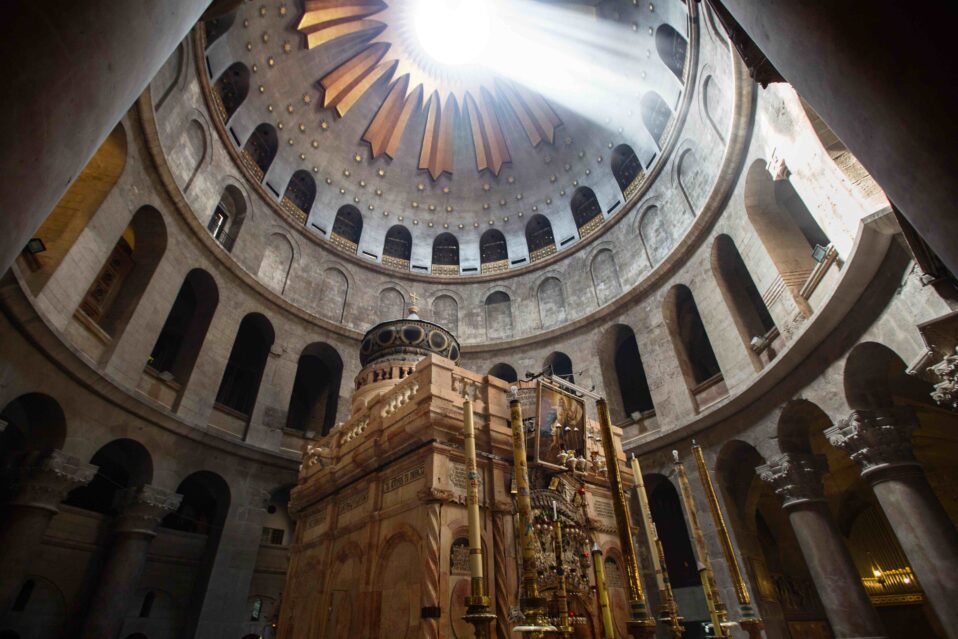
In the Christian Quarter of Jerusalem’s Old City stands one of the most sacred places in the world, the Church of the Holy Sepulchre. For centuries, believers have come here to remember the crucifixion, burial, and resurrection of Jesus. Though surrounded today by busy streets and ancient stone walls, this place invites us to step into the most important moment in history.
The tradition identifying this site goes back to the fourth century. When the Empress Helena visited the land, local Christians pointed to this location as the place where Jesus was crucified and buried. Her son, Emperor Constantine, then built a church here, calling it the Church of the Resurrection. From the beginning, the focus of this place was not death, but life.
Long before it became a church, this area had a different story. In ancient times, it was a stone quarry outside the city. Over time, it was filled in and became a garden with trees and, eventually, a burial site. Tombs from the time of Jesus have been discovered here, reminding us that this place once lay beyond the city walls, just as the Gospels describe.
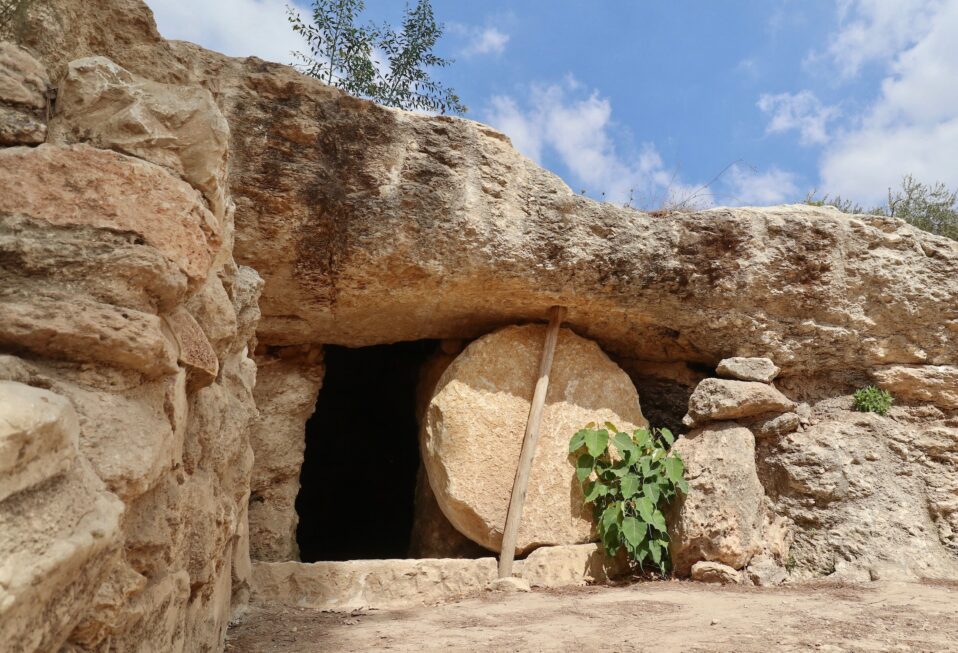
This detail matters. Jesus was crucified outside Jerusalem, in a place where tombs were cut into rock. The presence of first century tombs at this site aligns with that reality. What feels crowded and enclosed today was once open ground, quiet and removed from the city’s center.
The tomb itself, now enclosed within the church, has been shaped and reshaped over centuries. What visitors see today is not the untouched burial place, but a structure built around it. Still, at its core lies a first century tomb, the kind described in the Gospels.
History layered more meaning onto this place. In the second century, a Roman temple was built over the site, covering it for generations. Yet the memory of its significance did not disappear. When the temple was removed and the church constructed, that memory resurfaced. The testimony of early believers, preserved despite time and change, points to this location with remarkable consistency.
For many visitors, the question remains: Is this truly the place?
Archaeology and ancient tradition both support its authenticity. But even more important than the exact location is what happened. Somewhere just outside Jerusalem, in a garden tomb, Jesus was laid after the cross. And three days later, that tomb was empty.
Standing in the Church of the Holy Sepulchre, surrounded by stone, history, and centuries of prayer, we are reminded of a simple and powerful truth. Death did not have the final word. The grave could not hold Him.
This place, whether one stands inside its walls or simply reflects from afar, calls us back to the heart of the gospel. The cross, the burial, and the resurrection are not distant events. They are the foundation of our hope.
The empty tomb still speaks.
It tells us that God brings life out of death. It tells us that what seems final is not final in His hands. And it invites us to trust that the same power that raised Jesus is still at work today.
Stephen Faircloth is the President of CBN Israel, an initiative dedicated to sharing the true story of the Jewish nation and inspiring a global community of Christians to stand with Israel and support her people in need. Our vision is to reshape the global conversation about Israel by fostering understanding, hope, and healing between Jews and Christians around the world. For more than 50 years, the Christian Broadcasting Network has supported Israel. By joining CBN Israel, you become part of this enduring legacy, transforming lives today and strengthening Christian support for Israel for generations to come.