

By Stephen Faircloth
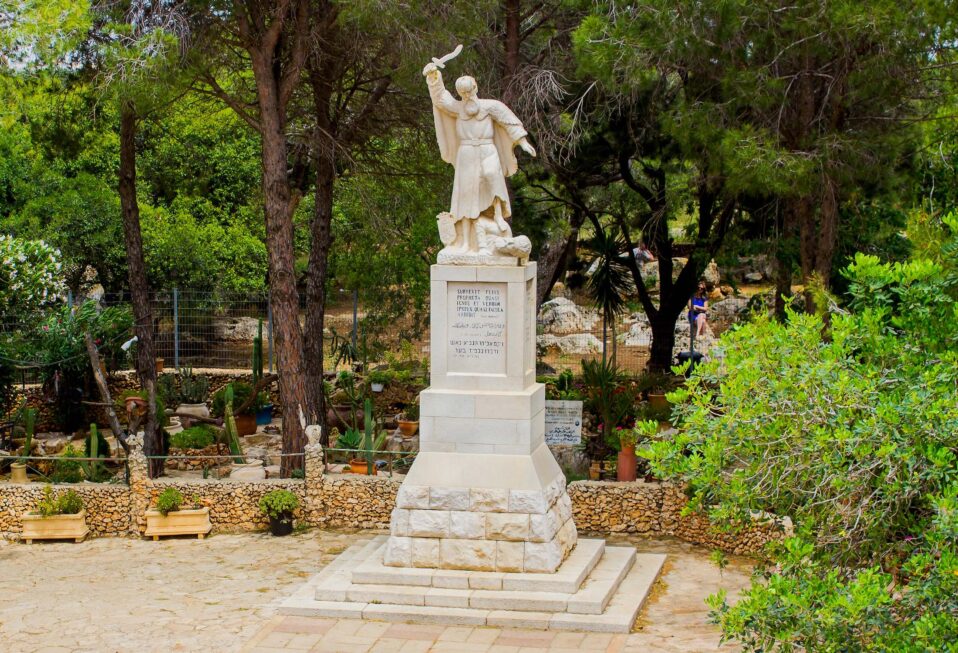
Mount Carmel stretches like a green ridge along the Mediterranean coast, where the mountains of Samaria meet the sea. Unlike much of the land of Israel, Carmel is known for its beauty and fertility. Regular rainfall nourishes its slopes, making it a place where crops flourish and life seems secure.
Because of this abundance, Carmel became closely associated with prosperity. The Bible often points to it as a symbol of richness and blessing. Yet this same abundance also made it a center for a dangerous temptation. Just to the north lay Phoenicia, where Ba’al, the god of storms and fertility, was worshiped. On a mountain known for rain and growth, many began to believe that Ba’al was the one providing it.
Over time, the people of Israel drifted. They no longer trusted fully in the Lord. Instead, they tried to secure their future by turning to other sources. If Ba’al controlled the rain, then perhaps he should be honored too. It was a way of easing uncertainty, a way of taking control.
But God had already spoken clearly. He alone would send the rain in its proper time. Trust and obedience were the foundation of their provision. When the people turned away, the rain stopped. A drought settled over the land, exposing the emptiness of their misplaced trust. It was in this moment that Elijah called the nation to Mount Carmel.
The setting was not accidental. This was the very place where Ba’al was believed to rule, where rain and fertility were most evident. There, on that mountain, Elijah confronted the prophets of Ba’al and the wavering hearts of the people: “How long will you hesitate between two opinions? If the Lord is God, follow Him.” The challenge was simple, but deeply personal.
The prophets of Ba’al cried out for hours, calling on their god to respond. Nothing happened. No fire. No answer. No power. Then Elijah prayed. God responded immediately. Fire fell from heaven, consuming the sacrifice and leaving no doubt. The God of Israel alone is the living God. And after the fire came the rain.
This story is not only about a dramatic moment in Israel’s history. It speaks directly into our lives. We may not stand on Mount Carmel, but we often face the same question. Where do we place our trust? What do we look to for security, provision, and control?
It is easy to rely on what seems visible and dependable. Like the people of Israel, we can be tempted to trust in what promises quick results or certainty. But those things cannot truly sustain us.
God still calls us back to Himself. He invites us to stop wavering and to choose. Not halfway, not with divided hearts, but fully. To trust that He alone provides, He alone sustains, and He alone answers.
Mount Carmel reminds us that God is not silent. He reveals Himself. He responds. And when we turn back to Him, He brings restoration. The question remains: will we trust Him completely?
Stephen Faircloth is the President of CBN Israel, an initiative dedicated to sharing the true story of the Jewish nation and inspiring a global community of Christians to stand with Israel and support her people in need. Our vision is to reshape the global conversation about Israel by fostering understanding, hope, and healing between Jews and Christians around the world. For more than 50 years, the Christian Broadcasting Network has supported Israel. By joining CBN Israel, you become part of this enduring legacy, transforming lives today and strengthening Christian support for Israel for generations to come.