


By Stephen Faircloth
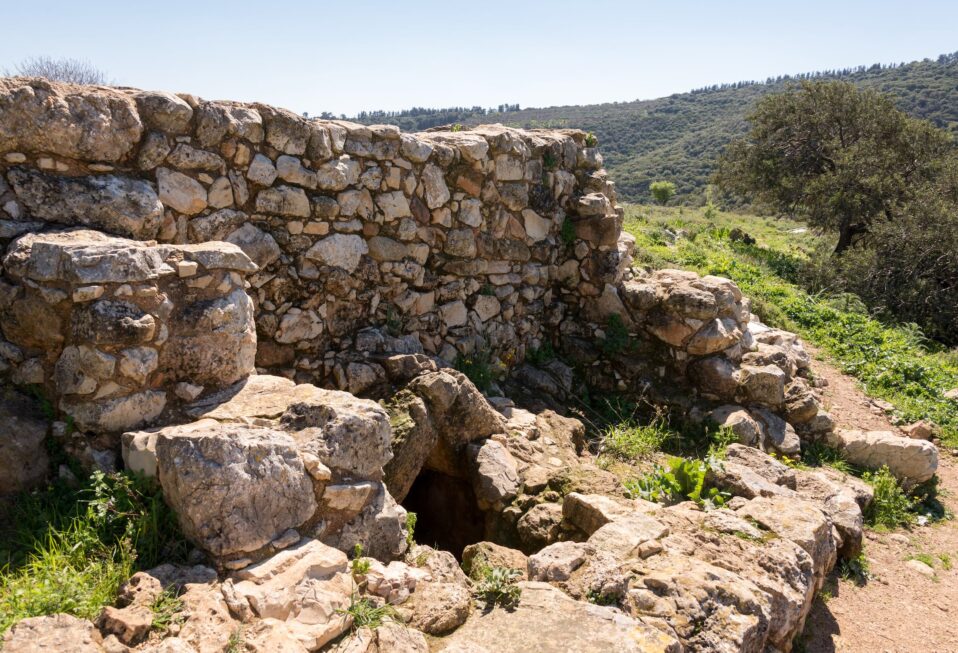
Just a few miles north of Nazareth, across the Beit Netofa Valley, lie the remains of the ancient village of Yodfat. In the time of Jesus, it would have been an easy day’s walk from His hometown. Nestled among the hills of Galilee, Yodfat was a working village where daily life revolved around simple but essential tasks. Families raised sheep and goats, spun wool into thread, and wove it into cloth. The discovery of loom weights and pottery fragments reveals a community shaped by labor, creativity, and trade.
Yodfat gives us a glimpse into the kind of places where Jesus lived and ministered. These were not grand cities or centers of power, but ordinary villages filled with people trying to provide for their families and remain faithful to God. In places like this, Jesus taught, healed, and shared the message of the kingdom.
The village also carries a sobering history. During the First Jewish Revolt, it became a fortified stronghold. The Roman army eventually surrounded it, building a ramp to breach its defenses. The historian Josephus, who was present during the siege, described the desperation of those final days. In the end, the village was destroyed and never rebuilt, leaving behind a silent testimony to both human struggle and the passing nature of earthly life.
Yet even in its ruins, Yodfat speaks. Archaeological findings reveal a community marked by both diversity and devotion. Some homes show signs of wealth, with decorative elements similar to those found in Jerusalem. Others reflect the lives of artisans and laborers. There were merchants, craftsmen, and undoubtedly the poor, all living side by side.
More importantly, the remains point to a people committed to their faith. Ritual immersion pools and stone vessels indicate careful attention to purity laws. The absence of certain animal remains reflects adherence to dietary practices found in the Torah. This was a community seeking to honor God in the rhythms of everyday life.
These were the kinds of people who heard Jesus’ voice. When we consider Yodfat, we are reminded that God’s work often unfolds in ordinary places. Jesus did not limit His ministry to prominent cities or influential leaders. He walked through villages like this one, meeting people in their homes, their fields, and their places of work.
Yodfat also reminds us of how quickly circumstances can change. A thriving village became a ruin within a generation. What once felt stable disappeared. Yet God’s purposes continued. The message Jesus proclaimed in those hills did not end with the destruction of a village. It carried forward, reaching far beyond Galilee.
As we reflect on Yodfat, we are invited to consider our own lives. We may not live in ancient villages, but our daily routines are not so different. We work, we provide, we navigate challenges, and we seek meaning in the midst of it all.
God meets us there. He meets us in the ordinary, in the familiar places where life unfolds day by day. Just as Jesus walked the hills of Galilee, He walks with us now, calling us to live faithfully in our own time and place.
Stephen Faircloth is the President of CBN Israel, an initiative dedicated to sharing the true story of the Jewish nation and inspiring a global community of Christians to stand with Israel and support her people in need. Our vision is to reshape the global conversation about Israel by fostering understanding, hope, and healing between Jews and Christians around the world. For more than 50 years, the Christian Broadcasting Network has supported Israel. By joining CBN Israel, you become part of this enduring legacy, transforming lives today and strengthening Christian support for Israel for generations to come.