

By Arlene Bridges Samuels
President Trump declared on Monday that “the deal with the Islamic Republic of Iran is now complete. Congratulations to all!” While Islamist leaders may celebrate what they view as a diplomatic victory, Christians in Lebanon, Jews in northern Israel, and millions of ordinary Iranian citizens are not celebrating. They are bracing themselves.
On paper, the agreement may appear to reduce tensions. Yet many remain concerned that it could embolden a regime with nearly five decades of oppression, violence, and support for terrorist proxies throughout the Middle East. The same ideology that fuels Hamas and other Iranian-backed groups continues to threaten not only Israel, but also neighboring nations and vulnerable populations across the region.
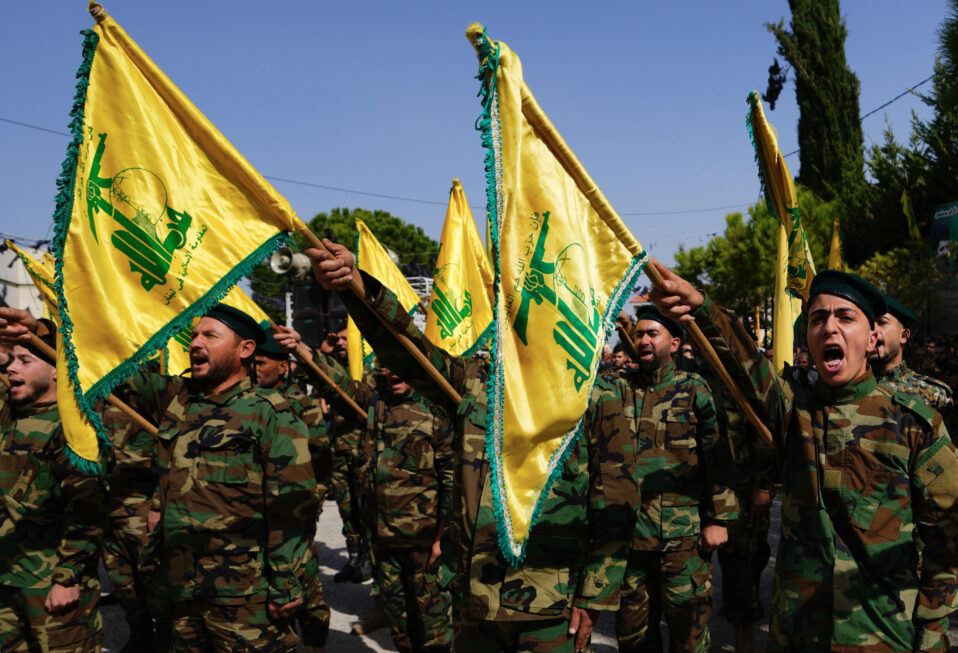
For Israelis and Lebanese alike, relations between their countries remain fragile. Yet both face a common enemy. Hezbollah, whose name means “Party of God,” functions as Iran’s most powerful proxy in Lebanon. In many ways, Hezbollah has created an unofficial alliance of survival between Lebanese Christians and Israeli Jews, both of whom bear the consequences of its actions.
A useful analogy is the Russian matryoshka nesting doll. Each smaller figure fits inside a larger one. Hezbollah is the largest doll, dominating the structure. Hidden within are smaller, vulnerable communities, including Christians in southern Lebanon and Jewish civilians in northern Israel, who live under constant threat.
The treatment of civilians by Hezbollah and the Israel Defense Forces could hardly be more different.
Since the 1980s, Hezbollah has entrenched itself across southern Lebanon and in significant portions of Beirut and its suburbs. According to Open Doors World Watch List, approximately 1.9 million Christians live in Lebanon, representing nearly one-third of the country’s population. These include historic Maronite and Greek Orthodox communities, along with evangelical churches represented by the Supreme Council of Evangelicals.
Many Christian leaders speak candidly about the reality they face.
Maronite priest Father Nagib Al Amil describes Christians in southern Lebanon as “eternal hostages.” Catholic priest Father Charbel Eid speaks of the devastating consequences: “Our village is destroyed. Our people have lost everything. We are paying the price for a war we did not choose.”
Maronite priest Mazen Najjar, who works with Catholic humanitarian projects, states plainly, “Israel is not targeting our churches. The danger comes from those who fire rockets from our fields.”
In Beirut, Resurrection Church Pastor Assaad Bechara echoes a similar perspective, saying that many Christians do not view Israel as their enemy. Across denominational lines, Christian leaders increasingly agree that Hezbollah is devastating Lebanon, that ordinary Christians desire peace rather than war, and that the Church must continue speaking truth despite significant risks.
The story of Nabil, a resident of the Christian village of Qlayaa, illustrates these realities.
His family has lived there for generations. Known for their independence, villagers have repeatedly opposed Hezbollah’s attempts to operate within their community. On one occasion, Hezbollah fighters sought to establish a rocket-launching position on Christian-owned land. Nabil and several local men confronted them directly.
The fighters insisted they had the right to operate there “for the resistance.” After a tense confrontation, Hezbollah withdrew but relocated the launch site just beyond the village boundaries.
Soon afterward, rockets were fired toward Israel.
“The house shook like an earthquake,” Nabil recalled. His wife grabbed their children and rushed into the hallway as the launch blasts thundered nearby.
When Israel responded, the strikes targeted the launch positions without hitting village homes.
“They were careful,” Nabil said. “But the fear was real. Israel is not targeting Christian villages. The danger comes from those who hide among us.”
On the worst nights, Nabil rings the church bell, and villagers gather to pray for both spiritual and physical protection.
Stories like his are repeated across southern Lebanon. Many Christian families have quietly left their homes. Exact numbers are difficult to verify, but thousands are believed to have relocated due to the insecurity created by Hezbollah’s military activities.
Across the border, Israeli civilians face a parallel reality.
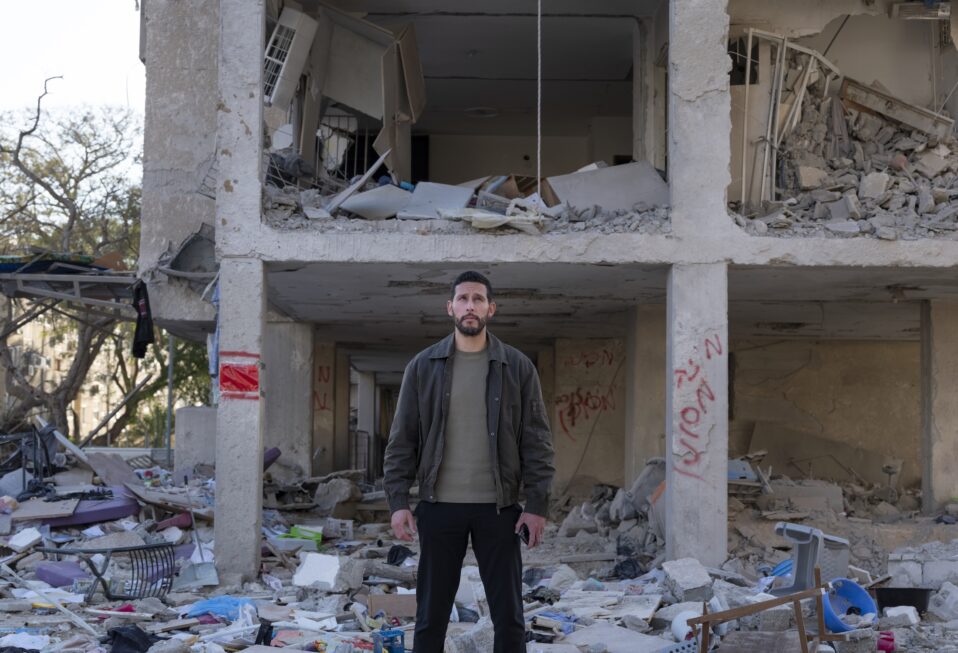
Since October 2023, more than 60,000 residents have been displaced from communities along Israel’s northern frontier. Towns such as Kiryat Shmona and Metula remain largely empty as families continue living elsewhere.
In recent months alone, Hezbollah has launched hundreds of rockets and numerous drones toward civilian areas.
Yael, a mother of three from Kiryat Shmona, says her children sleep in their shoes because they have only seconds to reach shelter when sirens sound. Her youngest child refuses to fall asleep unless the safe-room door remains open.
Eitan, a farmer in Margaliot, describes harvesting his orchard between rocket alerts. Drones fly so low overhead that he can hear their metallic whine. Several explosive drones have damaged irrigation systems and destroyed crops.
Like Nabil in Lebanon, Eitan refuses to abandon his land.
In another northern community, neighbors regularly check on Rivka, an eighty-nine-year-old Holocaust survivor. A rocket blast shattered her windows, but she refuses to leave.
“I survived Europe,” she says. “I will survive this.”
Seventeen-year-old Daniel from Metula says his school has effectively become a bomb shelter. Classes are conducted online. Sports fields sit empty. Social gatherings take place underground.
He insists he is not afraid. His mother says he now sleeps with the light on.
The Cohen family fled Shlomi with little more than pajamas and toothbrushes. Months later, they continue living in a hotel.
“We’re safe,” they say, “but we’re not home.”
Just a short distance away sits Alma al-Shaab, a Lebanese Christian-majority village facing similar dangers. Residents there report that Hezbollah launches rockets and drones from nearby areas, leaving local civilians to suffer the consequences.
“Hezbollah fires from our fields, and we pay the price,” one resident explained.
These stories reveal a two-sided humanitarian crisis.
Lebanese Christians face intimidation, economic collapse, displacement, and the constant threat of retaliation should they openly oppose Hezbollah. Israeli civilians endure rocket attacks, displacement, trauma, and ongoing uncertainty along the northern border.
The human cost is immense. More than one hundred Israeli soldiers have been killed in cross-border attacks and military operations connected to the conflict. Thousands of civilians have required medical treatment for injuries sustained during the war.
Meanwhile, Hezbollah’s grip on southern Lebanon continues to deepen the suffering of the very people it claims to defend.
The unfolding situation resembles a set of increasingly troubling nesting dolls. Each layer reveals another consequence of Iran’s regional strategy, another community caught in the crossfire, and another reminder that civilians often bear the heaviest burden of war.
World leaders would do well to remember the timeless truth: “Mercy to the guilty is cruelty to the innocent.”
Our CBN Israel team welcomes you to join us in prayer as we reflect on Ephesians 6:12:
“For our struggle is not against flesh and blood, but against the rulers, against the authorities, against the powers of this dark world and against the spiritual forces of evil in the heavenly realms.”
Prayer Points:
- Pray for Lebanese Christians as they endure pressure, uncertainty, and the threat of Hezbollah’s influence.
- Pray for Lebanese pastors and church leaders to have wisdom, courage, and discernment.
- Pray for displaced Israeli families struggling with trauma, uncertainty, and separation from their homes.
- Pray for families grieving loved ones who have died while defending their nation.