


By Stephen Faircloth
Perched in the hills just north of Capernaum, the ruins of Chorazin overlook the Sea of Galilee. Though this ancient village is mentioned only briefly in the Gospels, it holds a sobering place in the story of Jesus.
Jesus once pronounced a severe rebuke over Chorazin, along with Bethsaida and Capernaum, because despite witnessing His mighty works, the people refused to repent (Matthew 11:21-24; Luke 10:13-16). It is a reminder that spiritual privilege does not guarantee spiritual transformation. The land between these villages formed the heart of Jesus’ Galilean ministry, where miracles and teachings unfolded almost daily. Yet familiarity bred indifference.
Unlike Capernaum and Bethsaida, Chorazin sat back from the shoreline. While it was removed from the fishing trade of the lake, it was renowned for producing exceptional wheat—a detail preserved in ancient rabbinic writings. Archaeological discoveries confirm that Chorazin was a vibrant Jewish community, beginning in the first century A.D.
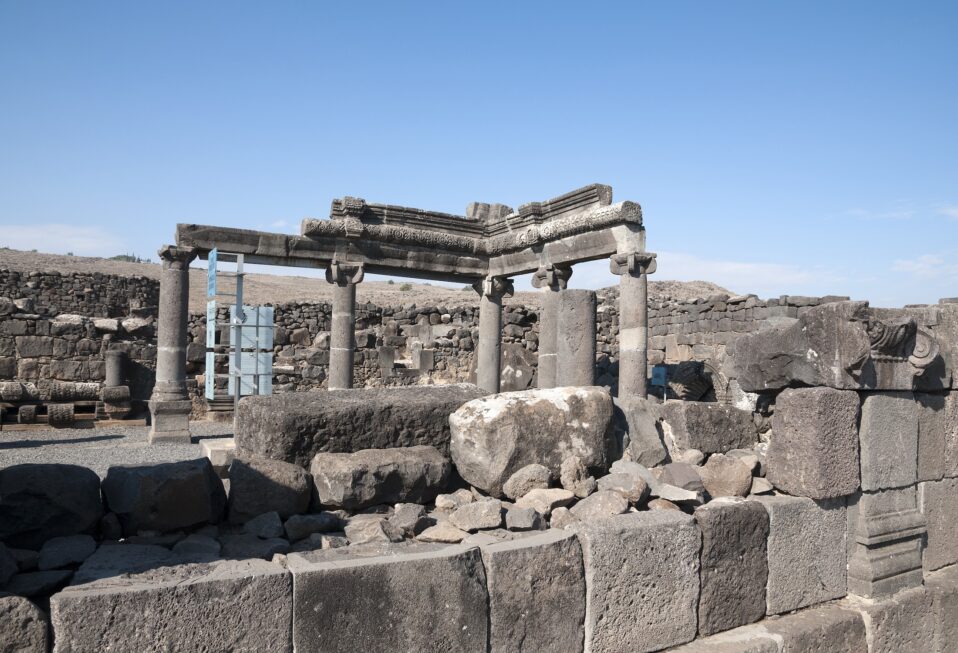
Most of the ruins visitors see today date to later centuries. The basalt synagogue at the village center, possibly constructed by the third century, reflects the classic Galilean synagogue style seen in places like Capernaum. Worshippers would ascend a broad southern staircase, facing Jerusalem, to enter the hall. Inside, benches formed a U-shape around the room. Carved basalt stones, though difficult to shape, were decorated with symbolic motifs.
Among the most striking finds is a basalt chair called the “Seat of Moses.” According to tradition, this was where teachers of the Law would sit to instruct the people (see Matthew 23:1-2). The chair bears an Aramaic inscription honoring the benefactor who donated it and praying that he would have a share among the righteous. Beneath the later synagogue floor, archaeologists have uncovered signs of an earlier public building—perhaps the synagogue where Jesus Himself taught.
In homes nearby, excavators have found ritual baths, stone vessels, and other artifacts that reveal a community concerned with purity and devotion. And yet, Chorazin still fell under Jesus’ judgment. The people saw, heard, and experienced much, but their hearts remained unchanged.
Chorazin warns us that it is possible to be surrounded by spiritual opportunity and still drift into complacency. It challenges us to consider: Are we responding to what God has shown us, or merely observing it from a safe distance?
Where has God been at work in your life? Have you grown familiar with His blessings without letting them transform you? What would it look like to respond with repentance and renewed faith today?
Stephen Faircloth is the President of CBN Israel, an initiative dedicated to sharing the true story of the Jewish nation and inspiring a global community of Christians to stand with Israel and support her people in need. Our vision is to reshape the global conversation about Israel by fostering understanding, hope, and healing between Jews and Christians around the world. For more than 50 years, the Christian Broadcasting Network has supported Israel. By joining CBN Israel, you become part of this enduring legacy, transforming lives today and strengthening Christian support for Israel for generations to come.