


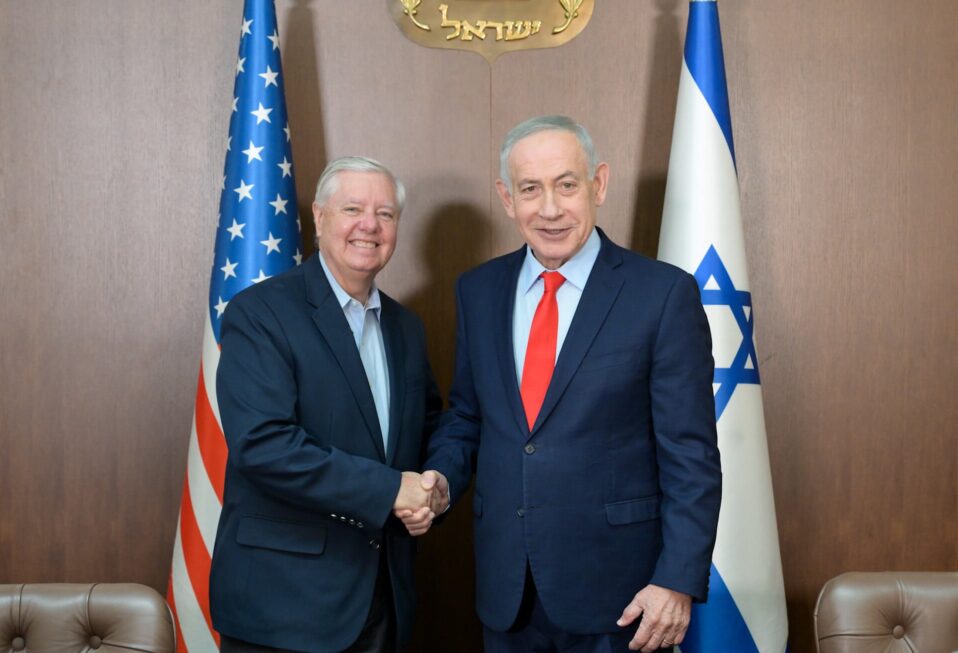
The sudden homegoing of Senator Lindsey Graham on July 11, 2026, has prompted an outpouring of heartfelt tributes from across America and around the world. Leaders, colleagues, and ordinary citizens are remembering a man whose life reflected the enduring motto of his beloved South Carolina: “While I Breathe, I Hope.”
That hope was not merely a slogan. It was the defining theme of Graham’s life.
While attending the University of South Carolina, Graham experienced unimaginable loss when both of his parents died within a short period of time. His younger sister, Darline, was only twelve years old. After graduating from law school, he joined the U.S. Air Force and became her legal guardian, assuming the responsibilities of both brother and parent. That decision revealed the character that would define his life: faithfulness, sacrifice, and an unwavering commitment to others.
As a native South Carolinian who lived in the Palmetto State on and off for forty years, I am still processing the shock of his passing. Like so many others, I have admired his remarkable journey from personal tragedy to a lifetime of public service.
Graham’s career reflected both his love for his country and his determination to defend it. He served in the U.S. Air Force Judge Advocate General’s Corps, the South Carolina Air National Guard, and the Air Force Reserve, retiring as a Colonel after eighteen years of military service. He later served in the South Carolina House of Representatives before representing the state’s Third Congressional District in the U.S. House of Representatives. In 2003, he was elected to the United States Senate, where he would serve for more than two decades.
His intelligence, wit, humility, and command of complex policy issues earned the respect of colleagues on both sides of the aisle. Throughout his career, Graham became one of America’s most influential voices on national security, foreign policy, judicial affairs, support for Israel, and the protection of unborn life.
Even during his final days, he remained fully engaged in public service.
Just before his passing, Senator Graham traveled to Ukraine, where leaders expressed deep appreciation for his steadfast advocacy. While there, he celebrated his seventy-first birthday and announced an agreement with the White House on new sanctions against Russia backed by President Trump. After returning to Washington, D.C., he spoke with the President before passing away later that night. In the days that followed, members of both political parties rallied behind the bipartisan Sanctioning Russia Act, viewing its passage as one way to honor his enduring legacy.
Yet Graham’s influence reached far beyond a single piece of legislation.
His public life consistently reflected South Carolina’s motto by offering hope through principled leadership. He stood firmly with the world’s only Jewish state, opposed Iran’s pursuit of nuclear weapons, advocated for the freedom of the Iranian people, defended unborn children, and championed the rights of the Catawba Indian Nation. Whether addressing international crises or serving constituents at home, he sought to strengthen the principles of freedom, justice, and human dignity.
I had the privilege of witnessing part of that legacy firsthand.
From 2007 until my retirement in 2016, I served as the Southeast Regional Christian Outreach Director for the American Israel Public Affairs Committee (AIPAC). During those years, I observed Senator Graham’s unwavering commitment to the U.S.-Israel relationship.
Following his passing, AIPAC released a moving tribute:
“We mourn the passing of Senator Lindsey Graham, a great friend and true champion of the U.S.-Israel relationship. His many visits to Israel and his love for the Israeli people reflected not just a policy position, but a deep personal connection to the Jewish state and its citizens. Senator Graham played a vital role in leading the fight to impose sanctions that hold Iran and its proxies accountable.”
That tribute reflects what many of us witnessed over the years.
Senator Graham consistently worked to strengthen bipartisan support for Israel’s security and to prevent Iran from acquiring nuclear weapons. He also understood the importance of organizations like AIPAC, recognizing that its millions of members and supporters are American citizens who advocate for the U.S.-Israel alliance.
His legislative record reflected that commitment.
Highlights of Senator Graham’s Legislative Legacy
Support for Jerusalem as Israel’s Capital
From the Jerusalem Embassy Act of 1995 through the relocation of the U.S. Embassy to Jerusalem in 2018, Graham consistently supported recognizing Jerusalem as Israel’s undivided capital.
Opposition to the BDS Movement
Graham strongly backed the Israel Anti-Boycott Act and the Combating BDS Act, opposing efforts to isolate Israel through economic boycotts. South Carolina became the first state to enact anti-BDS legislation, encouraging many others to follow.
The Taylor Force Act
Named after West Point graduate and U.S. Army veteran Taylor Force, who was murdered by a Palestinian terrorist while visiting Israel in 2016, this law halted certain U.S. funding to the Palestinian Authority while its “pay-to-slay” program continued rewarding acts of terrorism.
Iran Sanctions and Opposition to the JCPOA
Graham remained one of Congress’s strongest advocates for sanctions against Iran and one of the most outspoken opponents of the 2015 Joint Comprehensive Plan of Action, arguing that it failed to stop Iran’s nuclear ambitions.
Pro-Life Leadership
Throughout his Senate career, Graham repeatedly introduced the Pain-Capable Unborn Child Protection Act. His convictions reflected both his Christian faith and his belief that every human life possesses inherent dignity. As he once observed, “The United States should not be in that club” of nations permitting late-term abortions.
As tributes continued pouring in, President Trump called Graham “one of the greatest people and senators I have ever known…a true American patriot,” ordering American flags flown at half-staff in his honor.
My dear friend Marziyeh Amirizadeh, who endured imprisonment under Iran’s Islamic regime before immigrating to America, also shared a moving reflection:
“As an Iranian who survived persecution under the Islamic regime, I was deeply grateful for his unwavering support in our fight for freedom. Millions of Iranians loved and respected him, affectionately calling him ‘Uncle Lindsey.’ He understood the suffering of my people and never hesitated to speak out against tyranny.”
Israel likewise mourned the loss of one of its most faithful friends.
During Senator Graham’s January 2024 visit to Kibbutz Kfar Aza following the October 7 Hamas massacre, Knesset Speaker Amir Ohana thanked him for his steadfast support. Graham responded with characteristic moral clarity:
“The brutality here was so strong and so visible, making it impossible for Israel not to respond. The destruction of Hamas is non-negotiable.”
Those words reflected the consistency that marked his public life.
One truth stands above all others: Senator Lindsey Graham lived with courage, conviction, and a profound sense of duty. He defended America’s security, stood shoulder to shoulder with Israel, advocated for unborn children, supported oppressed peoples seeking freedom, and remained guided by deeply held convictions rather than political convenience.
His legacy will be measured not only by legislation passed or speeches delivered, but by lives strengthened, alliances reinforced, and freedoms defended.
Following his passing, South Carolina Governor Henry McMaster appointed Graham’s sister, Darline Graham Nordone, to serve as interim United States Senator, a tribute President Trump described as “a fabulous honor to Lindsey, who loved her dearly.”
It seems especially fitting that the sister he sacrificially cared for as a young man now carries forward a portion of his life’s work in public service.
South Carolina’s motto declares, “While I Breathe, I Hope.”
Senator Lindsey Graham spent his life doing exactly that.
Now that his earthly race is complete, I imagine him reunited with his parents and hearing the words of Jesus recorded in Matthew 25:21: “Well done, good and faithful servant…Come and share your Master’s happiness.”
Our CBN Israel team invites you to join us in prayer as we remember Senator Graham’s life and legacy.
Prayer Points
- Pray for God’s comfort and peace for Senator Graham’s sister, Darline, and their entire family.
- Pray for strength and encouragement for his devoted staff in Washington and South Carolina as they mourn his loss.
- Pray for Senator Tim Scott, Trey Gowdy, and Senator Graham’s many friends and colleagues as they continue the work they shared together.
- Pray for wisdom, discernment, and strength for Darline Graham Nordone as she serves South Carolina during this season of transition.
Arlene Bridges Samuels is the weekly feature columnist for CBN Israel since 2020. Working on the staff of the American Israel Public Affairs Committee (AIPAC) as their SE Regional Outreach Director for nine years, International Christian Embassy Jerusalem USA engaged her as the Leadership Outreach Director part-time for their project American Christian Leaders for Israel (ACLI). Arlene is an author at The Blogs-Times of Israel, is published at AllIsrael.com and The Jerusalem Connection. Her devotionals and articles also appear on her Substack, The Eclectic Evangelical. She serves on the Advisory Board of NewPersia.org and on the advisory committee of RootAndBranchIsrael.com. Having traveled to Israel regularly since 1990, Arlene participates in Israel’s Government Press Office Christian Media Summits alongside members of Christian media from around the world. In 2024, Arlene and her husband Paul co-authored Mental Health Meltdown: Illuminating the Voices of Bipolar and Other Mental Illnesses. In May 2026, The White Rose Society honored Arlene as a non-Jewish individual who stands with the Jewish people.