

By Arlene Bridges Samuels
In an era of intense political division, agreement between Republican and Democratic administrations can seem almost miraculous. Yet four successive American presidents have shared serious concerns about the International Criminal Court.
Presidents George W. Bush, Barack Obama, Donald Trump, and Joe Biden differed substantially in how they dealt with the court. Nevertheless, none accepted its authority over American citizens, military personnel, or government officials.
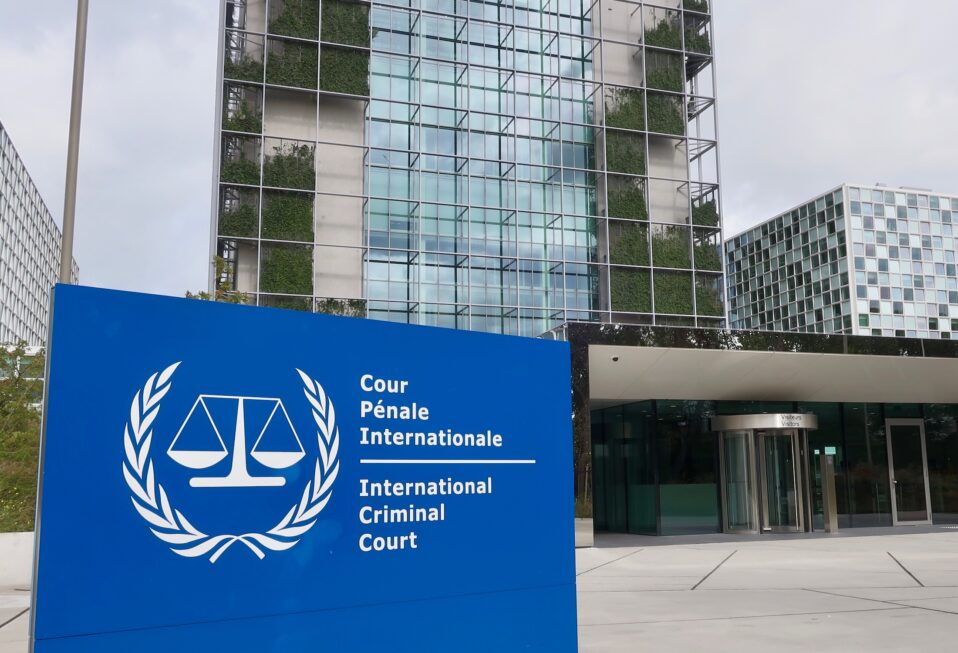
That history matters. The International Criminal Court, headquartered in The Hague, was created through the Rome Statute, which took effect on July 1, 2002. Its stated purpose was noble: to prosecute individuals responsible for genocide, crimes against humanity, war crimes, and crimes of aggression when national courts were unable or unwilling to act.
The court was envisioned as a last resort for victims denied justice in their own countries. Yet the United States never ratified the Rome Statute or became a member of the ICC. Israel also declined to join. Both nations have maintained that the court cannot legitimately exercise authority over the citizens of countries that never accepted its jurisdiction.
President George W. Bush warned that the ICC threatened American sovereignty, lacked adequate checks and balances, and could expose U.S. service members and officials to politically motivated prosecutions. “The United States cooperates with many other nations to keep the peace,” Bush explained, “but we will not submit American troops to prosecutors and judges whose jurisdiction we do not accept.”
President Barack Obama adopted a more cooperative posture. His administration participated as an observer in meetings of the court’s member nations and supported some ICC investigations involving atrocities overseas. Yet Obama never sought Senate ratification of the Rome Statute and continued protecting American military personnel from the court’s reach.
President Joe Biden also maintained the longstanding American refusal to recognize ICC jurisdiction over U.S. citizens. When the court issued arrest warrants for Israeli Prime Minister Benjamin Netanyahu and former Defense Minister Yoav Gallant in 2024, Biden called the decision “outrageous.”
“Whatever the ICC might imply, there is no equivalence, none, between Israel and Hamas,” Biden declared. “We will always stand with Israel against threats to its security.”
President Donald Trump has taken the strongest action against the court. His administration imposed sanctions on ICC officials and launched what Secretary of State Marco Rubio described as a campaign to dismantle the court’s threat to American sovereignty.
In a July 14, 2026, opinion article, Rubio warned that the ICC had expanded far beyond the limited institution originally presented to the world. “The ICC was born at the turn of the century,” Rubio wrote. “At first, it was marketed as a narrow backstop to prosecute the gravest crimes. Now the ICC and its allies seek a standing world tribunal with near-unlimited reach, empowered to override the courts and constitutions of the U.S. and other sovereign states, and to prosecute and arrest our citizens.”
Rubio asked Americans to consider the consequences of granting such power to an international institution.
“Most of us would struggle to imagine a world in which U.S. soldiers, police officers, Border Patrol agents and elected leaders could be dragged before an international court, tried by judges from random countries across the globe, found guilty under international laws we neither consent to nor control, and then imprisoned thousands of miles from America.”
This is the central American objection to the ICC. The debate is not about whether genocide, terrorism, and war crimes should be prosecuted. They should be. The issue is whether an international court that is not accountable to the American people may override the United States Constitution, disregard American courts, and claim authority over citizens of a nation that never joined it.
The ICC describes itself as a court of last resort intended to complement, rather than replace, national judicial systems. Critics respond that the court has increasingly attempted to extend its authority beyond the nations that consented to its jurisdiction.
Israel’s experience has intensified those concerns. After Hamas terrorists invaded Israel on October 7, 2023, they murdered approximately 1,200 people, kidnapped more than 250 hostages, and committed atrocities against civilians. The ICC initially condemned the massacre and hostage-taking.
Yet after Israel launched its war to destroy Hamas and rescue the hostages, ICC prosecutors sought arrest warrants against Israeli leaders while also pursuing Hamas officials. The court later issued warrants for Prime Minister Netanyahu and former Defense Minister Gallant over alleged war crimes in Gaza.
The warrants created a moral equivalence that American and Israeli leaders strongly rejected. Israel is a democratic nation with an independent judiciary, while Hamas is a terrorist organization that deliberately attacked civilians and operates from within densely populated areas.
Israel also disputes the court’s jurisdiction. It never joined the Rome Statute, and the question of whether the ICC has lawful authority over Israeli citizens remains deeply contested.
Netanyahu has described the court as a “corrupt and morally bankrupt institution” and a lawfare platform exploited by hostile regimes. President Biden called the warrants outrageous. President Trump imposed sanctions in response. Secretary Rubio has declared that the court must be prevented from threatening Americans and Israelis.
The controversy reached New York City when Mayor Zohran Mamdani threatened to have Netanyahu arrested if the Israeli prime minister visited the city.
Mamdani later acknowledged that he did not possess the authority to order such an arrest and instead called upon the federal government to enforce the ICC warrant. The United States, however, does not recognize the court’s jurisdiction over Netanyahu and is not obligated under the Rome Statute to execute its warrants.
President Trump responded unequivocally, declaring that Netanyahu would not be arrested while visiting the United States. Netanyahu accused Mamdani of “fomenting hate” and reminded him that a mayor has a responsibility to represent every citizen, including Jews, Christians, Muslims, and people of every background. The episode demonstrated how the ICC’s disputed decisions can be used to inflame political divisions far beyond the courtroom.
New York City is home to the largest Jewish population outside Israel. Its Jewish citizens have contributed immeasurably to the city’s cultural, civic, charitable, medical, and economic life. Public officials should seek to protect all communities rather than deepen hostility during a time of rising antisemitism.
The ICC’s credibility crisis does not end with jurisdictional disputes or its treatment of Israel.
On July 24, 2026, the court’s member nations removed Chief Prosecutor Karim Khan from office following a lengthy investigation into allegations of sexual misconduct involving a junior employee.
Before Khan’s election in 2021, an independent review had already identified bullying and sexual harassment as serious institutional problems within the Office of the Prosecutor. Khan entered office promising zero tolerance for misconduct and affirming that every employee deserved a safe workplace.
The allegations against him therefore raised profound questions about hypocrisy, internal accountability, and the character of an institution entrusted with judging the gravest crimes in the world. By secret ballot, 82 of the ICC’s 125 member nations voted to remove Khan after determining that he had committed serious misconduct.
His removal does not by itself invalidate every action taken by the court. It does, however, deepen legitimate concerns about an institution that claims extraordinary moral and legal authority while struggling to maintain accountability within its own leadership. A court cannot credibly demand justice from nations while failing to demonstrate justice, transparency, and integrity within its own walls.
Psalm 89:14 reminds us: “Righteousness and justice are the foundation of Your throne; love and faithfulness go before You.”
True justice must rest on truth, evidence, due process, and moral consistency. It cannot be driven by political pressure, selective enforcement, or hostility toward democratic nations defending their citizens. The ICC began with an honorable aspiration: to hold the perpetrators of humanity’s worst crimes accountable. Yet noble intentions do not justify unlimited power.
After decades of concern across Republican and Democratic administrations, the question is no longer whether the United States has reservations about the court. The record is clear. The question is whether an international institution that lacks the consent of the American people should be permitted to claim authority over American citizens and leaders of allied democracies.
Secretary Rubio, President Trump, and Prime Minister Netanyahu have answered with an emphatic no.
Our CBN Israel team welcomes you to join us in prayer this week for the United States and Israel.
Prayer Points
- Pray that international institutions entrusted with pursuing justice will act with integrity, impartiality, and respect for the truth.
- Pray that American leaders will protect the Constitution, national sovereignty, and the rights of American military personnel and citizens.
- Pray for Israel’s citizens as they continue enduring a prolonged, multifront war and the consequences of international lawfare.
- Pray for wisdom, discernment, and protection for President Trump and Prime Minister Netanyahu.
Arlene Bridges Samuels is the weekly feature columnist for CBN Israel since 2020. Working on the staff of the American Israel Public Affairs Committee (AIPAC) as their SE Regional Outreach Director for nine years, International Christian Embassy Jerusalem USA engaged her as the Leadership Outreach Director part-time for their project American Christian Leaders for Israel (ACLI). Arlene is an author at The Blogs-Times of Israel, is published at AllIsrael.com and The Jerusalem Connection. Her devotionals and articles also appear on her Substack, The Eclectic Evangelical. She serves on the Advisory Board of NewPersia.org and on the advisory committee of RootAndBranchIsrael.com. Having traveled to Israel regularly since 1990, Arlene participates in Israel’s Government Press Office Christian Media Summits alongside members of Christian media from around the world. In 2024, Arlene and her husband Paul co-authored Mental Health Meltdown: Illuminating the Voices of Bipolar and Other Mental Illnesses. In May 2026, The White Rose Society honored Arlene as a non-Jewish individual who stands with the Jewish people.