



By Stephen Faircloth
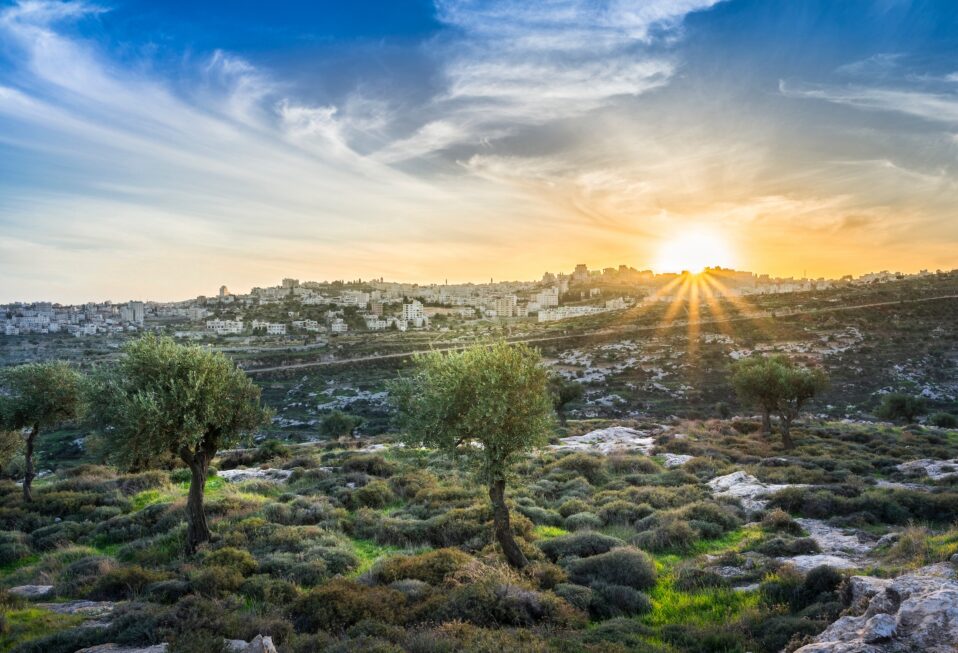
Bethlehem is forever linked with Christmas as the place where Jesus was born. Angels announced His arrival nearby, shepherds hurried through the night, and the long-awaited Messiah entered the world in humility. Yet by the time of Jesus’ birth, Bethlehem already carried centuries of history that shaped the meaning of that holy night.
The village first appears in ancient sources as early as the fourteenth century B.C. in the Amarna Letters, when it was a small Canaanite town. Long before it became associated with bread or shepherds, its name reflected its early pagan past. Over time, Bethlehem became woven into the story of Israel and into the purposes of God. It was the hometown of David, Israel’s greatest king, and the place where the prophet Samuel anointed a young shepherd as God’s chosen ruler.
Bethlehem’s importance came in part from its location. Situated along the central hill country route that ran north to south through Judah, it lay just south of Jerusalem and north of Hebron. Roads from east and west converged there, making it both accessible and vulnerable. Because of this strategic position, kings fortified Bethlehem, and later Herod the Great built his palace fortress Herodium just to the east, guarding the approaches from the Judean wilderness.
The fields around Bethlehem were familiar with conflict and courage. To the west lay the Elah Valley, where David faced Goliath and where Philistine forces threatened Judah’s heartland. At times, enemy garrisons even occupied Bethlehem itself. These struggles help explain why David longed so deeply for peace and why Bethlehem carried the memory of both danger and deliverance.
Bethlehem also stood at the center of God’s unfolding redemption. In its fields, Boaz met Ruth, whose faith and loyalty would place her in the lineage of David and ultimately of Jesus. In a home there, Samuel poured oil over David’s head, marking the rise of a shepherd king. Centuries later, another King would be born in the same town, fulfilling the words of the prophet Micah that from Bethlehem would come a ruler whose origins were from ancient days.
By the first century, Bethlehem was a small village overshadowed by nearby Jerusalem. When Joseph and Mary arrived because of the census, there was no royal welcome. Early Christian tradition remembers Jesus’ birth taking place in a cave, a common feature of hill country homes. Families often used natural caves as shelters for animals, with living quarters above or beside them. In such a setting, surrounded by feeding troughs, the Savior entered the world quietly and without display.
After the Jewish revolts against Rome, Bethlehem’s population changed dramatically. Jews were expelled from the region, and the Romans built a pagan shrine over the cave remembered as Jesus’ birthplace. Yet even this attempt to erase memory failed. In the fourth century, Emperor Constantine ordered the construction of the Church of the Nativity over the traditional site, preserving the place Christians still visit today. Later rebuilt under Emperor Justinian, the church stands as one of the oldest continuously used Christian sanctuaries in the world.
Bethlehem reminds us that God often chooses small places to accomplish great purposes. From a village shaped by roads, conflicts, and shepherds came both Israel’s beloved king and the Savior of the world. At Christmas, Bethlehem invites us to remember that God’s redemption does not arrive with power and spectacle, but with humility, faithfulness, and quiet obedience.
In the town of David, hope was born. And through that child laid in a manger, God stepped into history to bring light to the world.
Stephen Faircloth is the President of CBN Israel, an initiative dedicated to sharing the true story of the Jewish nation and inspiring a global community of Christians to stand with Israel and support her people in need. Our vision is to reshape the global conversation about Israel by fostering understanding, hope, and healing between Jews and Christians around the world. For more than 50 years, the Christian Broadcasting Network has supported Israel. By joining CBN Israel, you become part of this enduring legacy, transforming lives today and strengthening Christian support for Israel for generations to come.





Post a comment