



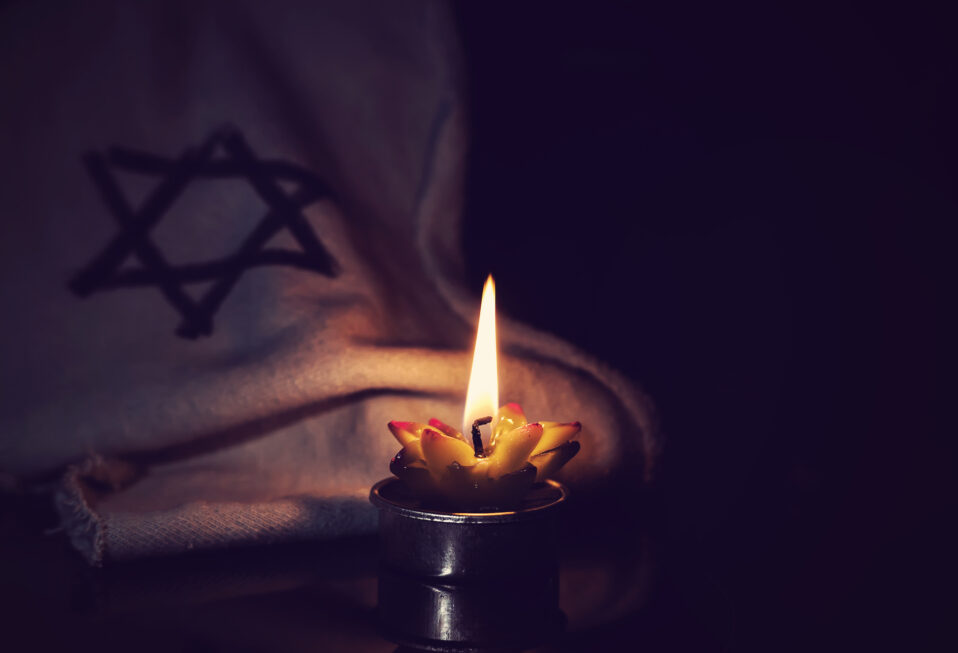
As Israel marks Yom HaShoah, Holocaust Remembrance Day, the nation does so under the shadow of recent trauma and ongoing conflict.
The October 7 attacks, though far smaller in scale than the Holocaust, shook Israelis deeply and revived painful echoes of a past many hoped would never again feel so close. For many, it was not just the brutality of the violence but the intent behind it that stirred historical memory.
Yom HaShoah is a solemn reminder that the Holocaust was not an inevitable tragedy but the result of unchecked hatred. The systematic murder of six million Jewish men, women, and children was fueled by a virulent form of antisemitism that spread across Germany and much of Europe, an ideology that defied reason and humanity.
Holocaust survivor and former Israeli Chief Rabbi Yisrael Meir Lau once reflected on this hatred: “Anti-Semitism you can explain, but you cannot find a reason for it. It’s against dialogue. It’s against logic. It’s a spiritual madness.” His words continue to resonate today as antisemitism persists in new forms across the globe.
Established in 1959, Yom HaShoah falls on the 27th day of the Hebrew month of Nisan, shortly after Passover. It commemorates not only the victims of the Holocaust but also the courage of those who resisted, especially during the Warsaw Ghetto uprising, when Jewish fighters stood against Nazi forces in a final act of defiance.
Each year, Israel’s national remembrance begins at Yad Vashem in Jerusalem. In a deeply moving ceremony, six Holocaust survivors, often joined by their descendants, light six torches in memory of the six million lives lost. Their presence bridges past and present and ensures that the stories of survival and loss are carried forward.
The following morning, a siren sounds across the country. For two minutes, life in Israel comes to a complete halt. Cars stop mid highway, people stand in silence, and a nation collectively remembers.
The name Yad Vashem comes from the book of Isaiah: “I will give them…a memorial and a name…an everlasting name that will never be cut off” (Isaiah 56:5). It reflects a central promise that those who were murdered will never be forgotten.
In 2005, the United Nations established International Holocaust Remembrance Day on January 27. This date marks the liberation of Auschwitz Birkenau, where more than a million people, most of them Jews, were killed.
Today, Israel observes this day amid a broader and ongoing regional struggle. Though a ceasefire may temporarily quiet the front lines, threats from Iran and its allied groups, including Hezbollah and the Houthis, remain a persistent concern. Their stated hostility toward Israel underscores a sobering reality that the dangers of hatred and extremism have not disappeared.
Yom HaShoah is therefore not only about remembering the past but also about vigilance in the present. It calls on the world to confront antisemitism wherever it appears and to stand against ideologies that dehumanize and destroy.
As this day is observed, many continue to reflect, to remember, and to pray for the victims of the Holocaust, for those affected by recent violence, and for a future where such tragedies are no longer repeated.
Stephen Faircloth is the President of CBN Israel, an initiative dedicated to sharing the true story of the Jewish nation and inspiring a global community of Christians to stand with Israel and support her people in need. Our vision is to reshape the global conversation about Israel by fostering understanding, hope, and healing between Jews and Christians around the world. For more than 50 years, the Christian Broadcasting Network has supported Israel. By joining CBN Israel, you become part of this enduring legacy, transforming lives today and strengthening Christian support for Israel for generations to come.





Post a comment