



By Stephen Faircloth
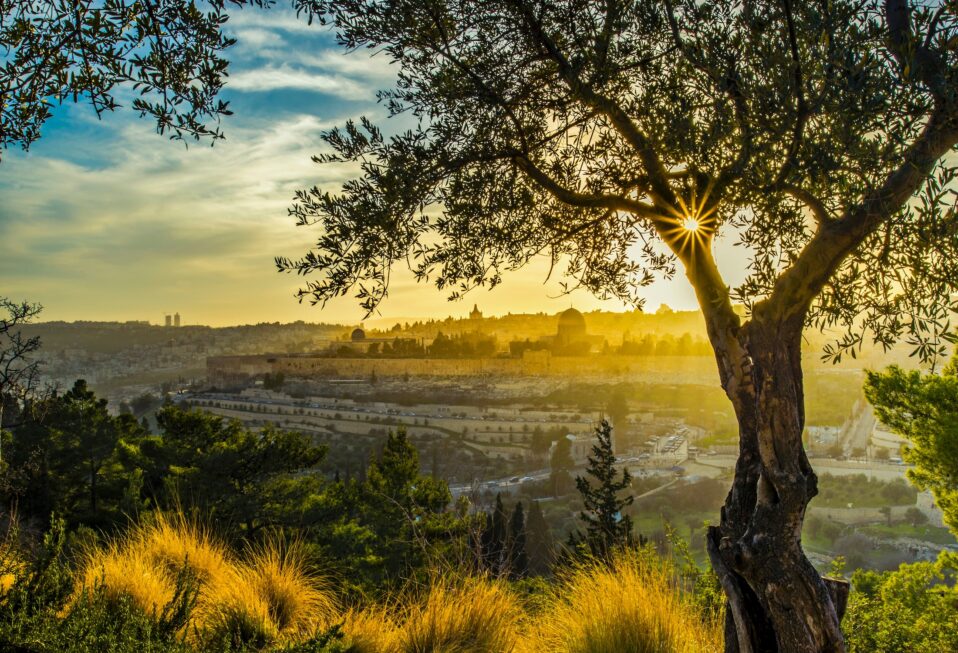
The Mount of Olives rises just east of Jerusalem, separated from the city by the Kidron Valley. From its slopes, one can look across at the walls of the holy city, while to the east the land quickly descends into the wilderness that stretches toward Jericho and the Dead Sea. It is a place where beauty and barrenness meet, where nearness and distance are felt at the same time.
Throughout Scripture, this mountain becomes a place of movement and encounter. When David fled from his son Absalom, he crossed the Mount of Olives weeping, seeking refuge in the wilderness beyond (2 Samuel 15:30). It was a place of sorrow, uncertainty, and trust in God during one of the darkest moments of his life.
The Mount of Olives also became a place of remembrance. For centuries, it served as a burial ground. Generations were laid to rest there, facing Jerusalem, holding onto the hope of God’s promises. The mountain quietly testified that life is brief, but God’s purposes endure.
In the time of Jesus, the Mount of Olives stood just outside the city, yet deeply connected to it. It was from this mountain that Jesus approached Jerusalem. As He drew near, He looked over the city and wept for it (Luke 19:41). What others saw as a moment of celebration, He saw with a heart of compassion, longing for people to recognize the peace that God was offering them.
The Mount of Olives was also a place where Jesus often withdrew to pray. In the stillness away from the crowds, He met with the Father. It reminds us that even in the shadow of great responsibility, Jesus made space for communion with God.
And it was on this same mountain that He faced the weight of what lay ahead. In the nearby garden, He prayed with deep anguish, surrendering Himself fully to the Father’s will. The Mount of Olives became a place of surrender, where obedience was chosen even in the face of suffering.
The prophet Zechariah spoke of a future day when the Lord would stand on the Mount of Olives, and the mountain itself would be transformed (Zechariah 14:4). This reminds us that the story of this place is not only about the past. It points forward to the fulfillment of God’s kingdom.
The Mount of Olives invites us into reflection. It is a place of sorrow and hope, of prayer and surrender, of past faithfulness and future promise. It reminds us that God meets us in every season, whether we are fleeing, grieving, seeking, or trusting.
Where is your Mount of Olives today? Is it a place of struggle, where you are carrying burdens? Is it a place of decision, where you must choose obedience? Or is it a place of quiet prayer, where you simply need to be with God?
Wherever you find yourself, the Lord meets you there. Just as He walked those slopes long ago, He walks with you now, inviting you to trust Him, to seek Him, and to rest in His purposes.
Stephen Faircloth is the President of CBN Israel, an initiative dedicated to sharing the true story of the Jewish nation and inspiring a global community of Christians to stand with Israel and support her people in need. Our vision is to reshape the global conversation about Israel by fostering understanding, hope, and healing between Jews and Christians around the world. For more than 50 years, the Christian Broadcasting Network has supported Israel. By joining CBN Israel, you become part of this enduring legacy, transforming lives today and strengthening Christian support for Israel for generations to come.





Post a comment