


By Stephen Faircloth
“The LORD’s Passover begins at sundown on the fourteenth day of the first month. On the next day, the fifteenth day of the month, you must begin celebrating the Festival of Unleavened Bread. This festival to the LORD continues for seven days, and during that time the bread you eat must be made without yeast…” (Leviticus 23:5-8).
It was a night filled with tension and expectation. Inside their homes, the people of Israel waited quietly. After centuries of bondage in Egypt, they had received precise instructions through Moses. Each household was to sacrifice a lamb and mark their doorframes with its blood. They were to prepare the meal and remain indoors until morning, trusting that something extraordinary was about to unfold.
That night, judgment came upon Egypt. Every firstborn in the land perished, from the lowest household to Pharaoh’s own family. Yet the homes marked by obedience were spared. The divine presence passed over them, preserving life within. By the following day, after enduring ten devastating plagues, the Israelites were released from slavery and began their journey toward freedom under Moses’ leadership.
This defining moment is remembered each year during Pesach or Passover, a central observance in Jewish life. In Exodus 13:5-8, the people are instructed to retell this story to their children and to eat unleavened bread for seven days. This bread, often called the bread of affliction, serves as a reminder of both hardship and haste, since there was no time for dough to rise before departure.
Today, this bread is known as matzah. Though made simply from flour and water, it must be prepared and baked within eighteen minutes to prevent fermentation. Its simplicity reflects both urgency and humility.
For generations, Jewish families have gathered on the evening of Passover for a special meal known as the Seder, a word meaning order. During this meal, the Exodus story is recounted in a structured and symbolic way. While customs may differ across cultures, the core message remains constant: God’s power to deliver and redeem.
Preparation for Passover involves removing all leaven from the home. This process can be detailed and thorough, as families search carefully to ensure that no trace remains. The act symbolizes a cleansing, both physical and spiritual.
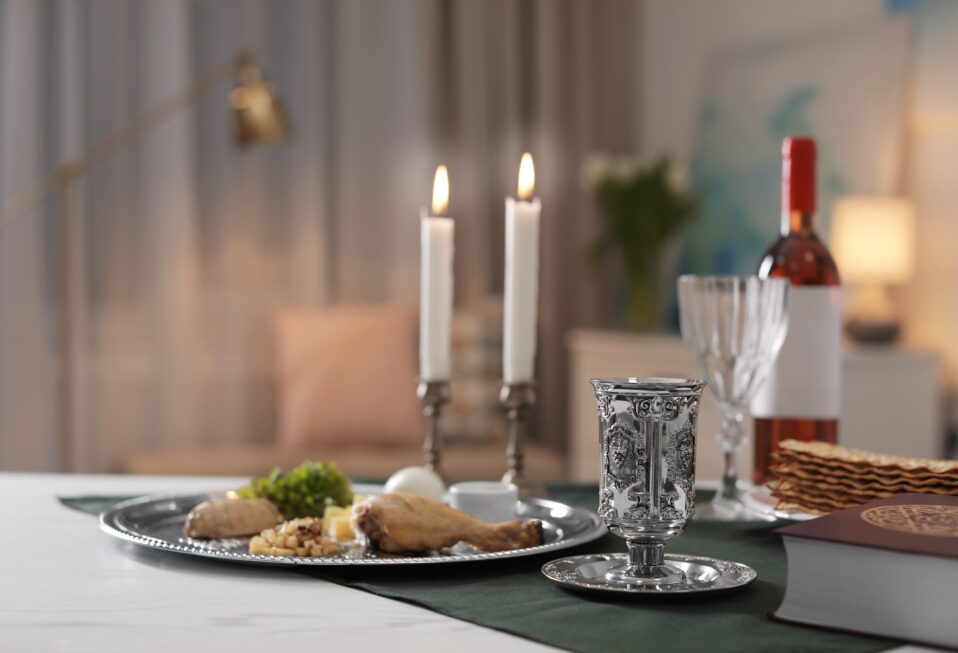
During the Seder, a plate holds several symbolic foods. A roasted bone recalls the Passover sacrifice. A boiled egg points to the cycle of life. Bitter herbs represent the harshness of slavery, while a sweet mixture called haroset reflects the mortar used in forced labor. A green vegetable dipped in salt water evokes both renewal and tears. Matzah is also central, placed prominently as a reminder of the Exodus experience.
For many Christians, Passover holds additional significance. The Last Supper shared by Jesus and His disciples was a Passover meal. When He broke the bread and spoke of His body, He was using unleavened bread. This connection continues in Christian communion practices today.
Some believers also see meaning in the appearance of matzah, with its markings suggesting suffering and sacrifice. Its lack of leaven is often understood as a symbol of purity. Within this perspective, Jesus is seen as the Passover Lamb, whose sacrifice brings redemption. The cup He shared is often associated with the Cup of Redemption from the traditional Passover meal, aligning with His words about a new covenant.
Passover and Easter frequently occur around the same time in early spring. The Jewish observance lasts eight days, with the first and last days marked by special gatherings. In Israel, one Seder is held, while Jewish communities elsewhere typically observe two evenings of celebration.
Holiday Greeting
Chag Kasher V’Sameach
Wishing you a happy and kosher holiday
During the intermediate days, it is also customary to say:
Moadim L’Simcha
Wishing you a joyful festival
Historical Note
In ancient times, the Passover celebration included the sacrifice of a lamb that was roasted and eaten during the Seder. This practice continued until the destruction of the Second Temple in Jerusalem in the first century.
Stephen Faircloth is the President of CBN Israel, an initiative dedicated to sharing the true story of the Jewish nation and inspiring a global community of Christians to stand with Israel and support her people in need. Our vision is to reshape the global conversation about Israel by fostering understanding, hope, and healing between Jews and Christians around the world. For more than 50 years, the Christian Broadcasting Network has supported Israel. By joining CBN Israel, you become part of this enduring legacy, transforming lives today and strengthening Christian support for Israel for generations to come.





Post a comment