

ARTICLES

Parashat Tzav (צַו) “Command”

This week’s Torah reading is Parashat Tzav (Leviticus 6:1-8:36). Read on Shabbat, March 28, 2026 / 9 Nisan 5786. The following is a special devotional drawn from this week’s reading.

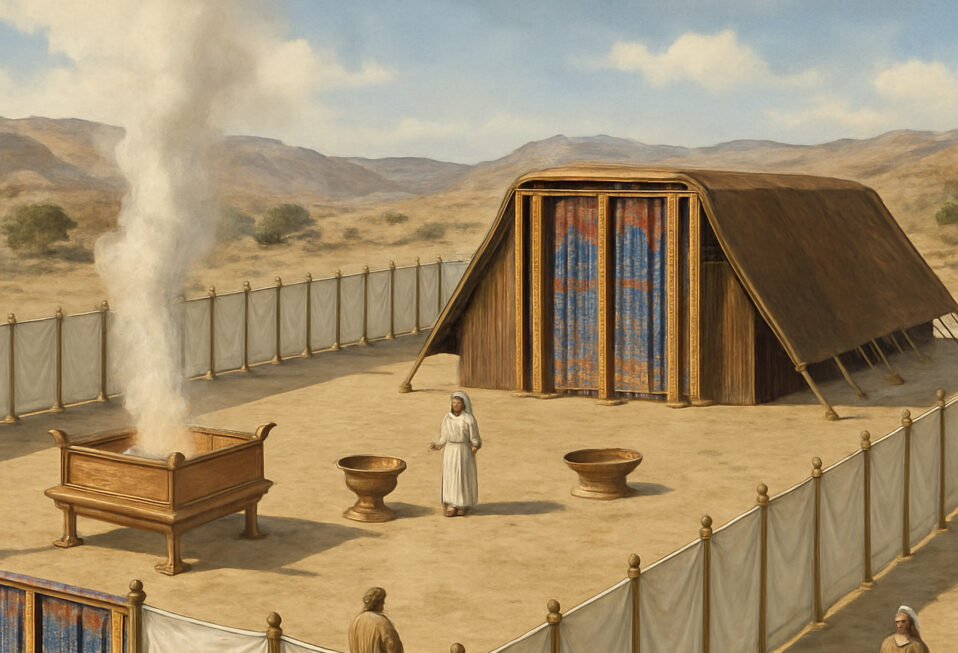
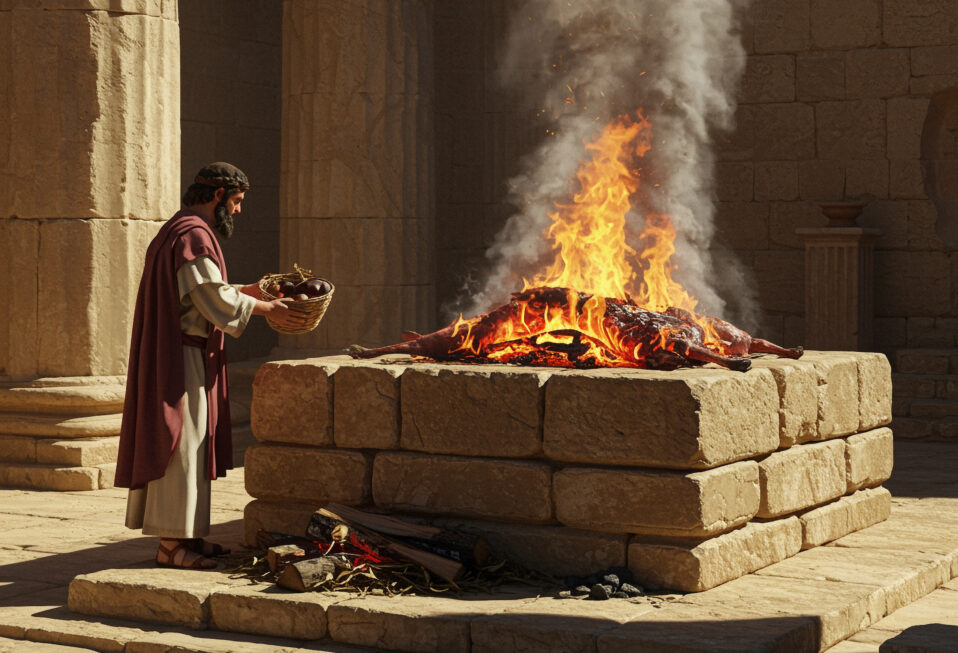
“The fire on the altar shall be kept burning on it; it shall not go out. The priest shall burn wood on it every morning, and he shall arrange the burnt offering on it and shall burn on it the fat of the peace offerings. Fire shall be kept burning on the altar continually; it shall not go out” (Leviticus 6:12-13).

Parashat Tzav continues the instructions for offerings, focusing on the responsibility of the priests to maintain the sacred service. At the center of this portion is the command that the fire on the altar must never go out. It is to be tended daily, with care and consistency. This continual flame represents devotion that does not depend on changing circumstances but remains steady over time.

The priests are given detailed instructions for their service, from the handling of offerings to the garments they wear. Their role requires attentiveness, discipline, and reverence. Worship is not left to impulse. It is shaped through intentional practice. The repetition of daily service teaches that holiness is cultivated through faithfulness in what may seem routine.

Tzav reminds us that spiritual life is sustained through ongoing attention. Just as the altar required fresh wood each morning, our relationship with God calls for daily renewal. Prayer, gratitude, and reflection are not one-time acts. They are practices that keep the fire of faith alive. When neglected, the flame can grow dim. When tended, it continues to give light and warmth.

Some may feel their spiritual life has grown quiet or distant. This portion offers a gentle invitation to begin again. Small, consistent steps can rekindle what feels lost. Others may already be walking in steady devotion. Let this reading encourage perseverance, knowing that God values faithful consistency more than occasional intensity.

The image of the continual fire also speaks to purpose. God’s presence is not meant to flicker in and out of our awareness. It is meant to remain central, shaping how we live and respond each and every day. Whether in moments of joy or challenge, the steady flame reminds us that God is near and worthy of ongoing devotion.

As this Shabbat begins, reflect on how you are tending the fire of faith in your life. Consider one practice you can renew or strengthen this week. Approach it not as a burden but as an opportunity to draw near to God. Let your daily rhythm become a place where His presence is honored and sustained.

PRAYER
Lord, help me keep the fire of devotion alive in my life. Teach me to seek You daily with faithfulness and sincerity. May my heart remain steady in Your presence and reflect Your light in all I do. Amen.
Read more

Israelis on the Global Front Lines to Oppose the Islamic Regime

By Arlene Bridges Samuels

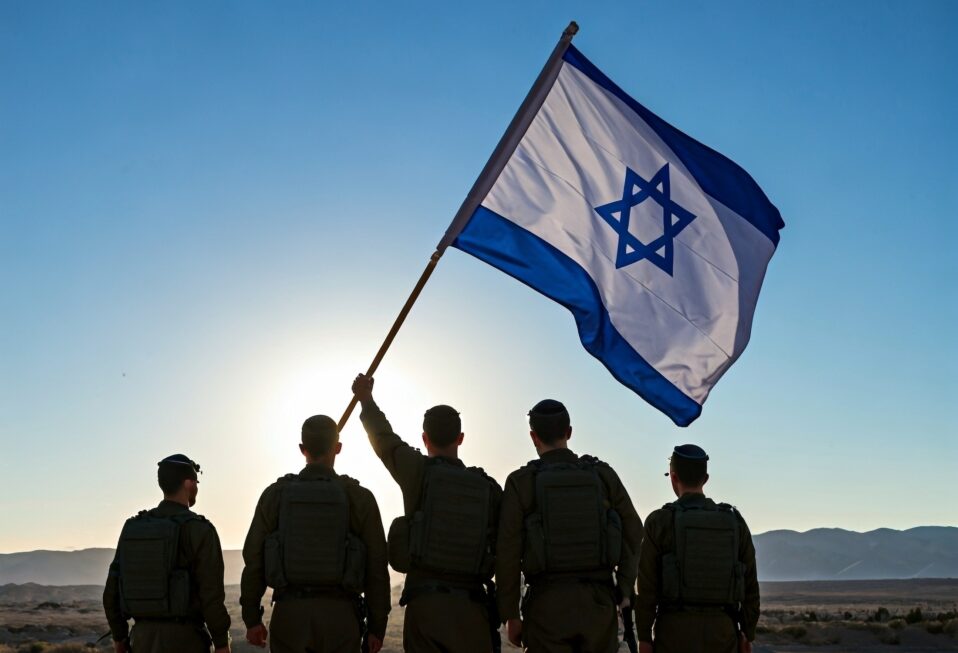
The cost of continuous warfare is immense. For a nation fighting a multi front war, disrupted sleep, constant alertness, and ongoing threats to personal safety are part of daily life. Israelis are living under these conditions as they defend their nation against what many leaders describe as the world’s most prolific sponsor of terror.

Today, Israel faces simultaneous attacks from multiple directions. Missiles launched from Iran, more than one thousand miles away, and rockets fired by Hezbollah from neighboring Lebanon place the population under constant threat.

Amir Tsarfati, international Bible teacher and president of Behold Israel, explains the urgency. When a missile is launched from Iran, Israelis have about ninety seconds to reach shelter. In northern communities near the Lebanese border, the warning time can be thirty seconds or less. For many, especially the elderly or those with health challenges, nights are now spent in bomb shelters as a precaution.

Prime Minister Benjamin Netanyahu has described Israel’s current military response, Operation Roaring Lion, as a battle not only for national survival but also against what he calls an Iranian axis that threatens global stability. The United States, under President Donald Trump, has partnered with Israel through coordinated military efforts. Both nations rely on close strategic cooperation as they confront shared threats.

During a March 22 visit to emergency personnel in Arad, Netanyahu emphasized that every Israeli citizen is now on the front lines. Civilians, alongside the Israel Defense Forces, police, and emergency responders, are part of the national defense effort. He urged citizens to follow instructions from Israel’s Home Front Command without hesitation and to move immediately to protected spaces when alerts sound.

Israeli leaders have repeatedly stressed a sobering reality. Buildings can be rebuilt. Lives cannot.

As a result, safety protocols have become more stringent than in past conflicts. Israelis can no longer assume that danger will pass quickly. Extended stays in shelters are often necessary as threats evolve.

These conditions have also disrupted religious life in a country that protects access to holy sites for Jews, Christians, and Muslims. This year, major observances for all three faiths coincide within a short period. Christians mark Palm Sunday on March 29 and Easter on April 5. Jews begin Passover on April 1. Muslim worship continues daily, with peak attendance on Fridays at the Temple Mount.

However, at the outset of the conflict, Israel’s Civil Administration announced that all holy sites in Jerusalem’s Old City would be temporarily closed due to security concerns. This included the Western Wall, the Temple Mount, and the Church of the Holy Sepulchre.

The impact has been deeply felt. Archbishop Pierbattista Pizzaballa, the Latin Patriarch of Jerusalem, canceled the traditional Palm Sunday procession from the Mount of Olives. He acknowledged the significance of the moment, noting that when access to sacred sites is restricted, it resonates far beyond the region. Yet he affirmed that protecting life must take priority in times of danger.

On March 12, Israel’s Foreign Ministry reported a missile strike just a short distance from Jerusalem’s most sacred locations. The incident reinforced the need for heightened security measures to protect both residents and worshippers.

Alongside these spiritual disruptions are significant practical challenges. Many of Jerusalem’s buildings were constructed before modern safety standards required reinforced safe rooms. Municipal architect Sharon Dinur has noted that thousands of structures lack adequate protection. In fact, more than half of Israeli homes do not have private safe rooms.

In older neighborhoods, residents often rely on improvised shelters such as ancient vaults or cisterns. While these spaces may offer some protection, they are far from ideal under modern warfare conditions.

Despite these hardships, daily life continues with resilience and determination. Israelis adapt, endure, and remain vigilant as they navigate the realities of ongoing conflict.

Psalm 121:4 offers a reminder of enduring hope. “Indeed, He who watches over Israel will neither slumber nor sleep.”

Our CBN Israel team welcomes you to join us in prayer this week.

Prayer Points

  • Pray for Israelis to respond quickly and wisely to Home Front Command instructions.
  • Pray for creative and meaningful ways to observe Palm Sunday, Passover, and Easter during this difficult season.
  • Pray for the safety and effectiveness of Israeli and United States military personnel.
  • Pray for the disarmament of the Islamic regime and for freedom for the people of Iran.

Arlene Bridges Samuels is the weekly feature columnist for CBN Israel since 2020. Working on the staff of the American Israel Public Affairs Committee (AIPAC) as their SE Regional Outreach Director for nine years, International Christian Embassy Jerusalem USA engaged her as the Leadership Outreach Director part-time for their project American Christian Leaders for Israel. Arlene is an author at The Blogs-Times of Israel, is published at AllIsrael.com and The Jerusalem Connection, and has traveled to Israel since 1990. By invitation, she attends Israel’s Government Press Office Christian Media Summits as part of Christian media worldwide. In 2024, Arlene and her husband Paul co-authored Mental Health Meltdown: Illuminating the Voices of Bipolar and Other Mental Illnesses. www.TheMentalHealthMeltdown.com.

Read more

A Mother’s Hope: Naomi’s Story

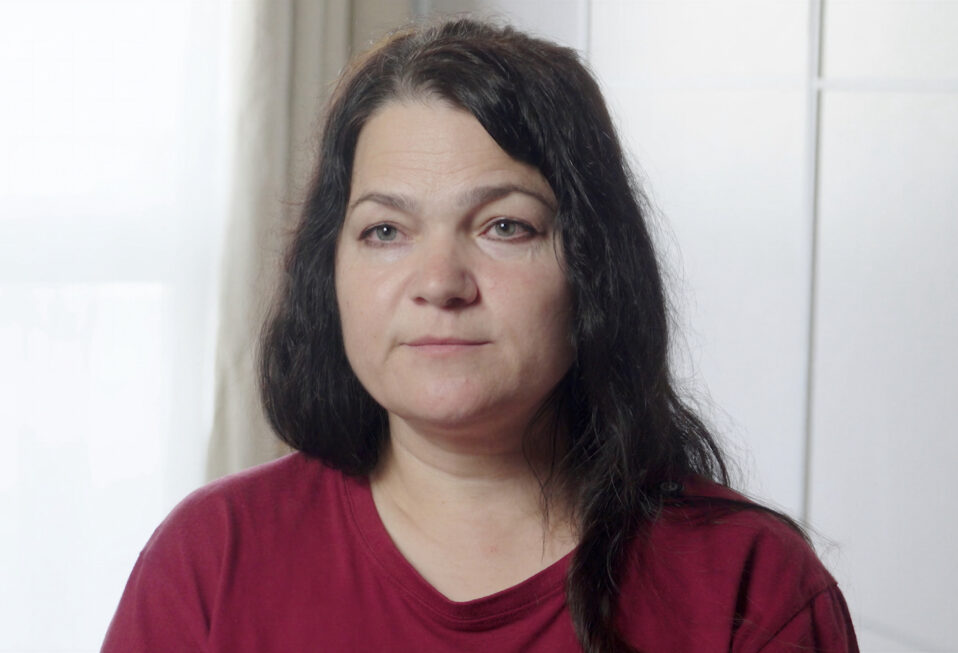
Naomi’s life in Jerusalem is filled with responsibility and sacrifice. As a single mother of three, she works tirelessly to provide not only for her children, but also for her disabled mother who fled the war in Ukraine. As Israel faced an intense war with Iran and daily missile sirens disrupted normal life, Naomi’s fragile stability was shaken once again. Every day felt like a balancing act between survival and exhaustion.

The family of five lives in a tiny two-bedroom apartment. “My mother has one bedroom, and my daughters share the other,” Naomi explained. “My son and I sleep on the couch in the living room.” When sirens sounded, they had to rush together to safety, crowding into the safest space they could find. “We need more space, but it is hard to find something we can afford, especially because my mom is disabled.”

Despite working multiple jobs, Naomi could barely keep up with expenses. With schools interrupted and work hours reduced because of the security situation, the pressure has only grown. “We live from paycheck to paycheck,” she admitted. “Sometimes the budget is very tight or just not enough.” The constant uncertainty has weighed heavily on her as she tries to shield her children from fear.

For years, Naomi carried this burden alone, unsure where to turn for help. Then someone referred her to CBN Israel.

Because of caring friends like you, CBN Israel was able to step in quickly. Donors provided food for the family, covered overdue bills, and eased the immediate pressure. Partner support also made it possible to invest in Naomi’s future by paying for professional training that will prepare her for a stable and well-paying career.

Today, Naomi sees a path forward. Your gifts to CBN Israel can restore hope to families facing hardship and uncertainty across the Holy Land.

Please join us in lifting heavy burdens in a time of war.

GIVE TODAY

Read more

Meeting God on the Mount of Olives

By Stephen Faircloth

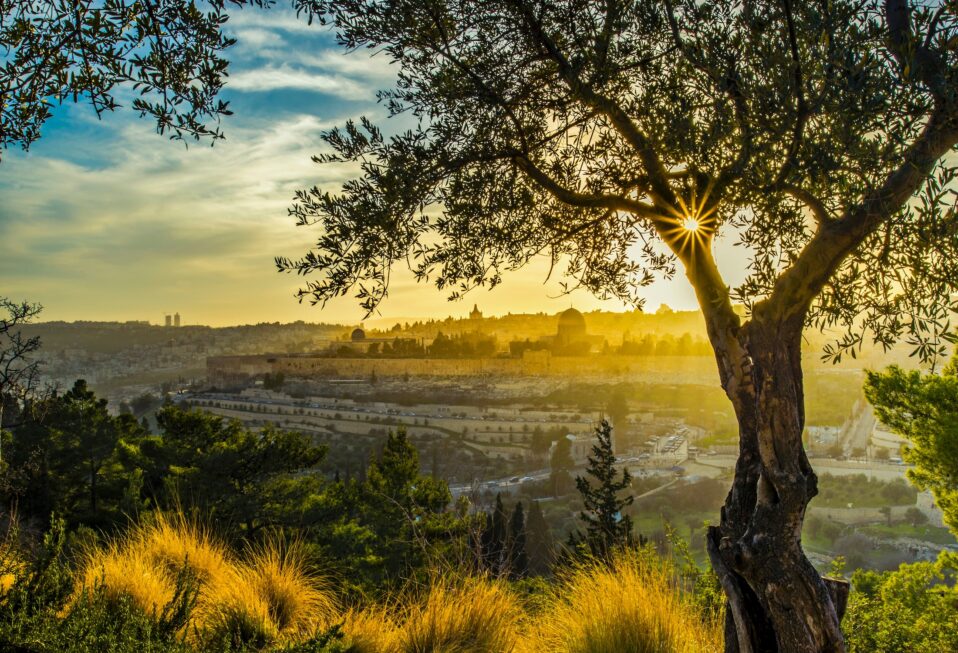
The Mount of Olives rises just east of Jerusalem, separated from the city by the Kidron Valley. From its slopes, one can look across at the walls of the holy city, while to the east the land quickly descends into the wilderness that stretches toward Jericho and the Dead Sea. It is a place where beauty and barrenness meet, where nearness and distance are felt at the same time.

Throughout Scripture, this mountain becomes a place of movement and encounter. When David fled from his son Absalom, he crossed the Mount of Olives weeping, seeking refuge in the wilderness beyond (2 Samuel 15:30). It was a place of sorrow, uncertainty, and trust in God during one of the darkest moments of his life.

The Mount of Olives also became a place of remembrance. For centuries, it served as a burial ground. Generations were laid to rest there, facing Jerusalem, holding onto the hope of God’s promises. The mountain quietly testified that life is brief, but God’s purposes endure.

In the time of Jesus, the Mount of Olives stood just outside the city, yet deeply connected to it. It was from this mountain that Jesus approached Jerusalem. As He drew near, He looked over the city and wept for it (Luke 19:41). What others saw as a moment of celebration, He saw with a heart of compassion, longing for people to recognize the peace that God was offering them.

The Mount of Olives was also a place where Jesus often withdrew to pray. In the stillness away from the crowds, He met with the Father. It reminds us that even in the shadow of great responsibility, Jesus made space for communion with God.

And it was on this same mountain that He faced the weight of what lay ahead. In the nearby garden, He prayed with deep anguish, surrendering Himself fully to the Father’s will. The Mount of Olives became a place of surrender, where obedience was chosen even in the face of suffering.

The prophet Zechariah spoke of a future day when the Lord would stand on the Mount of Olives, and the mountain itself would be transformed (Zechariah 14:4). This reminds us that the story of this place is not only about the past. It points forward to the fulfillment of God’s kingdom.

The Mount of Olives invites us into reflection. It is a place of sorrow and hope, of prayer and surrender, of past faithfulness and future promise. It reminds us that God meets us in every season, whether we are fleeing, grieving, seeking, or trusting.

Where is your Mount of Olives today? Is it a place of struggle, where you are carrying burdens? Is it a place of decision, where you must choose obedience? Or is it a place of quiet prayer, where you simply need to be with God?

Wherever you find yourself, the Lord meets you there. Just as He walked those slopes long ago, He walks with you now, inviting you to trust Him, to seek Him, and to rest in His purposes.

Stephen Faircloth is the President of CBN Israel, an initiative dedicated to sharing the true story of the Jewish nation and inspiring a global community of Christians to stand with Israel and support her people in need. Our vision is to reshape the global conversation about Israel by fostering understanding, hope, and healing between Jews and Christians around the world. For more than 50 years, the Christian Broadcasting Network has supported Israel. By joining CBN Israel, you become part of this enduring legacy, transforming lives today and strengthening Christian support for Israel for generations to come.

Read more

Weekly Devotional: When God Comes Looking for Us

“Then the man and his wife heard the sound of the Lord God walking in the garden at the time of the evening breeze, and they hid themselves from the Lord God among the trees of the garden” (Genesis 3:8).

After Adam and Eve disobeyed God, their first response was not confession but concealment. They hid. It is a deeply human reaction. Like children who avoid a parent after doing wrong, they withdrew in fear and shame, hoping somehow to escape being seen. Yet God did not leave them there.

He came into the garden, called out to them, and drew them from their hiding place. From the very beginning, Scripture reveals a God who seeks. When humanity turns away, He moves toward us. When we hide, He calls our name.

The psalmist later reflects on this same truth with awe. There is no place we can go where God is not present. Whether in the heights or the depths, in light or in darkness, He is there. Even the shadows we try to use as cover cannot conceal us from Him. His presence reaches further than our fear can run.

This can feel unsettling at first. We often want distance when we fail. Shame tells us to withdraw, to cover up, to stay hidden. But God’s pursuit is not driven by a desire to expose us for harm. It is motivated by His desire to restore us.

When Adam and Eve stepped out from hiding, God did not abandon them. He cared for them, even providing covering for their shame. His response shows both justice and mercy, but it also reveals His heart. He does not seek us out to destroy us, but to bring us back.

What we see in the garden continues throughout the story of Scripture. God is always the One who initiates, who searches, who calls. And our response matters.

The psalmist, overwhelmed by God’s nearness, does not try to run. Instead, he invites God closer: “Search me, O God, and know my heart.” What began as an uncomfortable truth becomes a surrendered prayer. He moves from hiding to openness, from fear to trust.

We face that same choice. When we fall short, we can retreat into silence and distance, or we can step forward and allow God to meet us where we are.

The One who already sees us fully also loves us deeply. There is no hiding from God. But there is also no place beyond His reach, His care, and His grace.

PRAYER

Father, when I am tempted to hide in shame or fear, remind me that You are already near. Help me step out of hiding and into Your presence. Search my heart, lead me in Your ways, and restore me with Your grace. Amen.

Read more

Parashat Pekudei (פְקוּדֵי) “Accounts”

This week’s Torah reading is Parashat Pekudei (Exodus 38:21-40:38). Read on Shabbat, March 21, 2026 / 1 Nisan 5786. The following is a special devotional drawn from this week’s reading.

“Then the cloud covered the tent of meeting, and the glory of the LORD filled the Tabernacle. And Moses was not able to enter the tent of meeting because the cloud settled on it, and the glory of the LORD filled the Tabernacle” (Exodus 40:34-35).

Parashat Pekudei brings the book of Exodus to its completion. After all the instructions, offerings, and careful work, the Tabernacle is finally assembled. Every detail has been followed, every piece put in its place. What began as a vision on the mountain now stands as a reality in the midst of the people. The work of many hands, guided by obedience, becomes a dwelling place for God’s presence.

When the Tabernacle is finished, God responds. His glory fills the space so fully that even Moses cannot enter. This moment reveals that the purpose of all the labor was not the structure itself, but the presence of God. The beauty of the materials and the precision of the design point beyond themselves to something greater. God chooses to dwell among His people, confirming that their efforts were not in vain.

Pekudei also emphasizes accountability and faithfulness. The materials are counted, the work is reviewed, and everything is done as commanded. This attention to detail reflects a deeper truth. Faithfulness in small things prepares the way for greater revelation. The people did not know exactly how God’s presence would appear, but they trusted that obedience would lead to something sacred.

This portion reminds us that God honors faithful completion. Many begin with enthusiasm, but finishing requires perseverance, patience, and trust. Whether in spiritual growth, relationships, or daily responsibilities, the process matters. God is present not only in the beginning but also in the steady work that leads to fulfillment.

Some may be in the middle of a long effort, wondering if their labor will bear fruit. Pekudei encourages endurance. God sees what is built with faithfulness, even when results are not yet visible. Others may be experiencing the joy of completion or breakthrough. Let this moment be filled with gratitude, recognizing that every step was guided by God’s hand.

As this Shabbat arrives, reflect on what God has called you to complete. Offer Him your diligence and your trust. Continue in faithfulness, knowing that His presence is the true goal of every effort. Let your life become a place where His glory is welcomed and revealed.

PRAYER
Lord, thank You for guiding me through every step of my journey. Help me remain faithful in what You have given me to do. May my life become a dwelling place for Your presence, and may all I do reflect Your glory. Amen.

Read more

Nourishing Hope Under Fire

As missiles from Iran and rockets from Hezbollah fell across Israel, everyday life was turned upside down. In cities near the northern border and throughout the country, families were rushing to bomb shelters at all hours. Workplaces were closed, schools were interrupted, and many households were struggling just to put food on the table.

For elderly widows, single mothers, and low-income families, the situation was especially frightening. With limited mobility or reduced income, even a quick trip to the grocery store can feel impossible. Some are afraid to leave their homes. Others simply cannot afford the rising cost of basic necessities.

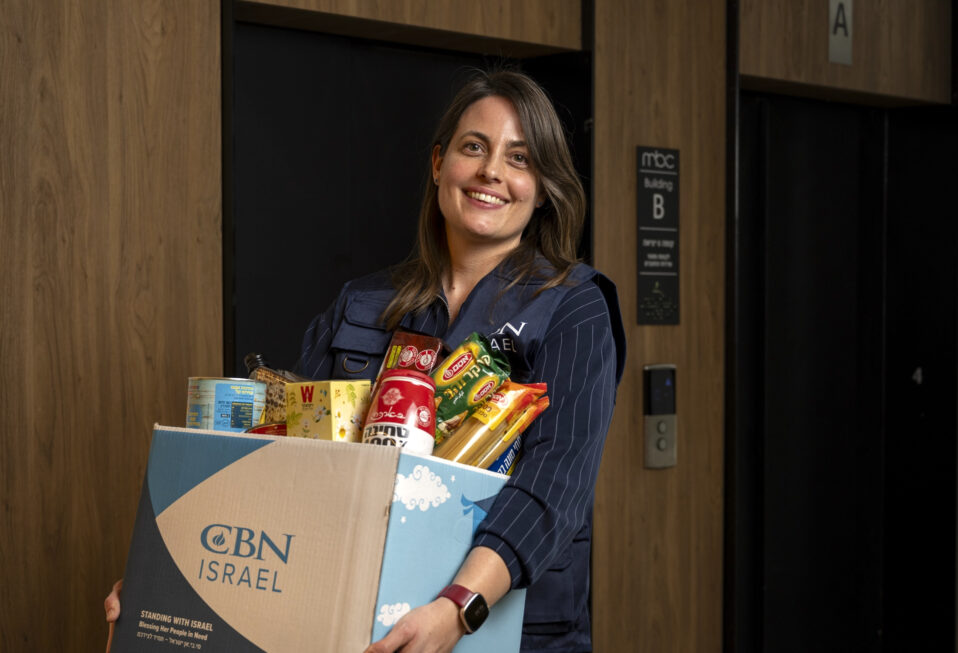
In the midst of this crisis, CBN Israel has mobilized to bring practical help and steady support. Because of caring friends like you, food boxes filled with fresh produce, pantry staples, and household essentials are being delivered directly to families in need. Hot meals are reaching seniors who cannot safely cook or shop for themselves. Volunteers are checking in on Holocaust survivors and vulnerable residents, ensuring they are not forgotten during these dangerous days.

One elderly woman in the north shared that the food she receives is often the only reliable meal she has during the week. A young mother explained that knowing groceries are coming allows her to focus on comforting her children when sirens sound instead of worrying about an empty refrigerator.

Before the escalation, hundreds of families relied on this support. Now, the need has grown dramatically as more people are displaced or unable to work. Lines form early at distribution centers, and requests for help continue to increase.

Because of the generosity of faithful partners, hope is being delivered alongside every box of food and every warm meal. Your gift today can help families survive the onslaught and remind them they are not alone.

Please join us in standing with Israel and providing nourishment, dignity, and peace of mind in a time of war.

GIVE TODAY

Read more

Ashkelon and the Crossroads of History

By Stephen Faircloth

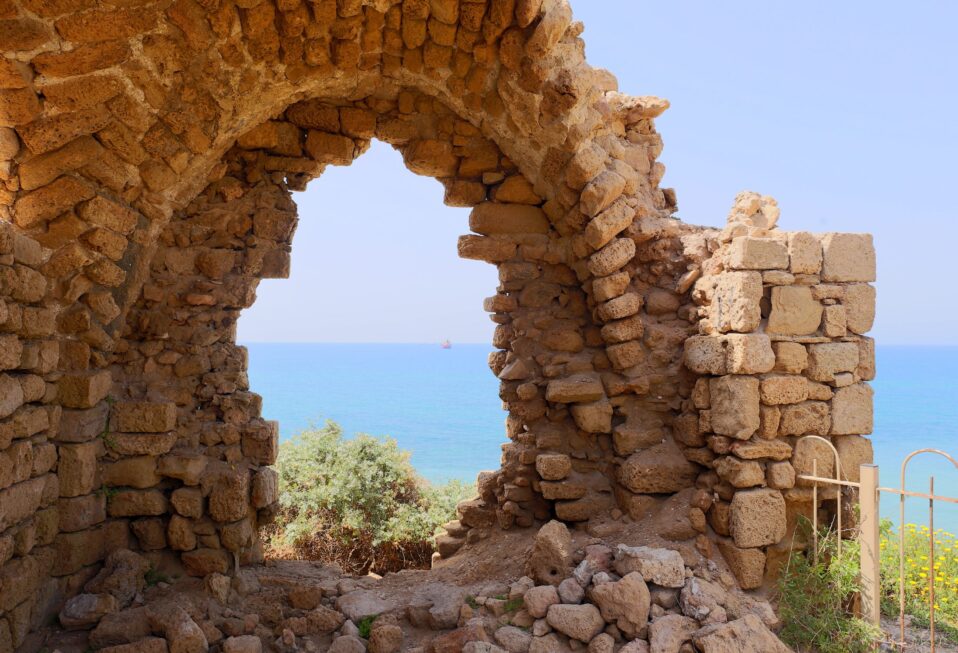
Ashkelon stands along the southern Mediterranean coast of modern Israel, positioned between Gaza and Ashdod. In the Bible it is named as one of the five major Philistine cities. Built on a ridge of hardened coastal sandstone, the city overlooked both the sea and the trade routes that connected great regions of the ancient world.

Though the coastal plain received only modest rainfall, Ashkelon had enough to sustain vineyards and gardens. Beneath the surface, a high water table provided a steady source of fresh water. More than one hundred ancient wells have been uncovered there, reminding us how essential water was for life in a dry land.

Ashkelon’s location made it a place of movement and exchange. Ships passed along its shores, and caravans traveled nearby routes linking Egypt with lands to the north and east. It became a meeting point of cultures, goods, and ideas. People came and went, and the city prospered because of its position at the crossroads.

Yet like many places shaped by opportunity and success, Ashkelon also experienced change, conflict, and eventual destruction. Empires rose and fell around it. Armies came and went. Though it was rebuilt more than once, its long history reminds us how temporary even the most strategic and flourishing cities can be.

The Bible mentions Ashkelon only briefly, often in the context of prophetic warning. It was a place known for influence, yet not always for faithfulness. Its story quietly echoes a truth we see throughout Scripture: significance in the world does not always mean alignment with God.

Standing at a crossroads can be a place of blessing, but it can also be a place of decision.

In many ways, our lives resemble Ashkelon. We stand at intersections of influence, opportunity, and choice. We are shaped by the environments around us, the voices we hear, and the paths we take. Like that ancient city, we can become busy, productive, and outwardly successful, yet still miss what matters most.

Ashkelon’s ruins remind us that everything built on human strength alone will one day fade. Trade routes shift. Wealth disappears. Cities fall silent. But God’s purposes continue beyond every rise and fall of history.

The question for us is not how prominent our place may be, but how faithful we are within it.

Where has God placed you? What crossroads are you standing at today? In the midst of activity, responsibility, and opportunity, are you attentive to His voice?

God works not only in great movements of history but also in the quiet decisions of individual lives. When we choose to walk in His ways, we align ourselves with something that endures far beyond the moment.

Ashkelon once stood as a powerful and thriving center of the ancient world. Today, its remains invite us to reflect on what truly lasts. Our calling is not simply to stand at the crossroads, but to choose the path that leads to life with God.

Stephen Faircloth is the President of CBN Israel, an initiative dedicated to sharing the true story of the Jewish nation and inspiring a global community of Christians to stand with Israel and support her people in need. Our vision is to reshape the global conversation about Israel by fostering understanding, hope, and healing between Jews and Christians around the world. For more than 50 years, the Christian Broadcasting Network has supported Israel. By joining CBN Israel, you become part of this enduring legacy, transforming lives today and strengthening Christian support for Israel for generations to come.

Read more

Weekly Devotional: Trusting God in the Waiting Season

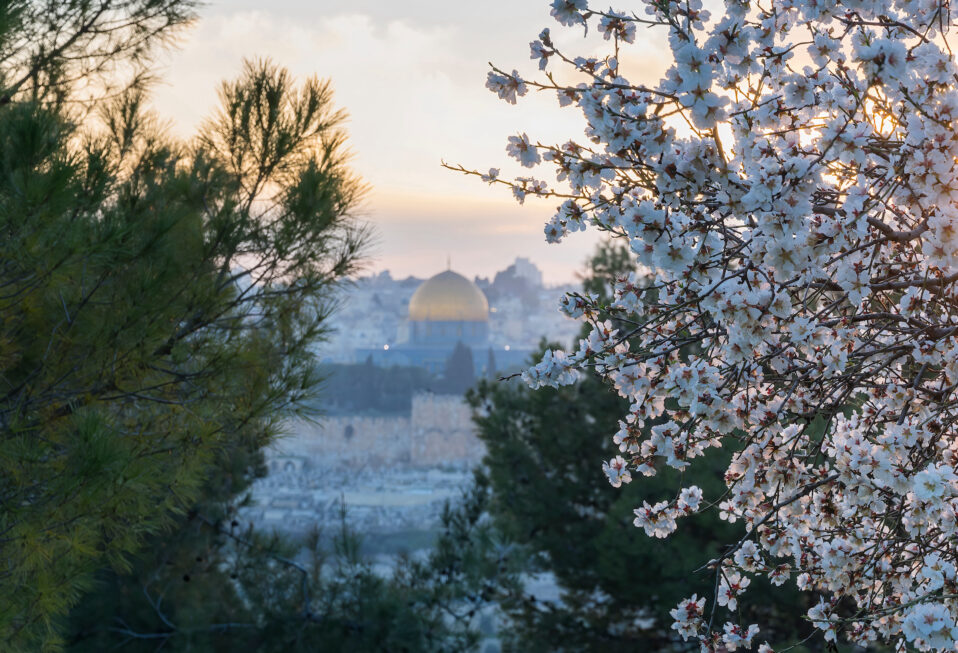
“The word of the Lord came to me saying, ‘What do you see, Jeremiah?’ And I said, ‘I see a rod of an almond tree.’ Then the Lord said to me, ‘You have seen well, for I am watching over My word to perform it’” (Jeremiah 1:11-12).

At first glance, this exchange between God and Jeremiah may seem unusual. Why would an almond branch carry such an important message? The meaning becomes clearer when we understand the Hebrew language and the natural world familiar to the prophet.

In Hebrew, the word for almond is shaqed, while the word translated “watching” is shoqed. The two words sound very similar. Through this wordplay, God connects Jeremiah’s vision with His message: just as Jeremiah sees the almond branch, God is carefully watching over His word to bring it to pass.

The almond tree itself also carries meaning. In the land of Israel, the almond tree is the first to blossom after winter. Its delicate flowers appear while much of the landscape still looks lifeless, signaling that spring is near. Yet although the almond blossoms early, its fruit comes much later. The harvest requires patience.

This pattern becomes a powerful illustration of God’s faithfulness. Like the almond blossom, God’s promises may appear long before their fulfillment. The beginning of His work may be visible, but the completion often takes time.

When Jeremiah received this vision, he faced a difficult calling. He would speak God’s message to a stubborn nation, and the results would not appear quickly. Yet God assured him that His word would not fail. The Lord Himself was watching over it and would bring it to fulfillment.

This truth speaks to our lives as well. Many times we struggle with waiting. We pray, hope, and trust, yet the answers seem slow in coming. In a world built around immediacy, patience can feel like a burden.

But the rhythms of God’s work are more like the seasons of a garden. Seeds take time to grow. Fruit develops slowly. What begins quietly beneath the surface eventually produces a harvest.

The almond branch reminds us that God has not forgotten His promises. Even when fulfillment seems delayed, He is still watching over His word. Our calling is not to rush ahead but to trust His timing and remain faithful in the waiting.

What God has spoken, He will accomplish.

PRAYER

Father, sometimes patience is hard for us. Help us not to get out in front of You, but to trust Your goodness and timing knowing that You watch over Your word. Amen.

Read more

Parashat Vayakhel (וַיַּקְהֵל) “He Assembled”

This week’s Torah reading is Parashat Vayakhel (Exodus 35:1-38:20). Read on Shabbat, March 14, 2026 / 24 Adar 5786. The following is a special devotional drawn from this week’s reading.

“Moses assembled all the congregation of the people of Israel and said to them, These are the things that the LORD has commanded you to do” (Exodus 35:1).

Parashat Vayakhel begins with Moses gathering the entire community of Israel. After the turmoil of the golden calf and the renewal of the covenant, the people are called together again. This time the focus is on building the Tabernacle, the sacred space where God’s presence will dwell among them. The assembly of the people shows that the work of holiness is not carried by individuals alone but by a community united in purpose.

Moses reminds them first of the Sabbath, the rhythm of rest that grounds their work in trust. Even the sacred task of constructing the Tabernacle must pause for the holiness of rest. By placing the Sabbath before the building project, God teaches that devotion is not measured only by activity. True faithfulness includes rest, reflection, and dependence on God’s provision.

The people respond with remarkable generosity. Men and women bring offerings from willing hearts. Craftsmen and artisans contribute their skills. Materials once used in Egypt are now transformed into instruments of worship. The community discovers that every gift has value. Creativity, generosity, and cooperation all become part of building a dwelling place for God.

Vayakhel reminds us that God invites each person to participate in His work. Some bring resources. Others bring skill. Others offer encouragement and service. When these gifts are joined together, something sacred emerges. The Tabernacle is not only a structure of wood and fabric. It is a testimony that God chooses to dwell among people who offer their lives willingly.

Some may feel their contributions are small or unnoticed. This portion reassures us that every offering matters when it is given with sincerity. Others may have been blessed with abundance or ability. Vayakhel encourages using those gifts with humility and gratitude. Together, the community becomes a reflection of God’s presence.

As this Shabbat arrives, consider how your gifts can contribute to the work God is doing around you. Offer your time, kindness, and creativity with a willing heart. Let your actions strengthen the community and honor God’s presence. In doing so, you help build a place where faith, generosity, and devotion come together.

PRAYER
Lord, thank You for inviting me to take part in Your work. Help me offer my gifts with a willing heart and serve with humility and joy. May my life contribute to a community that reflects Your presence and Your love. Amen.

Read more