ARTICLES

Walking the Hills of Jesus’ World

By Stephen Faircloth

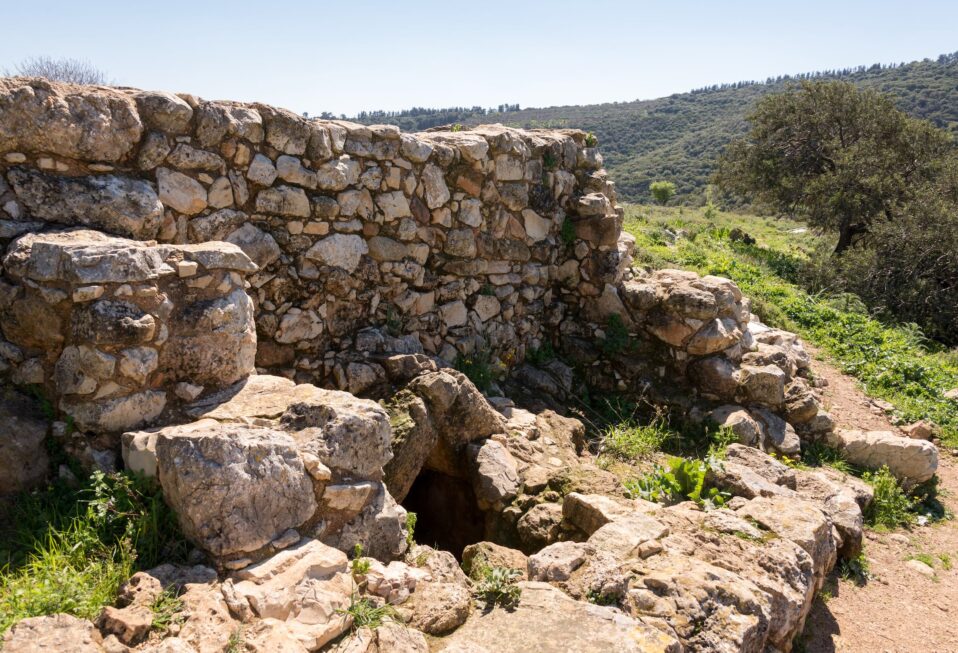
Just a few miles north of Nazareth, across the Beit Netofa Valley, lie the remains of the ancient village of Yodfat. In the time of Jesus, it would have been an easy day’s walk from His hometown. Nestled among the hills of Galilee, Yodfat was a working village where daily life revolved around simple but essential tasks. Families raised sheep and goats, spun wool into thread, and wove it into cloth. The discovery of loom weights and pottery fragments reveals a community shaped by labor, creativity, and trade.

Yodfat gives us a glimpse into the kind of places where Jesus lived and ministered. These were not grand cities or centers of power, but ordinary villages filled with people trying to provide for their families and remain faithful to God. In places like this, Jesus taught, healed, and shared the message of the kingdom.

The village also carries a sobering history. During the First Jewish Revolt, it became a fortified stronghold. The Roman army eventually surrounded it, building a ramp to breach its defenses. The historian Josephus, who was present during the siege, described the desperation of those final days. In the end, the village was destroyed and never rebuilt, leaving behind a silent testimony to both human struggle and the passing nature of earthly life.

Yet even in its ruins, Yodfat speaks. Archaeological findings reveal a community marked by both diversity and devotion. Some homes show signs of wealth, with decorative elements similar to those found in Jerusalem. Others reflect the lives of artisans and laborers. There were merchants, craftsmen, and undoubtedly the poor, all living side by side.

More importantly, the remains point to a people committed to their faith. Ritual immersion pools and stone vessels indicate careful attention to purity laws. The absence of certain animal remains reflects adherence to dietary practices found in the Torah. This was a community seeking to honor God in the rhythms of everyday life.

These were the kinds of people who heard Jesus’ voice. When we consider Yodfat, we are reminded that God’s work often unfolds in ordinary places. Jesus did not limit His ministry to prominent cities or influential leaders. He walked through villages like this one, meeting people in their homes, their fields, and their places of work.

Yodfat also reminds us of how quickly circumstances can change. A thriving village became a ruin within a generation. What once felt stable disappeared. Yet God’s purposes continued. The message Jesus proclaimed in those hills did not end with the destruction of a village. It carried forward, reaching far beyond Galilee.

As we reflect on Yodfat, we are invited to consider our own lives. We may not live in ancient villages, but our daily routines are not so different. We work, we provide, we navigate challenges, and we seek meaning in the midst of it all.

God meets us there. He meets us in the ordinary, in the familiar places where life unfolds day by day. Just as Jesus walked the hills of Galilee, He walks with us now, calling us to live faithfully in our own time and place.

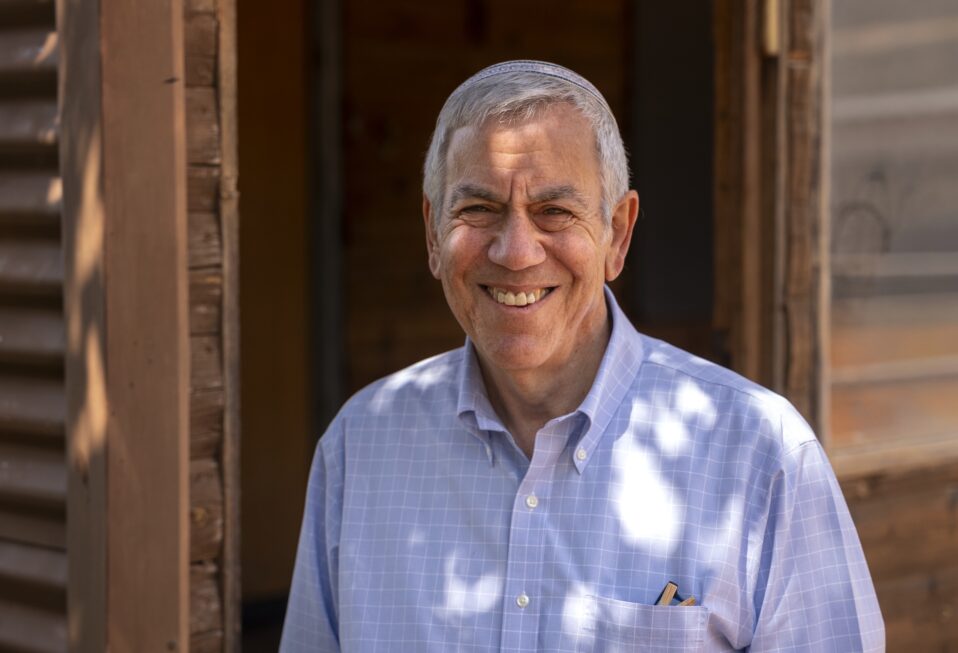
Stephen Faircloth is the President of CBN Israel, an initiative dedicated to sharing the true story of the Jewish nation and inspiring a global community of Christians to stand with Israel and support her people in need. Our vision is to reshape the global conversation about Israel by fostering understanding, hope, and healing between Jews and Christians around the world. For more than 50 years, the Christian Broadcasting Network has supported Israel. By joining CBN Israel, you become part of this enduring legacy, transforming lives today and strengthening Christian support for Israel for generations to come.

Read more

Living a Faith That Strengthens Others

“Whatever happens, conduct yourselves in a manner worthy of the gospel of Christ… standing firm in the one Spirit, striving together as one for the faith of the gospel” (Philippians 1:27).

What does your life communicate about your faith? Not just in words, but in daily choices, attitudes, and responses. Paul’s encouragement to the believers in Philippi invites us to consider not only how we live, but why it matters.

Paul wrote this letter with deep joy. Though he had faced hardship and opposition in Philippi, he later heard that the believers there were growing strong in their faith. They had not given up. They were standing firm despite pressure. That news filled him with gratitude, but also with purpose. He urged them to continue living in a way that reflected the gospel they believed.

At first glance, his instruction sounds personal: live a life worthy of the gospel. But Paul quickly widens the focus. He speaks of standing firm “in one Spirit” and striving “together as one.” In other words, the way each person lives affects the strength of the whole community.

This challenges the way we often think. Faith can feel like a private matter, something between us and God alone. But Scripture consistently points us toward something bigger. Our walk with Christ is personal, but it is never meant to be isolated. We belong to a larger body, a people, a shared witness.

Every act of faithfulness strengthens that witness. Every compromise weakens it. When we choose integrity, we encourage others to stand firm. When we pursue humility, we help create unity. When we remain steady in difficult moments, we give courage to those around us. Our lives become threads woven into something greater than ourselves.

Paul also reminds the Philippians not to be intimidated by opposition. Living for Christ will not always be easy. There will be resistance, misunderstanding, and pressure to conform. But when believers stand together, rooted in the same Spirit, they find strength that goes beyond what any individual could carry alone.

So, the question becomes more than “How am I living?” It becomes, “How is my life shaping the community God has placed me in?”

A life worthy of the gospel is not about perfection. It is about alignment. It is about allowing the truth of Christ to shape how we think, act, and relate to others. And as we do, we become part of a community that reflects His character to the world.

Your faith matters. Not only for you, but for those walking beside you.

PRAYER

Father, help us live in a way that reflects Your gospel each day. Shape our lives so that we strengthen and encourage those around us. Unite us in Your Spirit and make us a community that honors You. Amen.

Read more

American Pilots: Pivotal in Israel’s 1948 War of Independence

By Arlene Bridges Samuels

American pilots, both Jewish and Christian, share a remarkable history of partnership with Israel that reaches back to the nation’s founding on May 14, 1948. On that historic evening in Tel Aviv, Prime Minister David Ben-Gurion read the Declaration of Independence as jubilant crowds filled the streets with celebration.

At midnight, when the British Mandate officially ended and British forces withdrew, the celebration abruptly gave way to urgency. The new nation, home to about 650,000 Jews, was still reeling from the Holocaust. Now it faced an imminent invasion by surrounding Arab armies. The threat of destruction was immediate and real.

Looking back at Israel’s War of Independence, the role of American pilots stands out as both pivotal and extraordinary. What began as a covert effort to obtain outdated aircraft and limited weaponry became a mission that helped alter the course of history.

Israel’s Independence Day in 2026 began at sundown on April 21 and ended the following evening. Despite ongoing war, missile attacks, and national strain, Israelis marked the occasion with resilience. Families gathered, music filled the air, and voices rang out with the familiar declaration, “Am Yisrael Chai,” meaning “the people of Israel live.” Even in hardship, celebration persisted.

That resilience invites reflection on the early days of the state, when Israel had almost no military infrastructure. In 1948, it had no formal air force and only minimal weaponry. When five Arab nations launched a coordinated attack, Israel urgently needed help. Volunteers from around the world responded.

One of the most significant efforts was known as MACHAL (Mitnadvei Chutz La’Aretz), an acronym for “Volunteers from Abroad.” More than 4,000 men and women from 58 countries joined Israel’s fight for survival between 1947 and 1949. They included pilots, sailors, medics, mechanics, radio operators, and infantry fighters. Many were veterans of World War II who brought essential experience to a nation fighting for its existence.

American pilots played a particularly vital role. Facing severe shortages, Israel relied on ingenuity, international support, and determination. Golda Meir later recalled that the country possessed only a handful of rifles, a few machine guns, and just nine aircraft, with only one having two engines. Against this, the combined forces of Egypt, Jordan, Iraq, Syria, and Lebanon brought tanks, armored vehicles, and established air power.

Holocaust survivors, many newly arrived, joined the fight with little training but immense resolve. Between 25,000 and 30,000 survivors served in combat, making up nearly half of Israel’s early fighting force. About ten percent of those who died in the war were Holocaust survivors.

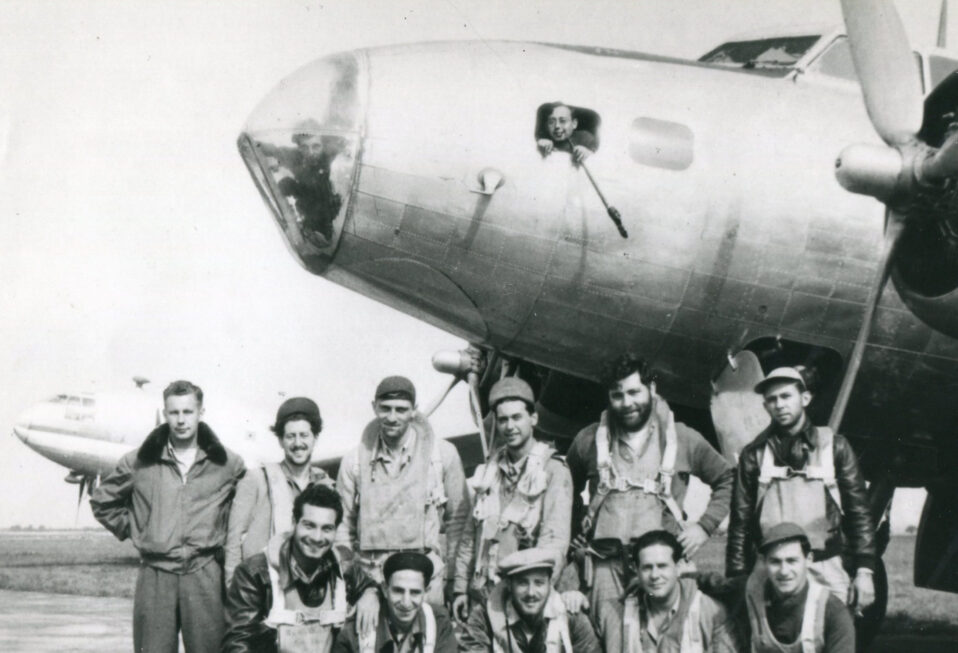
More than 1,000 volunteers from the United States joined the effort, including many experienced pilots. Records show that dozens of Christian pilots from the United States and Canada also volunteered. These pilots flew combat missions, transported aircraft across continents, and helped train Israel’s first generation of aviators.

Their service carried serious risks. American neutrality laws made such involvement illegal, exposing volunteers to potential arrest, fines, or loss of citizenship. Some operated quietly or under assumed roles. Despite these risks, they chose to act, driven by a desire to prevent further tragedy and to support a nation under threat.

A central figure in this effort was Al Schwimmer, a former U.S. Air Force pilot. Recognized for his courage during World War II, Schwimmer later became a key architect of Israel’s early air capabilities. Determined to help, he organized the acquisition and transport of surplus aircraft, often under conditions of secrecy and danger.

Working with Czechoslovakia, the only country willing to assist at the time, Schwimmer and his team secured aircraft and training opportunities for Israeli pilots. His efforts culminated in a historic moment on July 15, 1948, when Israeli forces carried out their first long range bombing mission against Cairo using B17 aircraft. The strike caught Egypt off guard and marked a turning point in the war.

Schwimmer later moved to Israel and founded Israel Aerospace Industries, helping build the nation’s aviation sector. David Ben-Gurion described the contribution of MACHAL and Schwimmer’s work as the most important support provided by the Jewish diaspora to Israel’s survival.

The cost of independence was high. Israel lost 6,373 people in the war, nearly one percent of its population at the time. This came just years after the loss of six million Jews in the Holocaust. The nation’s infrastructure and economy were fragile, yet its determination endured.

Today, Israel reflects more than seven decades of perseverance, innovation, and resilience. Its early struggles highlight the importance of partnership, courage, and sacrifice. The contributions of American pilots, both Jewish and Christian, remain a defining chapter in that story.

The prophet Isaiah once asked, “Can a country be born in a day?” History has answered that question. Israel stands as that nation.

Our CBN Israel team invites you to join us in prayer this week.

Prayer Points:

  • Pray with gratitude for God’s faithfulness to the Jewish people.
  • Pray for families grieving loved ones lost in war and terror.
  • Pray for wisdom and discernment for national leaders.
  • Pray for the safety of all those serving and reporting from Israel.

Arlene Bridges Samuels is the weekly feature columnist for CBN Israel since 2020. Working on the staff of the American Israel Public Affairs Committee (AIPAC) as their SE Regional Outreach Director for nine years, International Christian Embassy Jerusalem USA engaged her as the Leadership Outreach Director part-time for their project American Christian Leaders for Israel. Arlene is an author at The Blogs-Times of Israel, is published at AllIsrael.com and The Jerusalem Connection, and has traveled to Israel since 1990. By invitation, she attends Israel’s Government Press Office Christian Media Summits as part of Christian media worldwide. In 2024, Arlene and her husband Paul co-authored Mental Health Meltdown: Illuminating the Voices of Bipolar and Other Mental Illnesses. www.TheMentalHealthMeltdown.com.


Read more

A Mother’s Strength | Ziva’s Story

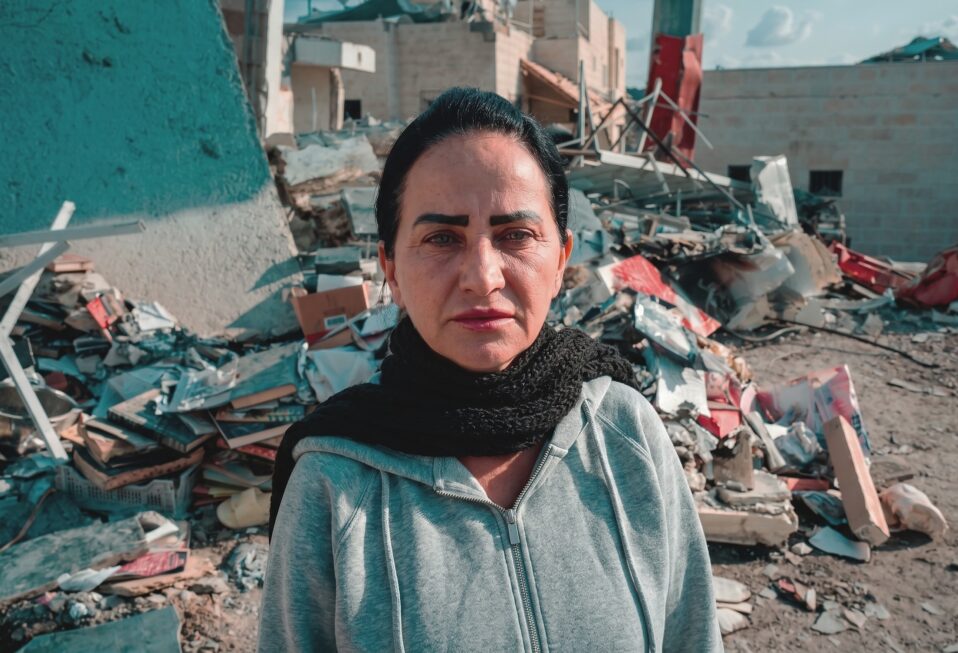
Ziva has always lived in a close-knit neighborhood in Beit Shemesh, where families share life’s joys and burdens. That sense of community was shattered in March 2026 when an Iranian ballistic missile struck her area directly, devastating blocks of apartment buildings and displacing hundreds of residents.

At first, Ziva thought the blast was a construction accident. Then the horrifying reality became clear. Nine people were killed, including a member of her extended family. Many others, including children, were rushed to hospitals for surgery after suffering severe injuries. The neighborhood she once knew was left covered in rubble and broken glass.

For Ziva, the trauma has been overwhelming. A mother of four children with special needs, she now struggles with post-traumatic stress while trying to care for her family. The explosion left her too shaken to immediately return to her apartment. “I don’t have the headspace,” she admitted, describing the urgent need for food, clothing, and a safe roof over their heads.

As sirens continued to sound across Israel, fear remained a daily reality for families like hers. With over 250 people displaced and entire buildings deemed unsafe, the path forward feels uncertain.

But in the midst of this crisis, caring and compassionate friends like you were there.

Thanks to the support of generous donors, CBN Israel immediately reached out to Beit Shemesh to provide urgent relief. Food, emergency supplies, and practical assistance were given to families who had lost so much in a single moment. The steadfast partnership of friends like you became a lifeline for Ziva and those facing sudden homelessness and trauma.

Your gifts to CBN Israel can bring hope and stability to families torn apart by war. Mothers, children, and entire communities can receive the help they desperately need as they begin the long process of rebuilding.

Please join us today in standing with Israel’s families in their time of greatest need.


GIVE TODAY

Read more

Trusting God’s Perfect Timing

“If you carefully obey my commands I am giving you today, to love the Lord your God and worship Him with all your heart and all your soul, I will provide rain for your land in the proper time, the autumn and spring rains, and you will harvest your grain, new wine, and oil. I will provide grass in your fields for your livestock. You will eat and be satisfied” (Deuteronomy 11:13-15 hcsb).

In an agricultural world where farmers depended entirely on rain, timing could mean the difference between life and loss. If the rains came too early, the crops could be ruined. If they came too late, the fields would dry out and die. Everything depended not just on rain, but on rain arriving at the right time.

As the people of Israel prepared to enter the Promised Land, God gave them a promise that required trust. Unlike Egypt, where irrigation systems could control water, this new land depended on rain from heaven. Survival would rest in God’s hands.

They would plant their fields and wait. Imagine the tension of that waiting. Seeds buried in the soil, no visible growth, eyes scanning the sky day after day. Would the rain come? Would it come in time?

God’s promise was clear. If they loved Him, obeyed Him, and remained faithful, He would send the rain in its season. He would provide what they needed, exactly when they needed it.

But the temptation was real. Other nations worshiped gods they believed controlled rain and fertility. Turning to those gods offered a sense of control, a way to ease uncertainty. It was a way of saying, “What if God doesn’t come through?”

We may not bow to ancient idols, but the struggle is familiar. When God’s timing feels slow or uncertain, we look for ways to take control. We try to secure outcomes on our own. We place our trust in what we can see, manage, or manipulate.

Yet God calls us to a different posture. He invites us to trust Him, not only for provision, but for timing. The rain does come. But it comes in its season.

There are seasons in our lives when we are planting and waiting, when nothing seems to be happening. Prayers feel unanswered. Progress feels delayed. But just as the farmer trusts that growth is happening beneath the surface, we are called to trust that God is at work even when we cannot see it.

God is not late. He is precise. He knows when to send what we need. His provision is not random. It is intentional, timely, and sufficient. When we walk in trust and obedience, we can rest in the assurance that He will care for us.

The question is not whether God will provide, but whether we will trust Him while we wait.

PRAYER

Father, teach us to trust Your timing. When we feel anxious or uncertain, remind us that You see what we cannot. Help us remain faithful and patient, knowing that You will provide exactly what we need in the right season. Amen.

Read more

Yom HaShoah: Israel Remembers Life and Loss

By Arlene Bridges Samuels

During Israel’s defensive war against the weakening Islamic Regime, sirens frequently pierce the air. These alarms send civilians rushing to safe rooms and bomb shelters as missiles target population centers from Iran and its proxies in Lebanon. For many Israelis, these shelters have become temporary living spaces where families gather to sleep, eat, and endure together.

On April 14, Israelis recognized a different kind of siren. It was the solemn, familiar sound that marks Yom HaShoah. At that moment, the entire nation stood still for two minutes of silence. Traffic stopped. Pedestrians paused. Businesses closed. Across the country, daily life halted as Israel remembered one of history’s darkest chapters.

Yom HaShoah, Holocaust and Heroism Remembrance Day, is one of four national days established since Israel’s founding in 1948. Alongside Memorial Day, Independence Day, and Jerusalem Day, it reflects both the sorrow and strength of the Jewish people.

Israel’s calendar moves quickly from mourning to celebration. Yom HaShoah follows Passover and is soon followed by Memorial Day and Independence Day. In a matter of days, the nation remembers deliverance from slavery, grieves the Holocaust, honors fallen soldiers, and celebrates statehood. This rhythm of sorrow and joy defines Israel’s national identity.

For Holocaust survivors living in Israel, this season carries profound emotional weight. They have endured the horrors of Nazi persecution, the trauma of the October 7 attacks, and now the constant threat of missile fire. These overlapping experiences reopen deep wounds that have never fully healed.

Some survivors describe trembling, freezing, or feeling transported back to childhood moments of terror. The sounds of sirens and explosions can trigger memories of hiding, fleeing, or being separated from loved ones. Many say that watching their children and grandchildren experience fear today intensifies the pain, reinforcing a legacy of intergenerational trauma.

The Holocaust was not simply a war. It was a systematic attempt to annihilate an entire people. Six million Jewish men, women, and children were murdered. Families were destroyed, and survivors carried lifelong scars. Genocide is defined as the deliberate destruction of a national, ethnic, racial, or religious group. That reality underscores the seriousness of modern threats against Israel. Calls for destruction are not symbolic. They reflect intent.

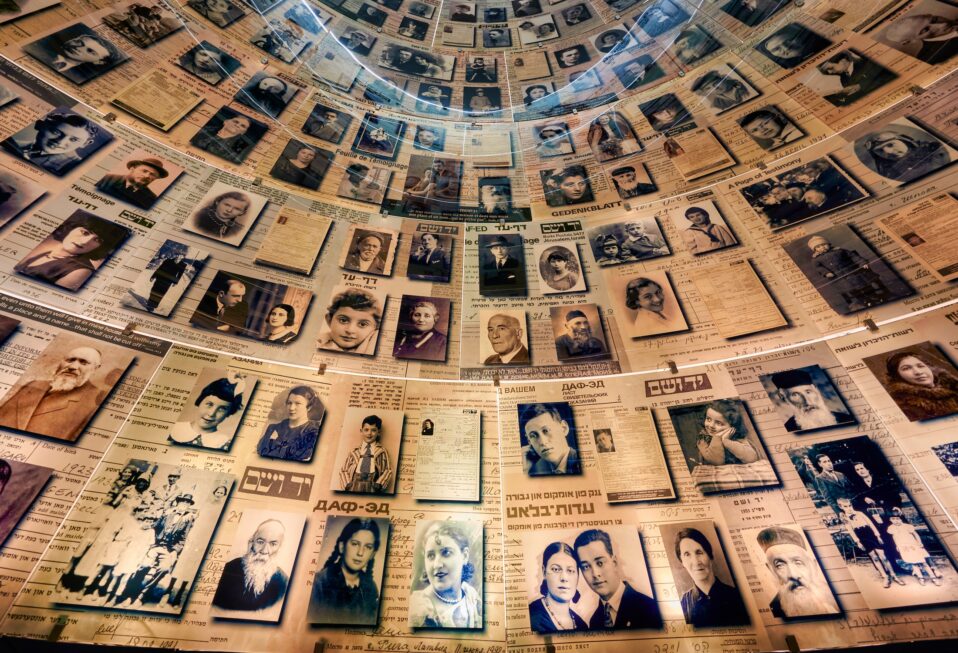
At the Yad Vashem Holocaust memorial in Jerusalem, the annual ceremony brings remembrance into focus. Survivor testimonies are read, honoring both unimaginable suffering and remarkable endurance. In 2026, an estimated 110,000 to 112,000 Holocaust survivors live in Israel. All are at least 80 years old, and more than a quarter are over 90.

Each year, six survivors light six torches in memory of the six million. The ceremony takes place in an outdoor plaza, where the flames rise as symbols of remembrance and resilience. Yad Vashem itself is named from Isaiah 56:5, which speaks of a memorial and a name that will endure forever.

The six torch lighters this year include Saadia Bahat, Miriam Bar Lev, Ilana Fallach, Moshe Harari, Avigdor Neumann, and Michael Sidko. Their lives span communities from Lithuania, the Netherlands, Poland, Hungary, Libya, and Ukraine. Together they reflect the theme of this year’s remembrance, the Jewish family during the Holocaust.

Saadia Bahat was born in Lithuania in 1928. His parents were murdered during the Holocaust. He endured six labor camps, starvation, and harsh conditions. At one point, after his shoes fell apart, he walked barefoot in the snow. Liberated by Soviet forces, he immigrated to Israel in 1946, joined the Haganah, and later served in the Israel Defense Forces. He built a long career at RAFAEL, contributing to Israel’s defense, and received the Israel Defense Prize. He has said that his work became a responsibility to future generations. Today, his family includes children, grandchildren, and great grandchildren.

Miriam Bar Lev, also known as Daisy, was born in Tel Aviv in 1936 and later moved to the Netherlands. Under Nazi occupation, her family went into hiding before being captured and sent to Bergen Belsen. Her father died there. She and her mother endured forced marches, transport in cattle cars, disease, and starvation. Liberated in 1945, they returned to Israel the following year. Miriam served in the military, became a nurse, and helped build the country’s health system. She raised a family that continues her legacy.

Their stories represent only a fraction of what survivors endured. Yet they also testify to resilience, rebuilding, and hope. Many survivors went on to serve in Israel’s defense and contribute to the nation’s growth.

Today, as the remaining survivors enter their final decades, their memories take on even greater urgency. They are living witnesses to history. Their voices remind the world not only of what was lost, but of what must never be repeated.

Our CBN Israel team invites you to join in prayer during this solemn time.

Prayer Points:

  • Pray for Holocaust survivors as they endure renewed trauma during Israel’s current war.
  • Pray for provision and support to meet the physical and emotional needs of survivors.
  • Pray for unity and strength for the United States and Israel as they confront ongoing threats.
  • Pray for wisdom and discernment for national leaders in this critical moment.

Arlene Bridges Samuels is the weekly feature columnist for CBN Israel since 2020. Working on the staff of the American Israel Public Affairs Committee (AIPAC) as their SE Regional Outreach Director for nine years, International Christian Embassy Jerusalem USA engaged her as the Leadership Outreach Director part-time for their project American Christian Leaders for Israel. Arlene is an author at The Blogs-Times of Israel, is published at AllIsrael.com and The Jerusalem Connection, and has traveled to Israel since 1990. By invitation, she attends Israel’s Government Press Office Christian Media Summits as part of Christian media worldwide. In 2024, Arlene and her husband Paul co-authored Mental Health Meltdown: Illuminating the Voices of Bipolar and Other Mental Illnesses. www.TheMentalHealthMeltdown.com.

Read more

Restoring Hope After Months of War

As summer begins, Israel is emerging from months of intense conflict with Iran that left deep scars across the nation. Neighborhoods like Beit Shemesh are still recovering from devastating missile strikes that forced many people to evacuate with little warning.

For thousands of displaced residents, life was abruptly uprooted. Families found themselves living in hotels across the country, trying to process loss, trauma, and uncertainty. Children struggled with fear and disrupted routines. Elderly residents were separated from familiar surroundings. Parents carried the heavy burden of staying strong for their families while coping with their own anxiety.

In the midst of that crisis, the Israel Trauma Coalition stepped in to coordinate critical support. Under the leadership of CEO Talia Levanon, the coalition provided psychiatric care, social workers, and safe play spaces for children who needed stability and reassurance. “It was very challenging,” Levanon reflected. “Not only because people were exposed to trauma and loss, but also because we had to secure the right food, the right social workers, and the right therapy for everyone, from 5-month-old infants to 94-year-old seniors.”

Through a vital partnership with CBN Israel, essential gaps were filled. The generosity of friends like you made it possible to care not only for displaced families, but also for the caregivers and first responders who were reaching their limits. Support for trauma therapists and play therapy programs ensured that those on the front lines could continue helping others heal.

Even amid heartbreak, hopefulness took root. “I was filled with hope,” Levanon said. “I felt that we were coping, that we were together.”

Through your compassion and support, healing and stability can return to families across Israel. You can stand in solidarity with them during one of their most difficult seasons and help restore courage and confidence for the days ahead.

Please join us in offering help and hope throughout the country!

GIVE TODAY

Read more

Choosing the God Who Answers

By Stephen Faircloth

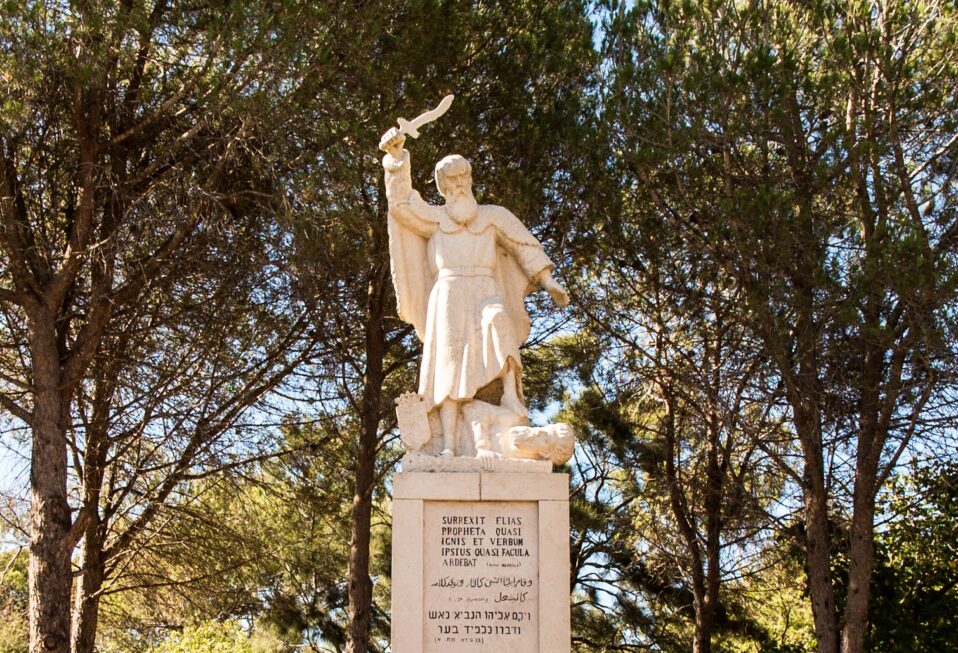
Mount Carmel stretches like a green ridge along the Mediterranean coast, where the mountains of Samaria meet the sea. Unlike much of the land of Israel, Carmel is known for its beauty and fertility. Regular rainfall nourishes its slopes, making it a place where crops flourish and life seems secure.

Because of this abundance, Carmel became closely associated with prosperity. The Bible often points to it as a symbol of richness and blessing. Yet this same abundance also made it a center for a dangerous temptation. Just to the north lay Phoenicia, where Ba’al, the god of storms and fertility, was worshiped. On a mountain known for rain and growth, many began to believe that Ba’al was the one providing it.

Over time, the people of Israel drifted. They no longer trusted fully in the Lord. Instead, they tried to secure their future by turning to other sources. If Ba’al controlled the rain, then perhaps he should be honored too. It was a way of easing uncertainty, a way of taking control.

But God had already spoken clearly. He alone would send the rain in its proper time. Trust and obedience were the foundation of their provision. When the people turned away, the rain stopped. A drought settled over the land, exposing the emptiness of their misplaced trust. It was in this moment that Elijah called the nation to Mount Carmel.

The setting was not accidental. This was the very place where Ba’al was believed to rule, where rain and fertility were most evident. There, on that mountain, Elijah confronted the prophets of Ba’al and the wavering hearts of the people: “How long will you hesitate between two opinions? If the Lord is God, follow Him.” The challenge was simple, but deeply personal.

The prophets of Ba’al cried out for hours, calling on their god to respond. Nothing happened. No fire. No answer. No power. Then Elijah prayed. God responded immediately. Fire fell from heaven, consuming the sacrifice and leaving no doubt. The God of Israel alone is the living God. And after the fire came the rain.

This story is not only about a dramatic moment in Israel’s history. It speaks directly into our lives. We may not stand on Mount Carmel, but we often face the same question. Where do we place our trust? What do we look to for security, provision, and control?

It is easy to rely on what seems visible and dependable. Like the people of Israel, we can be tempted to trust in what promises quick results or certainty. But those things cannot truly sustain us.

God still calls us back to Himself. He invites us to stop wavering and to choose. Not halfway, not with divided hearts, but fully. To trust that He alone provides, He alone sustains, and He alone answers.

Mount Carmel reminds us that God is not silent. He reveals Himself. He responds. And when we turn back to Him, He brings restoration. The question remains: will we trust Him completely?

Stephen Faircloth is the President of CBN Israel, an initiative dedicated to sharing the true story of the Jewish nation and inspiring a global community of Christians to stand with Israel and support her people in need. Our vision is to reshape the global conversation about Israel by fostering understanding, hope, and healing between Jews and Christians around the world. For more than 50 years, the Christian Broadcasting Network has supported Israel. By joining CBN Israel, you become part of this enduring legacy, transforming lives today and strengthening Christian support for Israel for generations to come.

Read more

Step Into the Sea

“Why are you crying out to Me? Tell the sons of Israel to go forward” (Exodus 14:15 NASB).

The people of Israel stood trapped. Behind them was Pharaoh’s army. In front of them was the sea. Fear rose quickly, and their voices turned to panic. Had they come this far only to perish in the wilderness?

Moses responded with what sounded like strong faith: “Stand still and see the salvation of the LORD.” It was a call to trust, to wait, to watch God act. And in many moments, that is exactly what faith looks like.

But this time, God answered differently: “Why are you crying out to Me? Move forward.”

In that moment, God challenged not their fear, but their hesitation. The miracle they needed would not come while they stood still. It would come as they stepped forward.

Imagine the scene. The sea had not yet parted. There was no visible path, no sign of escape. And yet God’s command was clear. Go forward.

Faith, in Scripture, is rarely passive. It is not only believing that God can act. It is moving when He calls, even when the outcome is unseen. The people had to step toward the very obstacle that terrified them. Only then did God make a way.

How often do we find ourselves in similar places? We pray, we wait, we hope for God to intervene. We tell ourselves to be still and trust. Yet sometimes, God is not asking us to stay where we are. He is calling us to take a step.

It may feel uncertain. It may even seem unreasonable. But obedience often begins before clarity.

God did not part the sea first and then invite them to walk through. He called them to move, and as they did, He revealed His power. Their action became the doorway to His deliverance.

This is the tension of faith. We want absolute certainty and assurance before we act; however, God often asks for obedience before we see the miracle He wants to perform.

What is the step in front of you today? Where is God asking you to move forward, even though the way is not yet clear?

The same God who made a path through the sea still leads His people. He is not asking us to create the miracle. He is asking us to trust Him enough to step toward it.

As we move, He makes the way.

PRAYER

Father, give us courage to move forward when You call. Help us trust You even when we cannot see the outcome. Teach us to walk in obedience, believing that You will make a way where there seems to be none. Amen.

Read more

Parashat Shmini (שְּׁמִינִי) “Eighth”

This week’s Torah reading is Parashat Shmini (Leviticus 9:1-11:47). Read on Shabbat, April 11, 2026 / 23 Nisan 5786. The following is a special devotional drawn from this week’s reading.

“For the LORD said, By those who come near Me I will be treated as holy, and before all the people I will be honored” (Leviticus 10:3).

Parashat Shmini marks a pivotal moment in the life of Israel. After days of preparation and consecration, the priests begin their service in the Tabernacle. Aaron offers the sacrifices as commanded, and the presence of God appears to all the people. Fire comes forth from before the LORD and consumes the offering on the altar. The people respond with awe, rejoicing and falling on their faces. It is a moment of divine nearness and unmistakable glory.

Yet within the same chapter, a sobering event unfolds. Nadab and Abihu, the sons of Aaron, offer unauthorized fire before the LORD. Their action, though perhaps well intentioned, does not follow the command given by God. The result is immediate and severe. This contrast between accepted worship and misguided offering reveals the seriousness of approaching God with reverence and obedience. Holiness is not defined by human impulse but by God’s instruction.

Shmini also includes teachings about what is clean and unclean, guiding daily life beyond the Tabernacle. These instructions remind Israel that holiness extends into every area of life. It is not limited to moments of worship but is expressed in choices, habits, and discernment. God calls His people to be set apart, reflecting His character in both sacred and ordinary spaces.

This portion invites reflection on how we approach God. There is joy in His presence and gratitude for His nearness, yet there is also a call to honor Him with sincerity and respect. Worship is not only about emotion or expression. It is shaped by alignment with God’s will. When reverence and devotion come together, they create a space where God’s presence is rightly honored.

Some may be drawn to passion and spontaneity in their spiritual life. This reading encourages balancing that passion with attentiveness to God’s guidance. Others may feel distant or unsure how to approach Him. Shmini offers reassurance that God desires to reveal His presence, while also inviting careful and thoughtful devotion.

As this Shabbat arrives, consider how you are honoring God in both your worship and your daily decisions. Reflect on areas where greater attentiveness or reverence may be needed. Approach Him with humility and gratitude, trusting that His presence brings both joy and transformation. Let your life become an expression of holiness that reflects His glory.

PRAYER
Lord, help me approach You with reverence and sincerity. Teach me to honor You in my worship and in my daily life. May my heart reflect Your holiness and my actions bring You glory. Amen.

Read more