

ARTICLES

Parashat Behar-Bechukotai (בְּהַר־בְּחֻקֹּתַי) “On the Mountain / In My Statutes”

This week’s Torah reading is Parashat Behar-Bechukotai (Leviticus 25:1-27:34). Read on Shabbat, May 9, 2026 / 28 Iyar 5786. The following is a special devotional drawn from this week’s reading.

“If you walk in My statutes and keep My commandments and do them, then I will give you your rains in their season, and the land shall yield its produce, and the trees of the field shall yield their fruit” (Leviticus 26:3-4).

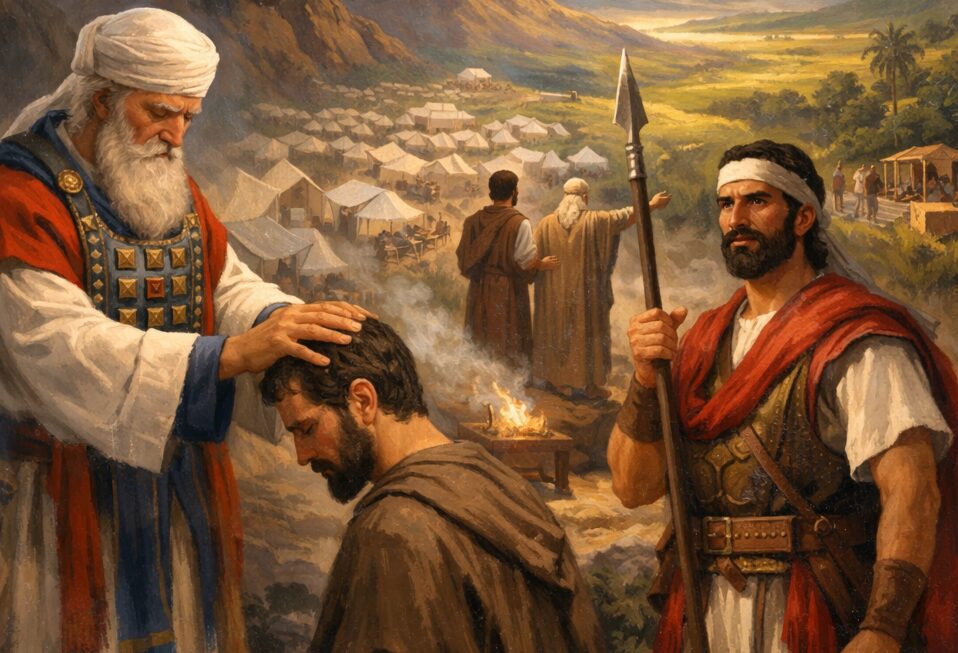
Parashat Behar begins with the command of the sabbatical year, when the land itself is given rest. Every seventh year, the people are to step back from planting and harvesting, trusting that God will provide. This rhythm teaches that the land does not ultimately belong to them. It belongs to God. The people are stewards, called to live with humility and trust rather than control.

The portion continues with the Year of Jubilee, a time of release and restoration. Debts are forgiven, land is returned, and those who have fallen into hardship are given a new beginning. These commands reveal a vision of society shaped by mercy and justice. God’s desire is not for permanent inequality or endless burden, but for restoration that reflects His compassion.

Bechukotai then sets before the people a clear choice. Blessing follows obedience, while distance from God leads to hardship. Yet even within the warnings, there is a thread of hope. God promises that if the people turn back to Him, He will remember His covenant. His faithfulness remains, even when human faithfulness falters.

These chapters remind us that trust in God is expressed not only in belief but in how we live. Resting when it seems risky, giving when it feels costly, and obeying when it is difficult all reveal where our confidence lies. God invites His people to live differently, reflecting His character in their choices and priorities.

Some may be striving to hold everything together, hesitant to release control. Behar encourages a posture of trust, remembering that God is the true provider. Others may feel the weight of past mistakes or ongoing struggles. Bechukotai offers reassurance that turning back to God opens the door to restoration and renewed relationship.

As this Shabbat arrives, reflect on areas where God may be calling you to trust Him more deeply. Consider one way you can practice rest, generosity, or obedience this week. Let your actions declare that your security rests not in what you control, but in the faithfulness of God who provides and restores.

PRAYER
Lord, thank You for Your faithfulness and provision. Teach me to trust You with my resources, my time, and my future. Help me walk in Your ways and rest in Your promises. May my life reflect confidence in Your goodness and care. Amen.

Read more

New Alliances Strengthen Israel’s Global Position

By Arlene Bridges Samuels

In an age where deception can spread across social media in seconds, truth remains steady and enduring. While harmful narratives about the United States, Israel, and their alliance continue to multiply, there is another reality that deserves attention. Truth must be spoken clearly and confidently. As Isaiah 62:1 declares, “For Zion’s sake I will not keep silent, for Jerusalem’s sake I will not remain quiet, till her vindication shines out like the dawn, her salvation like a blazing torch.”

Even as headlines focus on conflict with Iran, important developments are unfolding that highlight strengthening alliances and meaningful progress. Two such developments offer encouraging news for Israel and its global relationships.

The first is the emergence of the Isaac Accords. In 2025, Argentina’s president, Javier Milei, launched this initiative to deepen ties with Israel, following the framework established by the Abraham Accords. The agreement was formally signed in Jerusalem on April 19 by Prime Minister Netanyahu and President Milei, marking a significant shift in Argentina’s foreign policy.

This moment stands in sharp contrast to Argentina’s past. In the years following World War II, the country provided refuge to thousands of Nazi war criminals, including Adolf Eichmann and Josef Mengele, both central figures in the Holocaust. Today, Argentina has taken a markedly different path. It is now home to the largest Jewish population in Latin America, where Jewish citizens play an active and influential role in society.

The Isaac Accords aim to strengthen cooperation across economic, security, cultural, and diplomatic areas between Israel and Latin American nations. Supported by the Genesis Prize Foundation and the nonprofit American Friends of the Isaac Accords, the initiative promotes shared democratic values and mutual interests.

At the signing ceremony, Prime Minister Netanyahu emphasized the importance of this partnership, noting the role of the United States in supporting free societies. President Milei’s leadership has been widely recognized, including his selection as a recipient of the Genesis Prize for his strong support of Israel.

Milei has also committed to relocating Argentina’s embassy to Jerusalem and has reversed his country’s previous voting patterns at the United Nations to align more closely with Israel. He has prioritized investigations into past terrorist attacks in Buenos Aires, including the bombings of the Israeli embassy and the Argentine Israelite Mutual Association in the 1990s. These attacks, carried out by Iran-backed operatives, resulted in over one hundred deaths and hundreds of injuries.

Other countries in the region are following Argentina’s lead. Ecuador, Costa Rica, and Paraguay have designated Hamas, Hezbollah, and the Islamic Revolutionary Guard Corps as terrorist organizations. Bolivia has restored diplomatic ties with Israel. Brazil has established a parliamentary caucus focused on strengthening relations with Israel, and Honduras and Chile are exploring similar steps.

These developments also highlight a broader concern. The influence of the Islamic Regime is not limited to the Middle East. Its presence in Latin America has been established over decades through diplomatic and cultural channels. Addressing this influence is increasingly seen as important for regional stability and security.

Another positive change comes from Switzerland. Traditionally known for its neutrality, Switzerland has taken several steps to address terrorism and financial misconduct. Last year, the Swiss parliament banned Hamas and related groups from operating within its borders and strengthened measures to combat terror financing.

These actions represent a shift from longstanding policies that allowed financial secrecy. For years, concerns have been raised about the misuse of funds intended for humanitarian purposes. New regulations aim to increase transparency and cooperation with international partners.

In another significant decision, Switzerland voted against recognizing a Palestinian state, citing the absence of the institutional criteria required for statehood. This position reflects a reassessment of long-standing diplomatic approaches.

Together, these developments from Argentina, Switzerland, and other nations suggest a changing landscape in international relations. They demonstrate that alliances can evolve and that policies can shift toward greater accountability and cooperation.

In a time when negative narratives often dominate, these examples offer a reminder that constructive partnerships and principled decisions are still taking place. Speaking truth with clarity and conviction remains essential.

Our CBN Israel team invites you to join us in prayer.

Prayer Points:

  • Pray with gratitude for the development of new international partnerships supporting Israel.
  • Pray for President Javier Milei for wisdom, protection, and continued leadership.
  • Pray for efforts to counter terrorism and destabilizing influences in Latin America.
  • Pray for wisdom and strength for leaders in the United States and Israel.

Arlene Bridges Samuels is the weekly feature columnist for CBN Israel since 2020. Working on the staff of the American Israel Public Affairs Committee (AIPAC) as their SE Regional Outreach Director for nine years, International Christian Embassy Jerusalem USA engaged her as the Leadership Outreach Director part-time for their project American Christian Leaders for Israel. Arlene is an author at The Blogs-Times of Israel, is published at AllIsrael.com and The Jerusalem Connection, and has traveled to Israel since 1990. By invitation, she attends Israel’s Government Press Office Christian Media Summits as part of Christian media worldwide. In 2024, Arlene and her husband Paul co-authored Mental Health Meltdown: Illuminating the Voices of Bipolar and Other Mental Illnesses. www.TheMentalHealthMeltdown.com.

Read more

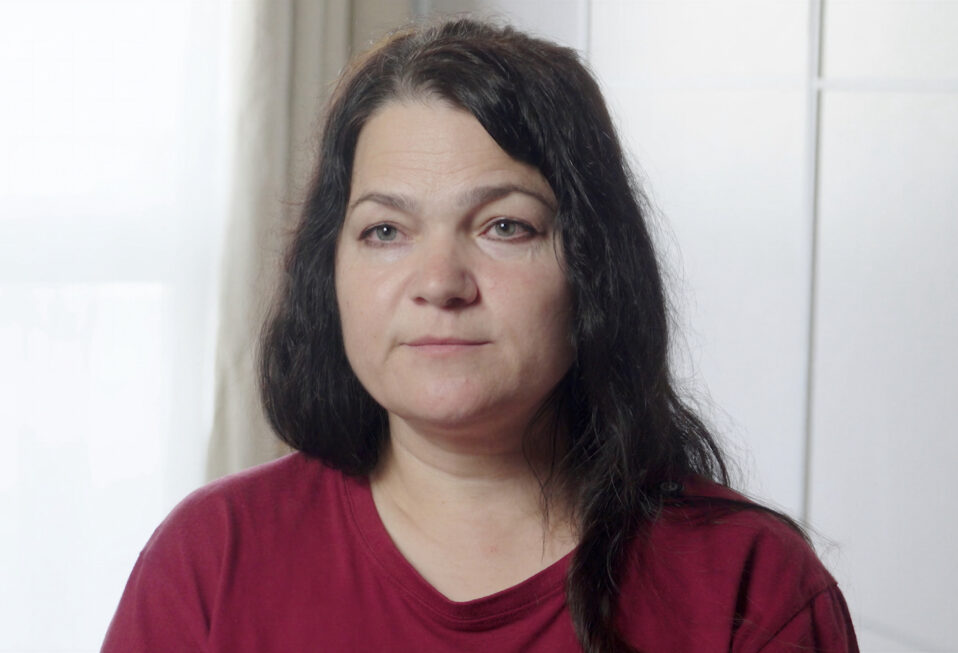
From War to Refuge: Natalia’s Journey of Survival

At just 13 years old, Natalia’s childhood was shattered by war. Forced to flee her home in Ukraine as the Nazis advanced, she survived World War II by working in a factory tied to the war effort. Against overwhelming odds, she lived through one of history’s darkest chapters and eventually returned to rebuild her life.

Decades later, war once again invaded her world. As missiles struck Ukrainian cities and entire neighborhoods were reduced to rubble, Natalia found herself reliving memories she had spent a lifetime trying to overcome. “A rocket hit our neighborhood in the middle of the night,” she recalled. “More than 30 people in my community were killed.”

At 95 years old, Natalia made the difficult journey to Israel, seeking safety and a new beginning. But arriving as a frail senior with limited mobility brought new challenges. Confined to a wheelchair, she needed an apartment with elevator access. She had no proper furniture, limited resources, and struggled to secure enough food. In a new country, far from everything familiar, she faced her later years alone.

That is when compassionate friends stepped in.

Through CBN Israel, caring supporters began delivering regular food packages and essential groceries. More than nourishment, those visits brought comfort and connection. Donors also provided a special bed and basic furniture, transforming her empty apartment into a place of dignity and rest.

“Thank you so much for your generous help,” Natalia shared. “I am overjoyed to receive the food and groceries, and so grateful for the furniture. Your kindness means more than you know.”

Because of faithful friends like you, Holocaust survivors, refugees, and vulnerable seniors in Israel are not forgotten. Your compassion provides meals, shelter, and hope to those rebuilding their lives after unimaginable loss.

Thank you for standing with Israel’s survivors and bringing light into their darkest moments!

GIVE TODAY

Read more

Streams in the Desert at Ein Gedi

By Stephen Faircloth

Ein Gedi, which means “spring of the young goat,” is a place of life in the midst of barrenness. Located along the western shore of the Dead Sea, it is the largest oasis in the region, surrounded by dry, rugged wilderness. Yet from its rocky hills flow fresh springs that never cease, turning desert into a place of beauty and provision.

Four main springs supply water year-round, feeding streams that run through the valleys of Nahal David and Nahal Arugot. In a land where water is scarce, Ein Gedi stands as a reminder that God can bring abundance where none seems possible.

For thousands of years, people have been drawn to this oasis. Its history stretches back to ancient times, but for many readers of Scripture, Ein Gedi is most closely associated with David. When he fled from King Saul, it was here, among the caves and cliffs, that he found refuge (1 Samuel 24). Surrounded by danger, David hid in the wilderness, yet he also experienced God’s protection and provision.

Ein Gedi was more than a hiding place. It was a place of decision. In one of its caves, David had the opportunity to take Saul’s life and end his suffering. Instead, he chose restraint. He trusted God’s timing rather than forcing his own outcome. In that moment, the quiet streams and rugged hills of Ein Gedi became a setting for faith, patience, and obedience.

The oasis itself supported life in remarkable ways. Its steady water supply allowed for the growth of date palms and rare plants used in perfumes. Even in an arid environment, it became a place of fruitfulness and trade. What looked like wilderness from a distance held hidden resources that sustained many.

That truth speaks to our lives as well. There are seasons when we feel like we are walking through a desert. Circumstances may seem dry, uncertain, or even threatening. Like David, we may find ourselves in places we did not choose, waiting for God to act.

Yet Ein Gedi reminds us that even in the wilderness, God provides springs. He meets us in hidden places. He sustains us when resources seem scarce. And sometimes, He uses those very seasons to shape our character, teaching us to trust Him more deeply.

David did not remain in hiding forever. The same God who sustained him in the caves eventually brought him into his calling. But it was in places like Ein Gedi that his faith was refined.

When we find ourselves in our own wilderness seasons, we can take heart. God has not abandoned us. He is present, providing what we need, even if it comes in unexpected ways. In the desert, there are still streams.

Stephen Faircloth is the President of CBN Israel, an initiative dedicated to sharing the true story of the Jewish nation and inspiring a global community of Christians to stand with Israel and support her people in need. Our vision is to reshape the global conversation about Israel by fostering understanding, hope, and healing between Jews and Christians around the world. For more than 50 years, the Christian Broadcasting Network has supported Israel. By joining CBN Israel, you become part of this enduring legacy, transforming lives today and strengthening Christian support for Israel for generations to come.

Read more

Weekly Devotional: A Life That Truly Seeks God

“He sought God throughout the lifetime of Zechariah, the teacher of the fear of God. During the time that he sought the Lord, God gave him success” (2 Chronicles 26:5).

King Uzziah began his life with great promise. Early in his reign, he made a deliberate choice to seek God. He surrounded himself with wise counsel, listened to instruction, and walked in reverence before the Lord. And as long as he continued on that path, his life flourished.

But his story does not end the way it began. Over time, Uzziah drifted. Success led to pride, and pride led to disobedience. The king who once sought God began to rely on himself. What started as a life marked by faithfulness ended in tragedy. His life stands as both an encouragement and a warning.

What does it really mean to seek God? Scripture makes it clear that seeking God is not merely an emotional experience. It is not defined by feelings or fleeting moments of inspiration. To seek God is to walk in reverence before Him, and that reverence is expressed through obedience. It is choosing His ways daily, even in small and unseen decisions. Yet the danger comes when we begin well but fail to continue.

It is possible to start with sincere devotion and slowly shift our focus. We may still speak about God, still identify as people of faith, yet our actions reveal that something else has taken His place. Pride can quietly replace dependence. Self-confidence can overshadow trust.

Seeking God is not a one-time decision. It is a daily posture. Each day presents us with the opportunity to choose again. Will we listen? Will we obey? Will we walk in humility before Him?

The life of Uzziah reminds us that consistency matters. Finishing well is just as important as starting well. God is not looking for occasional moments of devotion, but for hearts that remain turned toward Him over time.

When we truly seek Him, it shows in how we live. Our priorities shift. Our decisions reflect His truth. Our lives begin to align with His will. And in that place, we find what we are truly searching for.

PRAYER

Father, help us seek You not just in words, but in how we live each day. Guard our hearts from pride and self-reliance. Teach us to walk in humility and obedience, so that our lives remain anchored in You. Amen.

Read more

Parashat Emor (אֱמֹר) “Say”

This week’s Torah reading is Parashat Emor (Leviticus 21:1-24:23). Read on Shabbat, May 9, 2026 / 21 Iyar 5786. The following is a special devotional drawn from this week’s reading.

“These are the appointed feasts of the LORD, the holy convocations, which you shall proclaim at the time appointed for them” (Leviticus 23:4).

Parashat Emor highlights the sacred rhythm of time. God appoints seasons and gatherings that shape the life of His people. These appointed times are not random observances. They are invitations to pause, to remember, and to realign the heart with God’s purposes. Each festival carries meaning, pointing back to God’s faithfulness and forward to His promises.

The listing of the feasts creates a pattern that weaves holiness into the calendar. From Sabbath rest to the celebrations of Passover, Shavuot, and Sukkot, the people are reminded that time itself belongs to God. Life is not meant to be lived without reflection. It is structured with moments of remembrance, gratitude, and renewal. These rhythms protect the heart from forgetting and anchor the community in shared identity.

Emor also emphasizes the role of those who serve in sacred spaces. The priests are called to live with care and integrity, recognizing that their actions reflect the holiness of God. Their responsibility points to a broader truth. Every person is called to honor God not only in special moments but in daily conduct. Holiness is not limited to certain places or times. It extends into every part of life.

This portion invites us to consider how we mark time in our own lives. Without intention, days can pass without reflection or gratitude. God’s appointed times remind us to stop and remember. They teach us to celebrate His provision, to acknowledge His presence, and to renew our commitment to walk in His ways.

Some may feel caught in the busyness of daily routines, moving from one responsibility to the next without pause. Emor encourages creating space for rest and reflection. Others may be in seasons of waiting or uncertainty. These rhythms provide stability, reminding us that God is faithful in every season and that His timing is trustworthy.

As this Shabbat arrives, take time to honor the rhythm God has given. Pause from your work and reflect on His goodness. Consider one way you can build regular moments of gratitude and remembrance into your life. Let your time become a testimony that your days belong to the Lord who orders every season.

PRAYER
Lord, thank You for the gift of time and the rhythms that draw me back to You. Teach me to pause, remember, and honor You in every season. May my life reflect gratitude for Your faithfulness and trust in Your perfect timing. Amen.

Read more

Despite War, Israel Continues to Bless the World

By Arlene Bridges Samuels

The Jewish concept of tikkun olam, meaning “repairing the world,” continues to guide Israel even amid multi-front wars. This small nation with a remarkable spirit continues to improve life far beyond its borders.

Consider just a few examples. Netafim drip irrigation systems help farmers in more than 100 countries increase crop yields and conserve water. Israeli desalination technologies operate in dozens of nations, addressing global water shortages. Mobileye has made Israel a leader in vehicle safety and autonomous driving systems. In medicine, IceCure’s ProSense technology offers minimally invasive cancer treatment by freezing tumors with extreme precision.

These innovations reflect a long-standing national commitment to share knowledge. In 1958, Israel established MASHAV, its Agency for International Development Cooperation, to provide training and expertise to developing nations. Since then, programs have reached more than 140 countries and trained hundreds of thousands of professionals, equipping them with tools to strengthen their own communities.

At the same time, Israel faces ongoing threats to its survival. The nation continues to defend itself against hostile forces while remaining committed to contributing to the global good. Despite these efforts, Israel is often overlooked or criticized rather than recognized for its impact.

Yet Israeli innovation continues as a form of resilience and purpose. Among nearly 200 nations in the world, Israel remains unique as the only Jewish state, with a history rooted in ancient times and a modern rebirth that continues to draw people back to their ancestral homeland. Since the Hamas war began, tens of thousands of Jews from around the world have immigrated to Israel, reflecting both connection and hope.

Since October 7, 2023, Israeli society has endured profound national trauma. Even so, its achievements have not slowed. In many cases, innovation has accelerated under pressure.

Health technology offers a clear example. Israel’s medical sector is widely recognized for its breakthroughs, many of which influence global standards of care. In emergency medicine, the concept of the “golden hour” highlights the importance of rapid treatment after injury. Israeli researchers and military medical teams have developed tools to meet that need in combat conditions. One such advancement enables rapid blood transfusion in the field, improving survival rates for wounded soldiers. Another widely adopted tool, the Combat Application Tourniquet, allows immediate control of severe bleeding with minimal training.

Israel’s medical corps has also integrated artificial intelligence to improve treatment for post-traumatic stress, supporting both soldiers and civilians. In the private sector, companies such as CartiHeal are advancing cartilage regeneration, while AI driven diagnostics are improving patient outcomes across hospitals worldwide.

Israel’s experience with emergencies has also shaped its global humanitarian response. The Israel Defense Forces and related agencies have carried out dozens of international aid missions, often while Israel itself is under threat. In 2025, Israeli teams delivered medical assistance to Druze communities in Syria and deployed rescue units to assist after a devastating earthquake in Southeast Asia. These missions reflect both expertise and a commitment to human life.

Cybersecurity is another area where Israel’s influence is global. Israeli companies develop systems that detect cyber threats in real time, protecting banks, hospitals, airports, and government networks. These technologies help safeguard critical infrastructure and respond quickly to evolving risks.

Even during wartime, Israel’s high-tech sector remains strong. It accounts for a significant portion of the national workforce and continues to grow. New jobs are being created, and innovation remains a driving force in the economy.

In defense technology, Israeli companies are advancing artificial intelligence, surveillance systems, and drone capabilities suited to modern warfare. These developments not only strengthen Israel’s security but also shape how other nations respond to emerging threats.

Taken together, Israel’s contributions in health care, technology, and humanitarian aid reinforce its position as a global leader in innovation. These achievements continue despite the immense pressures of war.

Yet the global narrative often fails to reflect these realities. Israel is frequently portrayed in negative terms, while its contributions to global wellbeing receive far less attention. This imbalance underscores the importance of informed discussion and a commitment to truth.

The story of Israel is not only one of conflict. It is also one of creativity, resilience, and service to others. Even under fire, the nation continues to live out the principle of repairing the world.

Our CBN Israel team invites you to join us in prayer.

Prayer Points:

  • Pray with gratitude for Israel’s contributions that benefit people around the world.
  • Pray for wisdom and protection for Israel’s military as it faces ongoing threats.
  • Pray for continued cooperation between Israel and the United States.
  • Pray for healing and restoration for those affected by trauma.

Arlene Bridges Samuels is the weekly feature columnist for CBN Israel since 2020. Working on the staff of the American Israel Public Affairs Committee (AIPAC) as their SE Regional Outreach Director for nine years, International Christian Embassy Jerusalem USA engaged her as the Leadership Outreach Director part-time for their project American Christian Leaders for Israel. Arlene is an author at The Blogs-Times of Israel, is published at AllIsrael.com and The Jerusalem Connection, and has traveled to Israel since 1990. By invitation, she attends Israel’s Government Press Office Christian Media Summits as part of Christian media worldwide. In 2024, Arlene and her husband Paul co-authored Mental Health Meltdown: Illuminating the Voices of Bipolar and Other Mental Illnesses. www.TheMentalHealthMeltdown.com.

Read more

Community Support and Resilience Center

Imagine living in a country whose very existence—and yours—is constantly threatened. For generations, Israel’s people have faced persecution, tragedy, and danger. In fact, a staggering one third of all Israelis live with some form of anxiety or trauma-related distress.

The horrors of the October 7th attack by Hamas only intensified the trauma—followed by the ballistic missile attacks from Iran. How can any nation recover from so much terrorism?

Thankfully, friends like you were there through CBN Israel. Because they understand the escalating mental health needs on the ground, CBN Israel launched the Community Support and Resilience Center. Using innovative strategies, the center is designed to help residents not only cope, but to truly heal and rebuild their lives.

And it marks a significant milestone for the ministry’s work in the Holy Land. The center serves as a crucial network for counseling professionals, as well as individuals seeking help. Through workshops, seminars, and public events, it will facilitate training on essential self-care strategies, stress reduction, coping skills, and processing devastating events.

As the demand for professional counseling has overwhelmed government and healthcare systems, you are providing assistance at the community level to those who are still waiting. For those who are grappling with dark memories and loss, caring donors are giving them, as the ancient promise in Jeremiah 29:11 says, “a future and a hope.”

And your gifts to CBN Israel can offer a lifeline of hope in even more ways. You can bring groceries, financial aid, safe housing, and more to those in crisis.

Please join us as we reach out and care for others!

GIVE TODAY

Read more

Walking the Hills of Jesus’ World

By Stephen Faircloth

Just a few miles north of Nazareth, across the Beit Netofa Valley, lie the remains of the ancient village of Yodfat. In the time of Jesus, it would have been an easy day’s walk from His hometown. Nestled among the hills of Galilee, Yodfat was a working village where daily life revolved around simple but essential tasks. Families raised sheep and goats, spun wool into thread, and wove it into cloth. The discovery of loom weights and pottery fragments reveals a community shaped by labor, creativity, and trade.

Yodfat gives us a glimpse into the kind of places where Jesus lived and ministered. These were not grand cities or centers of power, but ordinary villages filled with people trying to provide for their families and remain faithful to God. In places like this, Jesus taught, healed, and shared the message of the kingdom.

The village also carries a sobering history. During the First Jewish Revolt, it became a fortified stronghold. The Roman army eventually surrounded it, building a ramp to breach its defenses. The historian Josephus, who was present during the siege, described the desperation of those final days. In the end, the village was destroyed and never rebuilt, leaving behind a silent testimony to both human struggle and the passing nature of earthly life.

Yet even in its ruins, Yodfat speaks. Archaeological findings reveal a community marked by both diversity and devotion. Some homes show signs of wealth, with decorative elements similar to those found in Jerusalem. Others reflect the lives of artisans and laborers. There were merchants, craftsmen, and undoubtedly the poor, all living side by side.

More importantly, the remains point to a people committed to their faith. Ritual immersion pools and stone vessels indicate careful attention to purity laws. The absence of certain animal remains reflects adherence to dietary practices found in the Torah. This was a community seeking to honor God in the rhythms of everyday life.

These were the kinds of people who heard Jesus’ voice. When we consider Yodfat, we are reminded that God’s work often unfolds in ordinary places. Jesus did not limit His ministry to prominent cities or influential leaders. He walked through villages like this one, meeting people in their homes, their fields, and their places of work.

Yodfat also reminds us of how quickly circumstances can change. A thriving village became a ruin within a generation. What once felt stable disappeared. Yet God’s purposes continued. The message Jesus proclaimed in those hills did not end with the destruction of a village. It carried forward, reaching far beyond Galilee.

As we reflect on Yodfat, we are invited to consider our own lives. We may not live in ancient villages, but our daily routines are not so different. We work, we provide, we navigate challenges, and we seek meaning in the midst of it all.

God meets us there. He meets us in the ordinary, in the familiar places where life unfolds day by day. Just as Jesus walked the hills of Galilee, He walks with us now, calling us to live faithfully in our own time and place.

Stephen Faircloth is the President of CBN Israel, an initiative dedicated to sharing the true story of the Jewish nation and inspiring a global community of Christians to stand with Israel and support her people in need. Our vision is to reshape the global conversation about Israel by fostering understanding, hope, and healing between Jews and Christians around the world. For more than 50 years, the Christian Broadcasting Network has supported Israel. By joining CBN Israel, you become part of this enduring legacy, transforming lives today and strengthening Christian support for Israel for generations to come.

Read more

Weekly Devotional: Living a Faith That Strengthens Others

“Whatever happens, conduct yourselves in a manner worthy of the gospel of Christ… standing firm in the one Spirit, striving together as one for the faith of the gospel” (Philippians 1:27).

What does your life communicate about your faith? Not just in words, but in daily choices, attitudes, and responses. Paul’s encouragement to the believers in Philippi invites us to consider not only how we live, but why it matters.

Paul wrote this letter with deep joy. Though he had faced hardship and opposition in Philippi, he later heard that the believers there were growing strong in their faith. They had not given up. They were standing firm despite pressure. That news filled him with gratitude, but also with purpose. He urged them to continue living in a way that reflected the gospel they believed.

At first glance, his instruction sounds personal: live a life worthy of the gospel. But Paul quickly widens the focus. He speaks of standing firm “in one Spirit” and striving “together as one.” In other words, the way each person lives affects the strength of the whole community.

This challenges the way we often think. Faith can feel like a private matter, something between us and God alone. But Scripture consistently points us toward something bigger. Our walk with Christ is personal, but it is never meant to be isolated. We belong to a larger body, a people, a shared witness.

Every act of faithfulness strengthens that witness. Every compromise weakens it. When we choose integrity, we encourage others to stand firm. When we pursue humility, we help create unity. When we remain steady in difficult moments, we give courage to those around us. Our lives become threads woven into something greater than ourselves.

Paul also reminds the Philippians not to be intimidated by opposition. Living for Christ will not always be easy. There will be resistance, misunderstanding, and pressure to conform. But when believers stand together, rooted in the same Spirit, they find strength that goes beyond what any individual could carry alone.

So, the question becomes more than “How am I living?” It becomes, “How is my life shaping the community God has placed me in?”

A life worthy of the gospel is not about perfection. It is about alignment. It is about allowing the truth of Christ to shape how we think, act, and relate to others. And as we do, we become part of a community that reflects His character to the world.

Your faith matters. Not only for you, but for those walking beside you.

PRAYER

Father, help us live in a way that reflects Your gospel each day. Shape our lives so that we strengthen and encourage those around us. Unite us in Your Spirit and make us a community that honors You. Amen.

Read more