ARTICLES

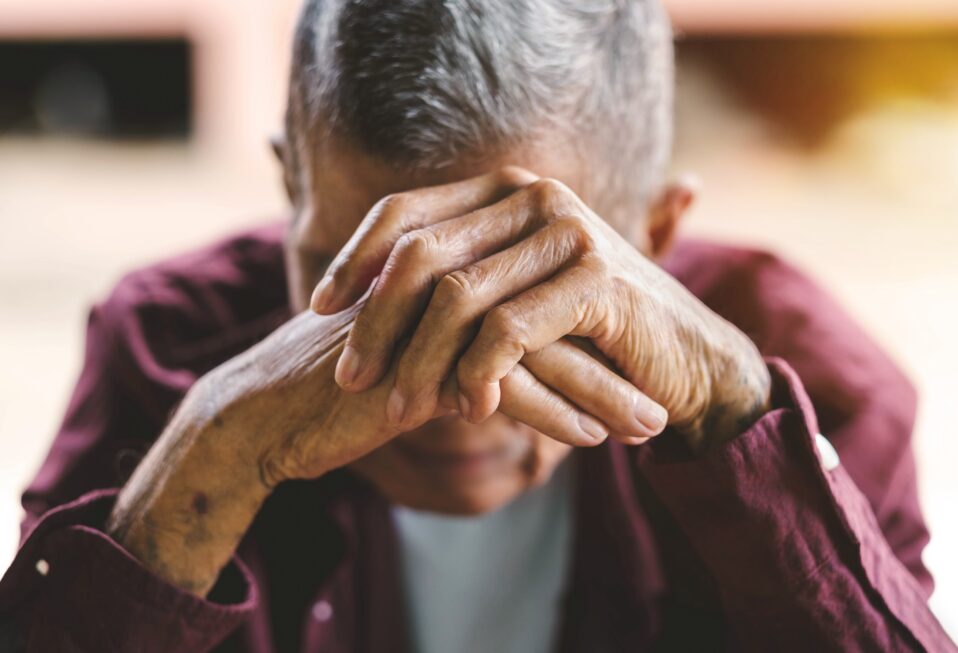
Weekly Devotional: Hiding from God

Then the man and his wife heard the sound of the LORD God walking in the garden at the time of the evening breeze, and they hid themselves from the LORD God among the trees of the garden (Genesis 3:8 HCSB).

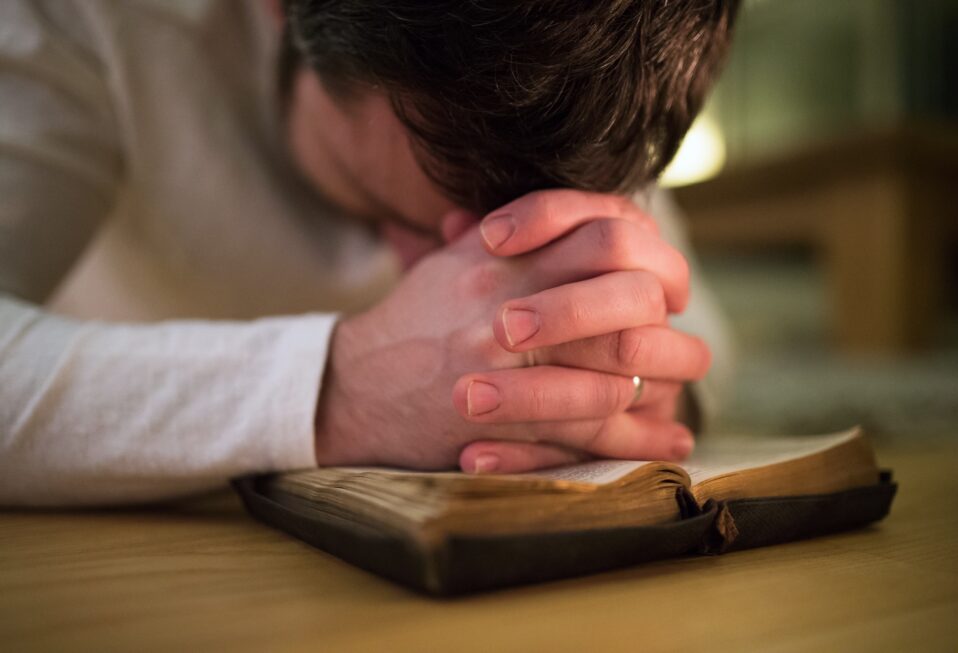
After Adam and Eve disobeyed God, He came to walk with them in the garden—yet they responded by hiding themselves.

Children who disobey a parent often respond in the same manner. But God did not leave Adam and Eve in hiding; He searched and called for them. You could say that, from the time of the Garden of Eden, the story of the Bible is God in search of mankind. Jesus declared in Luke 19:10, “For the Son of Man has come to seek and to save that which was lost.”

King David realized how intimately God knew him, and he recognized that even if he wanted to hide from God, he could not. He wrote in Psalm 139:7-12:

Where can I go from Your Spirit? Or where can I flee from Your presence? If I ascend to heaven, You are there; if I make my bed in Sheol, behold, You are there. If I take up the wings of the dawn, if I dwell in the remotest part of the sea, even there Your hand will lead me, and Your right hand will lay hold of me. If I say, “Surely the darkness will overwhelm me, and the light around me will be night,” even darkness is not dark to You, and the night is as bright as the day.

Even in those moments when our disobedience and shame drive us to hide from our Father in heaven, He searches us out. He lovingly pursues us and doesn’t allow us to remain in hiding. If we want to wrap ourselves in darkness to hide from Him, He dispels the darkness. What an incredible reality!

When Adam and Eve came out of hiding, God provided clothing to cover their nakedness. He also continued to care for them.

David’s realization that God knew him intimately, that God pursued him to the ends of the earth, elicited in him the response of obedient surrender: Search me, God, and know my heart; put me to the test and know my anxious thoughts; and see if there is any hurtful way in me, and lead me in the everlasting way (Psalm 139:23-24).

While our disobedience may tempt us to hide from God, His love for us should cause us to respond with a yearning to walk obediently in His ways.

PRAYER

Father, even in those times when I want to hide from You, I know You are there. You search me out and pursue me. Please lead me in Your paths today. Amen.

Read more

Israel: Still a Light to the Nations with Tikkun Olam

By Arlene Bridges Samuels

“A lie will go round the world while truth is pulling its boots on.” A quote often attributed to famous British preacher C.H. Spurgeon (1834-1892), its origin—as Spurgeon himself said—has actually been lost to time. Nevertheless, we as believers who stand with Israel have a choice: We must press on to share truth!

World news headlines detonate day after day with slanderous information and unfounded rumors about and against Israel. A cloud of despicable lies, accusations, actions, and ignorance continues to ignite the fires of Jew-hatred across the globe. It is past time for good news, and there is plenty of it. That’s because despite its seven-front war, Israel has not neglected one of its key foundations: “repairing the world,” or tikkun olam.

For centuries, the concept of “repairing the world” has repeatedly motivated the Jewish people and the Jewish state. Tikkun olam has no boundaries.

By educating ourselves through two excellent Israeli humanitarian organizations—IsraAID and MASHAV—we gain the facts and tools we need to share good news about Israel “repairing the world.” Although this catch phrase cannot actually be found word for word in Scripture, the concept flows throughout the Bible. The Hebrew verb TKN, which is used only four times in Scripture, is defined “to make straight, establish, arrange, or repair.” One example in Leviticus 19:9-10 calls for “leaving gleanings for the poor and the foreigner,” a way to share resources. Let’s look at the way this plays out in the two charitable groups just mentioned.

IsraAID, founded in 2001, is an international non-governmental humanitarian aid organization. Its teams have worked in emergency and long-term development settings in more than 60 countries globally. IsraAID also provides critical help inside the Jewish homeland. For example, they have been working with local municipalities in central Israel since June. These towns are hosting some 2,000 people whose homes were damaged or destroyed when Iran targeted Israeli civilians in missile attacks on residential buildings. IsraAID has been providing not only mental health support to those displaced, but help with education and logistics, as well.

In the company’s 2024 Annual Report, the list of IsraAID’s accomplishments globally is nothing short of astonishing, given that Israel is fighting a defensive war against the Islamic Regime and its terror surrogates. The report mentions IsraAID’s long-term humanitarian missions—which now face more emergencies, including Guatemala’s migration crisis, violence in Kenya, and refugees fleeing the Democratic Republic of the Congo into Uganda. When Cyclone Chido hit Mozambique last December, Israel’s emergency teams quickly responded with help.

This humanitarian organization also sent its rapid-response teams to Papua New Guinea after a devastating landslide in May. Already working in South Sudan, IsraAID noted that they frequently deal with a “crisis within a crisis.” One example highlights this reality. Over 500,000 people escaping Sudan’s next-door conflict were crammed into South Sudan’s refugee camps. The overcrowding set the stage for last December’s cholera outbreak. Here in the United States, IsraAID has often sent emergency teams to help communities devastated by fires, floods, hurricanes, or tornadoes.

Reading about Israel’s far-reaching commitment to tikkun olam shows us these facts dramatically reveal how outrageous are accusations that “Israel is an apartheid state.” Misinformed protesters grab the first headline they see despite the fact that Israel itself is a multi-colored country with Ethiopian, Asian, and Hispanic Jews. The apartheid designation is absurd. In addition, a look at the geographical locations of IsraAID’s humanitarian outreaches shows us that Israel treats all people in all crises with aid wherever possible. That includes Gaza.

IsraAID’s CEO, Yotam Polizer, quips: “We are FILO, First In and Last Out.” For Israel, wrongly defamed at every turn, IsraAID is a shining example of Israel’s commitment to helping others. IsraAID “repairs the world” regardless of religion or ethnicity. Its staff and volunteers view others simply as people in need.

MASHAV is another shining example of Israelis repairing the world. Its official name is “Israel’s Agency for International Development Cooperation at Israel’s Ministry of Foreign Affairs.” This organization was created in 1958 by two Israeli visionaries: Prime Minister David Ben-Gurion and Golda Meir, his foreign minister and later a prime minister herself. Ben-Gurion and Meir applied tikkun olam—a dynamic Jewish cultural value—to share Israel’s expertise, particularly in technology, with other developing countries. After only 10 years as a modern independent nation, Israel was already reaching out in friendship with development aid to other countries. MASHAV’s mission: to help developing nations achieve sustainable development and transformation within their own societies. On X, MASHAV calls it #HumanCapacityBuilding to empower those living in poverty to improve their own lives.

Cooperative projects combine with other nations in strengths, experience, and expertise in 10 different priority sectors, among them food security and agriculture, education for all, medicine and public health, and innovation and entrepreneurship.

MASHAV’s statistics are astounding. With more than 50 training centers and demonstration projects worldwide, each year the organization sees 5,000 trainees take part in 160 training courses in Israel and abroad. In addition, it is involved in 100 short-term consultancy missions and has 35 ongoing partnerships with donor countries and international organizations. In fact, MASHAV’s practical and compassionate programs have made an impact in 140 out of 193 nations in our world—with over 300,000 graduates from their training programs.

Jews in their ancestral homeland number around 7.7 million in a population of 10 million. Israel makes IsraAID and MASHAV even more miraculous in blessing the family of nations. Shining into the darkness of nations in disaster or need, Israeli Jews are beacons of light, despite being beset with hatred and war themselves.

Tikkun olam is an observable, treasured Jewish value designed by God. He Himself in His sovereignty will “make straight, establish, arrange, or repair” our world for all who honor and believe His redemptive sacrifice for sins. Truth and tikkun olam will someday erase the cloud of lies. Let us be sure to do our part to repair the cloud of lies with truth and facts!

Our CBN Israel team welcomes you to join us this week to pray and to pass along facts about Israel reflecting on Matthew 5:16—“Let your light shine before others, that they may see your good deeds and glorify your Father in heaven.”

Prayer Points:

  • Pray with praises for Israel’s extraordinary tikkun olam worldwide!
  • Pray for friends, family, and social media to read this article due to your sharing.
  • Pray for pastors and churches drifting away from Israel support to read the facts.
  • Pray for Evangelicals to proactively share facts about Israel to spread good news.

Arlene Bridges Samuels is the weekly feature columnist for CBN Israel since 2020. Working on the staff of the American Israel Public Affairs Committee (AIPAC) as their SE Regional Outreach Director for nine years, International Christian Embassy Jerusalem USA engaged her as the Leadership Outreach Director part-time for their project American Christian Leaders for Israel. Arlene is an author at The Blogs-Times of Israel, is published at AllIsrael.com and The Jerusalem Connection, and has traveled to Israel since 1990. By invitation, she attends Israel’s Government Press Office Christian Media Summits as part of Christian media worldwide. In 2024, Arlene and her husband Paul co-authored Mental Health Meltdown: Illuminating the Voices of Bipolar and Other Mental Illnesses. www.TheMentalHealthMeltdown.com.


Read more

New Immigrants: Simeon and Liza’s Story

Simeon had a good life in Ukraine. “My family was well off,” he said. “We had everything we needed.” Then, the war took it all from him—including his father, who went missing in action. Simeon recalled, “I had absolutely nothing. It was humbling.”

Forced to leave his homeland, Simeon and his bride, Liza, sought refuge in Israel, and soon they had a baby boy. Yet, starting over in a new country was challenging.

To support his family, Simeon worked long nights at one job, then served half days at an army base. With no bed, he slept a few hours on the floor. Utility bills kept piling up as he earned barely enough for rent and food. Then things suddenly got even worse when their landlord sold the apartment where they lived.

Despite all that, Simeon said, “We trusted that God would provide.” Liza added, “We prayed a lot, hoped, and relied on God.” And their prayers were answered, thanks to you!

Friends pointed them to CBN Israel, and caring donors helped them move, pay off their bills—and paid for several months of rent, along with providing groceries and basic furniture. Plus, they gave Liza private instructions to learn Hebrew—so she can study and stay at home with her son.

“It all happened in a miraculous way,” Liza said gratefully. “We can raise our son and not worry about tomorrow. I thank God we’ve gotten through this and can focus on moving forward!”

Your gifts to CBN Israel can help other immigrants move forward, along with assisting single moms, terror victims, and Holocaust survivors.

So many Israelis are in desperate situations. Your support can provide groceries, housing, furniture, and other financial aid needed to survive.

Please join us today in bringing help to those who are hurting!

GIVE TODAY

Read more

Biblical Israel: Arbel

By Marc Turnage

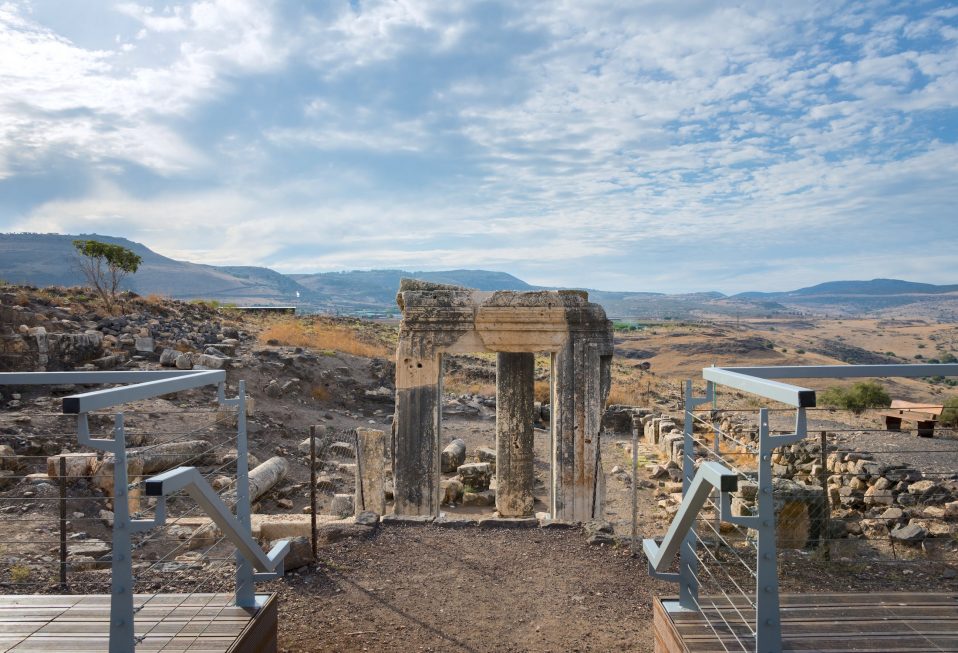
Arbel sits high upon the sheer limestone cliffs along the northwest corner of the lake of Galilee, northwest of Tiberias, overlooking the fertile plain of Gennesar. The Arbel Cliffs form the southern boundary of the plain of Gennesar and provide a striking visual landmark along the northwest shores of the lake. From here, visitors can see the geography on the northern shores of the lake of Galilee where 95% of Jesus’ ministry recorded in the Gospels took place.

Arbel could be identified with Beth-Arbel mentioned in the prophecy of Hosea (10:14). The current site of Arbel, however, began at the end of the second century B.C. The settlement most likely started as part of Hasmonean settlement of the Galilee when Jewish immigrants from Judea moved into the region. Rabbinic tradition identifies a Sage, Nittai, who lived in the second half of the second century B.C., as from Arbel (m. Avot 1:6-7). He served as the head of the Sanhedrin (m. Hagigah 2:2). His prominent position within Jewish society indicates a significant Jewish religious presence in Galilee at the end of the second century B.C.  

After the destruction of the Jerusalem Temple in A.D. 70, the priestly division of Yeshua, the ninth priestly division, settled at Arbel. Arbel was principally known for the growing of flax from which the inhabitants produced linen (Genesis Rabbah 19:1). The Arbel Valley was also known for its agricultural fertility, especially the production of grain (y. Peah 7, 4, 20a). Excavations uncovered wine and olive presses, as well as large pools, probably used for the processing of flax.

Arbel was the location of a clash between the Hasmonean forces of Antigonus and Herod (c. 39-38 B.C.). After Herod gained control of Sepphoris, he sent his force “to the village of Arbela,” and after 40 days, Herod’s forces fought the supporters of Antigonus (Josephus, War 1:305-313). Herod’s forces won the battle, and Antigonus’ supporters fled some taking refuge in caves “very near the village” of Arbel (Antiquities 14:415). There are three groups of caves in the cliffs of Mount Arbel, and most likely the rebels sought refuge in the western group of caves, which are the closest to the village of Arbel (approximately 400 meters). 

Herod eventually dealt with the rebels held-up in the caves. His forces could not make a direct assault on the caves due to the sheerness of the cliffs. His engineers constructed baskets to lower soldiers down the cliff face by machines anchored to the summit of the hill. The soldiers, armed with grappling hooks, fished the brigands out of the caves hurling them to the rocks below. Soldiers hurled fire into the caves to force the rebels out of them. Some of the rebels threw themselves along with their families down the cliffs while Herod watched from a fortified position on an opposite hill.

During the First Jewish revolt against Rome, Josephus fortified the “cave of Arbel” (Life 188; see Life 311; and War 2:573). Josephus likely fortified the eastern group of caves on the Arbel Cliffs where there are remains of actual fortifications. He also quite possibly utilized the western group of caves previously used by the supporters of Antigonus against Herod.

Today visitors can hike to the overlook from the cliffs of the Gennesar Valley and the northern shore of the Sea of Galilee. They can also see the remains of a limestone synagogue built in the fourth century A.D., which continued in use until the eighth century A.D. Renovations were made in the late sixth or early seventh century A.D. 

Marc Turnage is President/CEO of Biblical Expeditions. He is an authority on ancient Judaism and Christian origins. He has published widely for both academic and popular audiences. His most recent book, Windows into the Bible, was named by Outreach Magazine as one of its top 100 Christian living resources. Marc is a widely sought-after speaker and a gifted teacher. He has been guiding groups to the lands of the Bible—Israel, Jordan, Egypt, Turkey, Greece, and Italy—for over twenty years.

Website: WITBUniversity.com
Facebook: @witbuniversity
Podcast: Windows into the Bible Podcast

Read more

Weekly Devotional: Are You Only the God of the Past?

“God, we have heard with our ears—our ancestors have told us—the work You accomplished in their days, in days long ago: to plant them, You drove out the nations with Your hand; to settle them, You crushed the peoples. … Why do You hide Yourself and forget our affliction and oppression? For we have sunk down to the dust; our bodies cling to the ground. Rise up! Help us! Redeem us because of Your faithful love” (Psalm 44:1-2, 24-26 HCSB).

Have you ever found yourself frustrated reading the Bible? Not confused, but frustrated. Frustrated because in its pages you read about God’s mighty acts, His deliverance of His people, His signs and wonders, but then you look to our world, to your life, and the thought comes: “Where is God, why do we not see Him act as we heard Him do of old?” 

The psalmist felt the same way. He found himself frustrated because of God’s mighty acts in the past, but in the present, the psalmist feels that God has rejected His people. The psalmist cannot even console himself by acknowledging Israel’s sin (44:17-22). He declares that the people have not forgotten God’s name or turned back from Him, yet because He does not act, the people suffer and are distressed. 

It is such a raw and honest psalm. Most of us would not have the audacity to pray in such a manner. But the psalmist does. He recognized that in a covenantal relationship, both parties have responsibilities. God held Israel to their obligations to the covenant, and so, too, they could hold Him to His promises. 

The psalmist’s appeal to God’s steadfast covenant love called upon God to remember the covenant He made with Israel. Amid the psalmist’s frustrations, however, he recognized that the God of Israel kept His covenant. Reminding God of His covenant responsibilities had merit because God was faithful to His covenant with Israel. 

We often speak about relationship with God, and we sometimes even criticize the “religion” of the Bible. Yet true relationship allows for the visceral frustrations expressed by the psalmist. True relationship enables both parties to remind the other of their commitments, and it stands upon the confidence that the weaker party can trust the stronger party to remain true to the obligations of the agreement.

The Bible presents God as a covenant-keeping God. He keeps His promises and obligations to His people. Within the Old Testament, this acts as the basis of His love, the covenant. Even when He became angry with Israel, He still acted in faithfulness to the covenant He made with them; He did not give in to His emotions because He keeps His covenant.

He is the same for us. He is faithful. And He is big enough to handle our deepest questions and frustrations. We can trust Him to redeem us for the sake of His steadfast love.

PRAYER

Lord, we know about Your mighty deeds of the past, but at times we feel frustrated and forsaken in our present. Please rise up for the sake of Your steadfast love to us. Amen.

Read more

A Quick Hebrew Lesson: Aliyah and Diaspora

By Arlene Bridges Samuels

Israel is a small nation with a big presence in the modern world. In fact, its significance far outweighs its size and its population. During ancient times, God revealed Himself to His chosen people, the Jews. Israel’s 3,000-year-old capital, Jerusalem, is mentioned 800 times in the Old and New Testaments. In rabbinic literature and in biblical references, Jerusalem is considered the center of the world. Certainly, since October 7, 2023, Israel and the Jewish people are dominant in world news, with both truth and lies fighting for attention.

Amid the backdrop of wartime, why are Jews living in other countries now “making Aliyah”—immigrating to Israel? The Hebrew word aliyah means “ascent” or “going up.” In ancient times, ascent described the Pilgrim Road walk up to the Temple Mount for the annual Jewish festivals. Aliyah remains the word used for Jewish immigration, which now takes place primarily via flights to Israel. These immigrants are enacting Israel’s Law of Return, passed in 1950, that allows Jews, their children, and grandchildren to become citizens in their ancestral homeland.

In Genesis 17:8, God promises Abraham, “The whole land of Canaan, where you now reside as a foreigner, I will give as an everlasting possession to you and your descendants after you; and I will be their God.”

Worldwide, the Jewish population is now nearing 16 million, with 7.3 million living in Israel. To gather more firsthand information, I interviewed Gary Cristofaro, vice president of Ezra International (EI) at the National Religious Broadcasters Convention in February. Since 1996, Gary’s organization has made Aliyah possible for 120,000 Jews from Central Asia, Latin America, and the former USSR. During 2024 and into this year, EI has helped upwards of 6,000 Jews make Aliyah.

Explaining their reasons for wanting to make Aliyah, even after October 7, 2023, Gary says, “Many say they want a better life for their children; others want to be with their brothers and sisters in Israel since the attack.” Gary adds that growing antisemitism is widely mentioned as an important factor. In the last two years, due to the war between Russia and Ukraine, an Aliyah surge of Jews from both nations have begun living new lives in Israel. The numbers of French Jewish Aliyah are rising. As Gary mentioned, “We are seeing off-the-charts antisemitism in a Muslim-majority country, which I cannot disclose.”

Israel’s i24NEWS reports that since the October 7 invasion and massacre, 35,000 Jews have immigrated to Israel. They came from 100 different countries and a third of them are between 18 and 35 years old.

Since Ezra International’s founding, Gary told me, the organization has extended help to 30 different nations considered part of the Jewish Diaspora. Currently, they have teams on the ground in 14 nations. In the context of the Greek translation of the Bible, diaspora means “scattering” of the Jewish people outside of Israel, their homeland. In Hebrew the words golah (exile) and t’futzah (dispersion) are used, noting the Babylonian, Roman, and other exiles.

After the Holocaust—and the modern establishment of the world’s only Jewish state on May 14, 1948—Aliyah has grown in waves. No matter where they lived across the world, Jews went about building their lives yet yearned for their ancestral homeland. The phrase “Next Year in Jerusalem” has resounded countless times at Shabbat tables in the Jewish dispersion worldwide.

Christian organizations that help with Aliyah for diaspora Jews are not uncommon. They cooperate with Israel to help sponsor flights. However, Ezra International’s main contribution occurs before flights take off for the Holy Land. 

“Where we shine, and what we do differently, is to help Jews navigate the process prior to flights by focusing on poorer Jewish communities that have limited manpower and limited budgets,” Gary explains. “We work with the indigenous leaders in each of the nations through their Jewish Agency.” Since its establishment in 1996, Ezra International has earned lasting trust through decades of assistance cooperating with The Jewish Agency in Israel and diaspora nations.

On the ground, Gary’s staff emphasizes Israel’s Law of Return with the Jewish communities and sets into motion the research that will provide detailed, accurate documents. These must be presented to Israeli Consul General offices in each nation. Ezra International not only provides research to validate the facts of candidates’ Jewish heritage, but they help them navigate the bureaucracies.

Gary offered an insightful example of the process for a Ukrainian family. After Ezra International researched and gathered the documents for the family, he drove them for five hours on “pothole-filled roads” and put them up at a hotel. The next day, the entire family appeared as required and presented their documents to the Israeli Consulate in Ukraine. Afterward, he drove them back to their home—another five hours. Gary observed, “They can’t afford that type of thing without some help, and that’s where Ezra International comes in.’’

In emergencies like the war between Russia and Ukraine, Ukrainian families can exit their country with the help of teams in Romania or Moldova. “A lot of Russian Jews came out of Russia through neighboring countries,” Gary explains, “because they saw the writing on the wall.”

Gary comments that their research doesn’t look like a miracle. For instance, some of the research requires verifying the Jewish identity of Holocaust survivors whose parents undertook Gentile names for reasons of survival. Yet a miracle it is. “It’s amazing what the folks on the ground are doing. They are not in the limelight, but they are parting the ‘Red Sea’ of essential research and proof of Jewish identity.”

He refers to Romans 15:8, where the Apostle Paul wrote, For I tell you that Christ has become a servant of the Jews on behalf of God’s truth, so that the promises made to the patriarchs might be confirmed.

Gary embraces this passage as “a description of the work that our people on the ground are doing.” The teams are coming beside God’s people, humbly serving them. They often hear that they’re “the first Christians ever to show them kindness.”

Ezra International is devoted to doing its part to help fulfill the promises that God has made to the Jewish people for their homeland, Israel. For 2,000 years, it seemed impossible. But now it’s happening, and Scripture also promises that you can be a part of it! Learn more about Ezra, a Christian charity helping impoverished Jewish people who live outside the U.S. to make Aliyah.

Our CBN Israel team welcomes you to pray with us recalling Genesis 12:7: “To your offspring [or seed] I will give this land.”

  • Pray for Ezra International’s ongoing ministry to aid Jews making Aliyah.
  • Pray for safety in nations that are dangerously enacting Jew hatred.
  • Pray with thanks for the love Ezra’s staff is showing to God’s chosen people.
  • Pray for IDF members defending their ancestral homeland.

Arlene Bridges Samuels is the weekly feature columnist for CBN Israel since 2020. Working on the staff of the American Israel Public Affairs Committee (AIPAC) as their SE Regional Outreach Director for nine years, International Christian Embassy Jerusalem USA engaged her as the Leadership Outreach Director part-time for their project American Christian Leaders for Israel. Arlene is an author at The Blogs-Times of Israel, is published at AllIsrael.com and The Jerusalem Connection, and has traveled to Israel since 1990. By invitation, she attends Israel’s Government Press Office Christian Media Summits as part of Christian media worldwide. In 2024, Arlene and her husband Paul co-authored Mental Health Meltdown: Illuminating the Voices of Bipolar and Other Mental Illnesses. www.TheMentalHealthMeltdown.com.

Read more

Purim Gifts for Holocaust Survivors and the Elderly

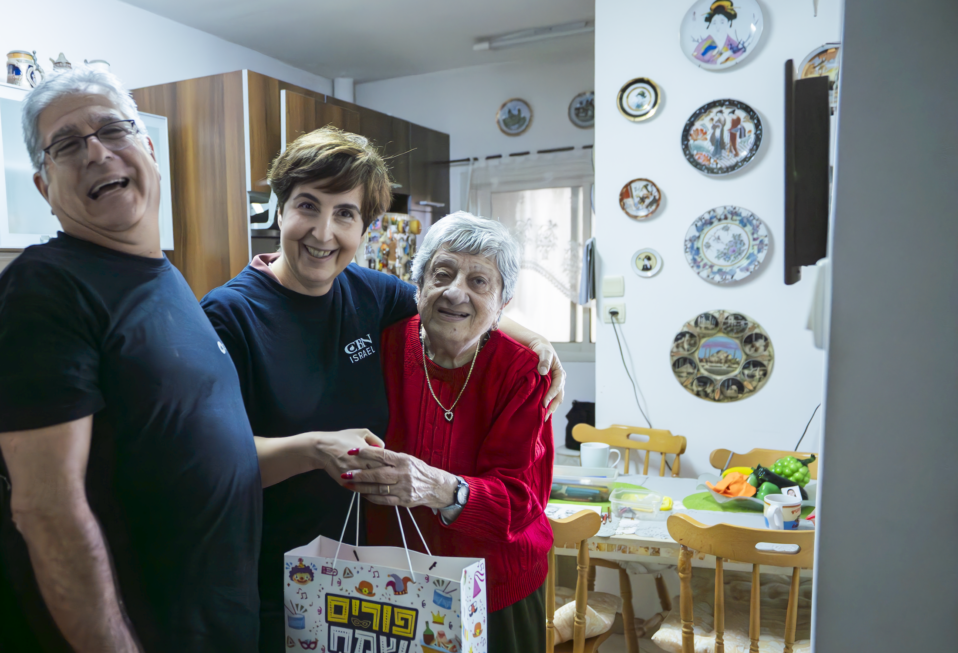
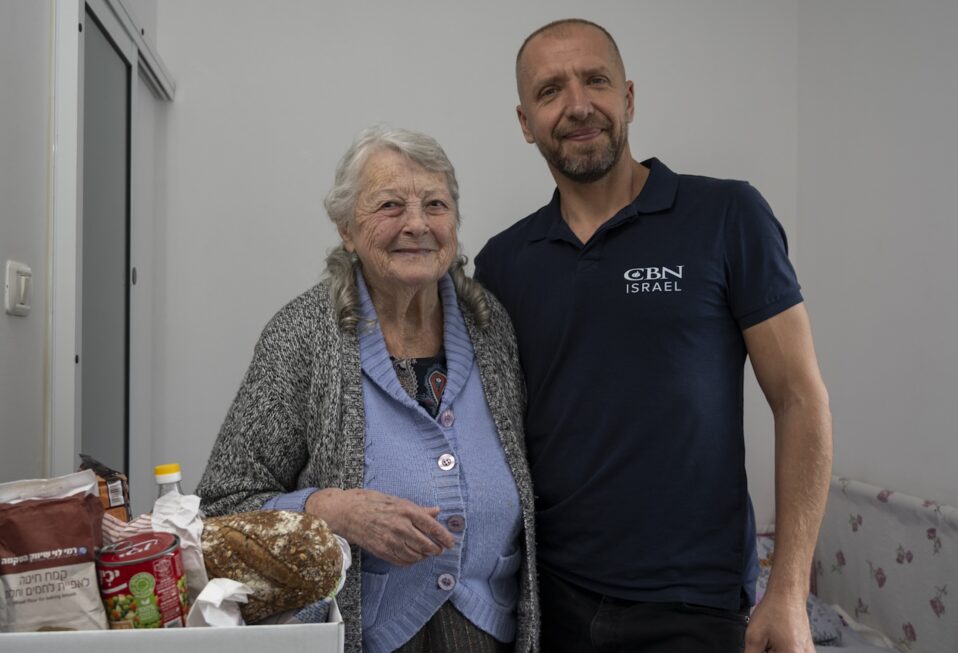
In the weeks leading up to Purim, the staff at CBN Israel were busy bringing traditional Purim gifts to Holocaust survivors and elderly people across the Jewish state, visiting them in their homes during the festive holiday. This is all thanks to the generosity of caring people like you.

Purim commemorates the story of Esther and celebrates the miraculous survival of the Jewish people who were slated for annihilation. Israelis celebrate by dressing in costumes and bringing gifts to family and friends. 

The CBN Israel packages were catered to their elderly recipients. Instead of candy and other sweets, the gift packages contained a warm blanket, tea, dried fruits, nutritious food, and also the traditional Purim cookies, Hamantaschen (Haman’s ears!).

And the CBN Israel outreach involved more than just gifts. Staff members personally delivered the packages to the homes of Holocaust survivors in the north and in the Jerusalem area. 

“They were so happy to receive the gifts, not because of the gifts—they are hungry for company. They wanted to make us tea and to talk,” said Yulia, a CBN Israel project manager. 

“One man cried so much because he was so happy to have visitors,” Yulia said. 

Many of the survivors, who were children at the time of the Holocaust, recounted their stories of loss and survival during those dark days. One couple, who are both 92 years old now, met in the third grade after having survived a concentration camp in Ukraine. They have been together ever since. 

“This outreach was just the beginning of building long-term relationships and support from CBN Israel for these people in need,” Yulia said. “The personal touch of visiting these people met another critical need beyond the Purim gift.”

And your gifts to CBN Israel can be a godsend to so many who are struggling to survive. You can be there for new immigrants, single moms, Holocaust survivors, war victims and more—offering help and hope.

The war in Israel has brought a host of challenges throughout the Holy Land. Your support can reach out to those in need with hot meals, groceries, finances, housing, and essentials.

Please help us extend a lifeline of compassion today!

GIVE TODAY

Read more

Holocaust Survivor: Natalia’s Story

When she was just 13, Natalia had to flee her home in Ukraine to escape the Nazis. As World War II raged, this young Jewish girl survived by working in a factory that supported the war effort. She eventually returned home.

In 2022, as Russian missiles rained down on Ukrainian cities and families were torn apart by violence, Natalia faced the unthinkable. After a lifetime spent recovering from the trauma of World War II, she was once again forced to relive its horrors as war returned to the very place where she had rebuilt her life.

She recalled, “A rocket hit our neighborhood in the middle of the night. The explosion killed over 30 people in my community.” Terrified, this elderly woman sought refuge in Israel, making Aliyah to become an Israeli citizen.

Yet as a frail senior who arrived with nothing, Natalia has had other battles to fight. At age 95, she must use a wheelchair to go outside. Because of her handicap, she had to find another apartment with an elevator. And in addition to needing help getting enough to eat, she also lacked basic furniture. Alone in a different country, where could she get help?

Thankfully, friends like you came to her rescue through CBN Israel. Caring donors are there delivering nutritious food, and she says these visits from our team mean as much as the aid itself. Donors also provided her with a special bed and essential furniture, to make her apartment feel like home.

Natalia exclaimed, “Thank you so much for your generous help. I have been overjoyed to receive the regular provisions of food and groceries, and I am so grateful for the furniture… Your kindness means more than you know!”

Your gifts to CBN Israel can be a blessing to Holocaust survivors like Natalia, and to refugees, single moms, terror victims, and others struggling to survive in the Holy Land.

And you can make a tremendous difference for those in need by providing hot meals, safe housing, necessities, and financial assistance.

Join us today in sharing God’s love and compassion with those who are hurting in Israel!

GIVE TODAY

Read more

Weekly Devotional: Be Prepared

“Then the kingdom of heaven will be comparable to ten virgins, who took their lamps and went out to meet the groom. Five of them were foolish, and five were prudent. For when the foolish took their lamps, they did not take extra oil with them; but the prudent ones took oil in flasks with their lamps. Now while the groom was delaying, they all became drowsy and began to sleep.

But at midnight there finally was a shout: ‘Behold, the groom! Come out to meet him.’ Then all those virgins got up and trimmed their lamps. But the foolish virgins said to the prudent ones, ‘Give us some of your oil, because our lamps are going out.’ However, the prudent ones answered, ‘No, there most certainly would not be enough for us and you too; go instead to the merchants and buy some for yourselves.’ But while they were on their way to buy the oil, the groom came, and those who were ready went in with him to the wedding feast; and the door was shut.

Yet later, the other virgins also came, saying, ‘Lord, lord, open up for us.’ But he answered, ‘Truly I say to you, I do not know you.’ Be on the alert then, because you do not know the day nor the hour” (Matthew 25:1-13 NASB).

A Jewish sage, a contemporary of Jesus, told his disciples, “Repent the day before you die.” His disciples responded with the question: “Who knows the day of his death?” To which their master replied, “Yes, therefore, one should repent every day.”

A number of Jesus’ parables called upon His listeners to be ready, for no one knows their final day. He contrasted the wise and foolish maidens as those who were ready and those who were not prepared. His point: Be like the wise maidens—be ready. 

We don’t like to think about our final day, but we will all have one. Our society often does everything it can to avoid thinking about our end. Jesus didn’t seek to scare His listeners, but like His contemporary, He sought to remind them that this life is short and it’s not the end. 

How we live in this life is preparation for the next. And at any moment, on any day, we could meet the Judge of the universe. Are we ready? How can we be ready? 

By daily seeking to live our lives in obedience to God. By choosing daily to repent and trust in His gift of salvation. It’s not complicated. It’s not scary. But it is real. How will you live today? Will you live with eternity in view? Be prepared and live each day as if it is your last. 

PRAYER

Father, we humble ourselves before You. Forgive us when we fall short of obeying You. May we always be ready to stand before You. Amen.

Read more

Israeli Weddings and Babies: Joys in Wartime

By Arlene Bridges Samuels

Ever since the onset of Israel’s defensive war—530 days ago—love has beautifully interrupted the fighting with weddings taking place on and off the battlefield. Evil cannot stop love, marriages, or the births of Jewish children.

While the Islamic Regime and its proxies are shouting “death to Jews,” Israel is focused on love and life! During wartime, with hundreds of thousands of men and women serving in the IDF, Jewish couples are rearranging their wedding dates to suit the changed circumstances. IDF army bases and other locations are now chosen as substitute wedding venues. Here are some examples.

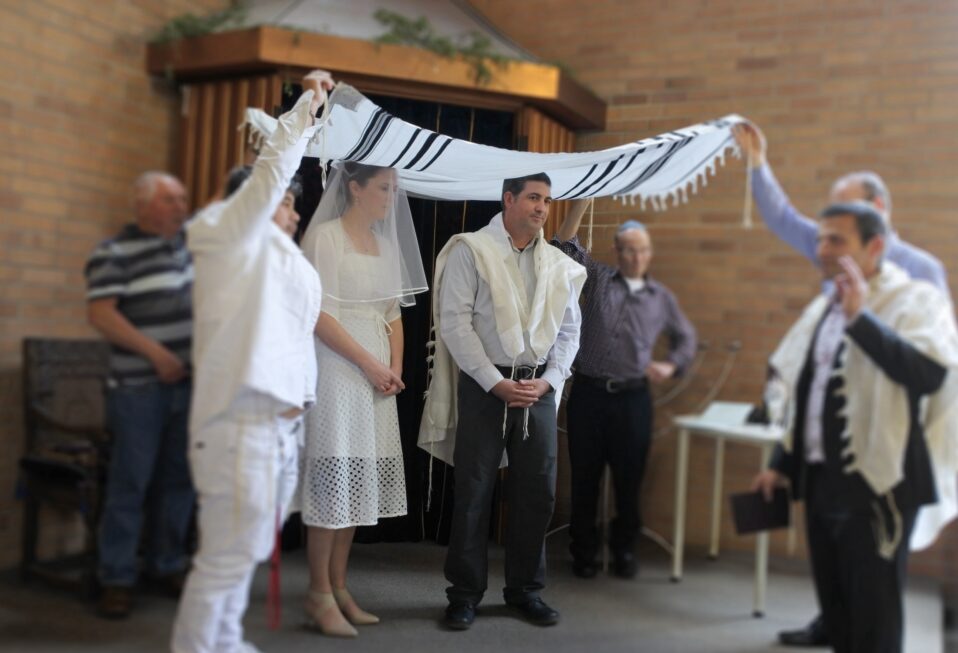
In northern Israel, at a kibbutz near an IDF base, one groom’s unit planned the entire event by arranging for flowers, catering, a wedding cake, and a traditional chuppah, or Jewish wedding canopy. When his future wife voiced concern about missile attacks, the groom told her, “If something happens, we’ll go into a bomb shelter, and then hopefully come back and finish the wedding. We can’t let ourselves be overwhelmed by what-if scenarios.” A famous Israeli singer showed up at the wedding and sang for the assembled group at no charge. Such things are becoming commonplace.

After October 7, 2023, a reservist called up for duty decided to get married right away. The bride and groom were dressed in their IDF uniforms and surrounded by excited soldiers. The radiant bride sported a beautiful wedding veil.

After he saw an IDF wedding photo, former Prime Minister Naftali Bennett observed, “Lately I find myself more and more urging young couples … to get married and have kids. I have already set up 4–5 weddings for injured people, or bereaved family members.” He described victory as not just “hell … on the battlefield” but with optimism: “building a new generation, with faith, and with growth from the horrible pain.”

Many weddings had already been planned for October 2023, following the Jewish fall festivals. After the horrors of October 7, each couple decided to either delay or proceed with inventive new plans. A quote from the Talmud reflects part of traditional Jewish culture: “If a funeral procession and a wedding procession meet at an intersection, the wedding procession goes first.”

Weddings frequently go viral on social media. Celebrated on those platforms, the joyful events bless Israel’s national family, which has been so traumatized by brutality, and boost their wedding joy, whether people know the happy couple or not. The re-planned, spontaneous, or scaled-down celebrations are often financed and supported by the local communities.

One couple had planned for their wedding to be held in a lovely venue on October 9, 2023, and they invited 400 guests. After October 7, the bride and groom opted for a much smaller wedding in a community garden across the street from their parents’ apartment. Social media began to fill with excitement and offers to help amid Hamas rockets falling. Bomb shelters could be accessed nearby. A klezmer music group showed up ready to play. Friends and strangers brought food and set up the necessary chuppah, where the bride and groom stood as if under a prayer shawl. Neighbors watched from their balconies as a rabbi pronounced beautiful prayers. Here’s one of my favorites:

“Blessed are you, Adonai, our God, Ruler of the universe, Who created joy and gladness, loving couples, mirth, glad song, pleasure, delight, love, loving communities, peace, and companionship.”

At the ceremony’s end, the groom stomped on a glass, part of Jewish weddings that recall Jewish tragedies for thousands of years. Joyous music and dancing followed.

The next day, in the paradox of Israel’s joys and sorrows, these newlyweds flew to London for a shiva, a time of mourning. Hamas had murdered a 20-year-old friend of theirs, a lone soldier. When the newlyweds shared news about their wedding with the lone soldier’s mother, the bereaved woman experienced a moment of joy. Important to note about lone soldiers programs: Friends of the IDF (FIDF) currently offers 7,000 young men and women help while serving in the IDF. Lone soldiers have no immediate family in Israel. Half of the lone soldiers volunteer from abroad, while others are Israeli orphans or are from broken homes.

Another couple moved forward with plans for an elegant wedding in May 2024. They kept their location in Jerusalem, complete with décor and food. However, they made their day one of beautiful remembrances, with Israeli flags flying, gifts for their guests, and prayers for IDF soldiers, hostages, and the state of Israel. As bride and groom stood under the chuppah, a shofar sounded as if going out to battle. Most of the guests had family members who were serving or had served in the IDF.

One couple kept their previous wedding date, October 12, 2023, although family and friends had their flights to Israel canceled. The ceremony was held on a Tel Aviv rooftop with a smaller number of guests. One of the hosts suggested taking the overage of delicious food to an army base. Everyone loved the idea! The bride commented, “We just wanted to have one day where there was happiness. We wanted to show the world that we have a love for each other in these dark times.” She is glad they made the decision.

But the more they afflicted them, the more they multiplied and the more they spread (Exodus 1:12).

It’s hardly surprising that an Israeli baby boom is well underway, with a 10 percent rise in births over the same period a year earlier. Some compare this jump to the U.S. post-World War II baby boom (1946–1964). In Israel, thousands more babies were born between September and November 2024, much higher than predicted. Israel’s Central Bureau of Statistics shows that the trend is continuing into 2025. Maternity wards are overflowing.

This information came out in a report requested by Knesset member Pnina Tamano-Shata, chair of the Committee on the Status of Women. “Despite the unimaginable hardship of the past year, we see how the people of Israel choose to grow from grief,” she observed. “The rise in births is proof of our inner strength and our ability to create new life even in the most difficult times.” One statistic indicates that in 2023, 172,500 births were recorded compared to 181,000 in 2024.

Couples have decided to have their first child or another child even in the difficulties of war. “It gave us some light and sanity in a dark time,” one mother explained. “After October 7 took so many lives from us, bringing a life into the world felt like the right thing to do.”

We welcome you to our CBN Israel team to pray from Psalm 127:3, “Children are a heritage from the LORD, offspring a reward from Him.”

Prayer Points:

  • Pray with thanks for the beautiful Jewish babies born in their ancestral homeland.
  • Pray for mothers at home caring for children whose fathers are IDF soldiers.
  • Pray for Israeli children, that their parents in the IDF will return home safely.
  • Pray for Hamas to finally release remaining hostages, whether alive or dead.

Arlene Bridges Samuels is the weekly feature columnist for CBN Israel since 2020. Working on the staff of the American Israel Public Affairs Committee (AIPAC) as their SE Regional Outreach Director for nine years, International Christian Embassy Jerusalem USA engaged her as the Leadership Outreach Director part-time for their project American Christian Leaders for Israel. Arlene is an author at The Blogs-Times of Israel, is published at AllIsrael.com and The Jerusalem Connection, and has traveled to Israel since 1990. By invitation, she attends Israel’s Government Press Office Christian Media Summits as part of Christian media worldwide. In 2024, Arlene and her husband Paul co-authored Mental Health Meltdown: Illuminating the Voices of Bipolar and Other Mental Illnesses. www.TheMentalHealthMeltdown.com.

Read more