ARTICLES

Chorazin: A Warning in the Ruins

By Stephen Faircloth

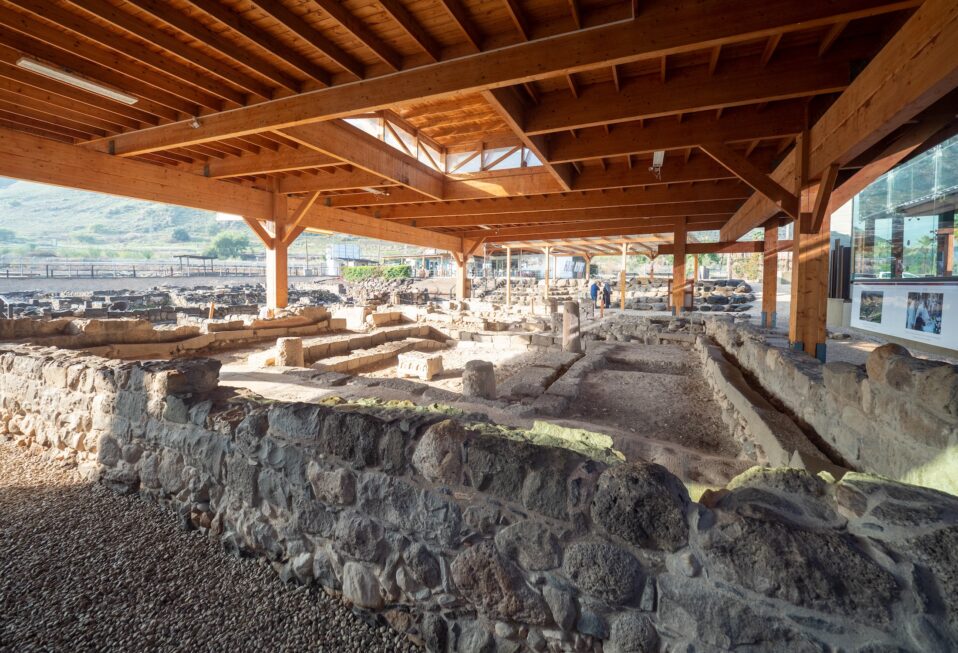
Perched in the hills just north of Capernaum, the ruins of Chorazin overlook the Sea of Galilee. Though this ancient village is mentioned only briefly in the Gospels, it holds a sobering place in the story of Jesus.

Jesus once pronounced a severe rebuke over Chorazin, along with Bethsaida and Capernaum, because despite witnessing His mighty works, the people refused to repent (Matthew 11:21-24; Luke 10:13-16). It is a reminder that spiritual privilege does not guarantee spiritual transformation. The land between these villages formed the heart of Jesus’ Galilean ministry, where miracles and teachings unfolded almost daily. Yet familiarity bred indifference.

Unlike Capernaum and Bethsaida, Chorazin sat back from the shoreline. While it was removed from the fishing trade of the lake, it was renowned for producing exceptional wheat—a detail preserved in ancient rabbinic writings. Archaeological discoveries confirm that Chorazin was a vibrant Jewish community, beginning in the first century A.D.

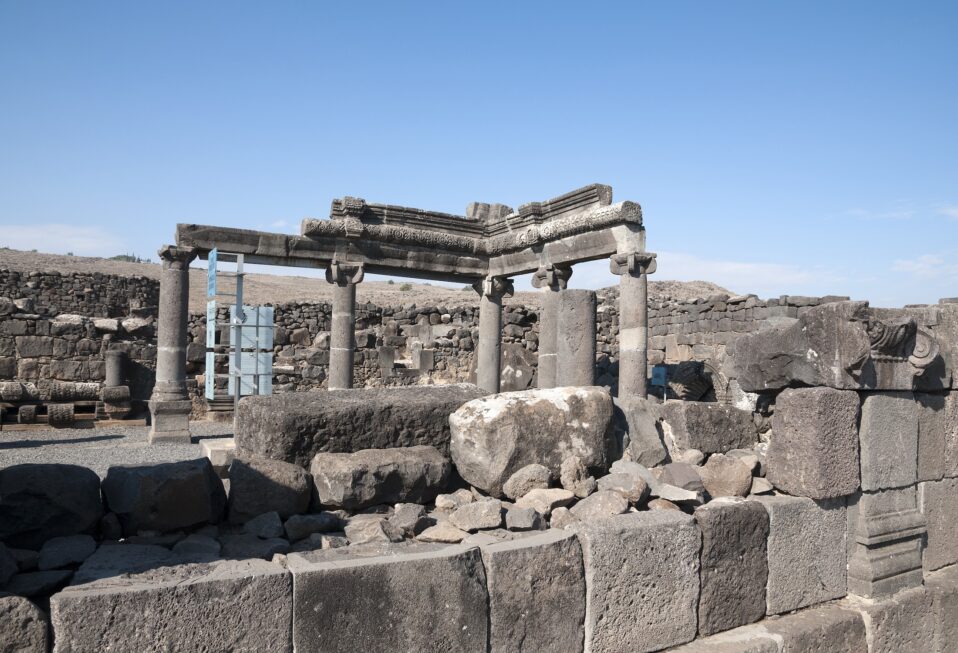
Most of the ruins visitors see today date to later centuries. The basalt synagogue at the village center, possibly constructed by the third century, reflects the classic Galilean synagogue style seen in places like Capernaum. Worshippers would ascend a broad southern staircase, facing Jerusalem, to enter the hall. Inside, benches formed a U-shape around the room. Carved basalt stones, though difficult to shape, were decorated with symbolic motifs.

Among the most striking finds is a basalt chair called the “Seat of Moses.” According to tradition, this was where teachers of the Law would sit to instruct the people (see Matthew 23:1-2). The chair bears an Aramaic inscription honoring the benefactor who donated it and praying that he would have a share among the righteous. Beneath the later synagogue floor, archaeologists have uncovered signs of an earlier public building—perhaps the synagogue where Jesus Himself taught.

In homes nearby, excavators have found ritual baths, stone vessels, and other artifacts that reveal a community concerned with purity and devotion. And yet, Chorazin still fell under Jesus’ judgment. The people saw, heard, and experienced much, but their hearts remained unchanged.

Chorazin warns us that it is possible to be surrounded by spiritual opportunity and still drift into complacency. It challenges us to consider: Are we responding to what God has shown us, or merely observing it from a safe distance?

Where has God been at work in your life? Have you grown familiar with His blessings without letting them transform you? What would it look like to respond with repentance and renewed faith today?

Stephen Faircloth is the President of CBN Israel, an initiative dedicated to sharing the true story of the Jewish nation and inspiring a global community of Christians to stand with Israel and support her people in need. Our vision is to reshape the global conversation about Israel by fostering understanding, hope, and healing between Jews and Christians around the world. For more than 50 years, the Christian Broadcasting Network has supported Israel. By joining CBN Israel, you become part of this enduring legacy, transforming lives today and strengthening Christian support for Israel for generations to come.

Read more

Faith in Action: How American Christians Can Stand with Israel Today

By Dani Naveh, President & CEO, Israel Bonds

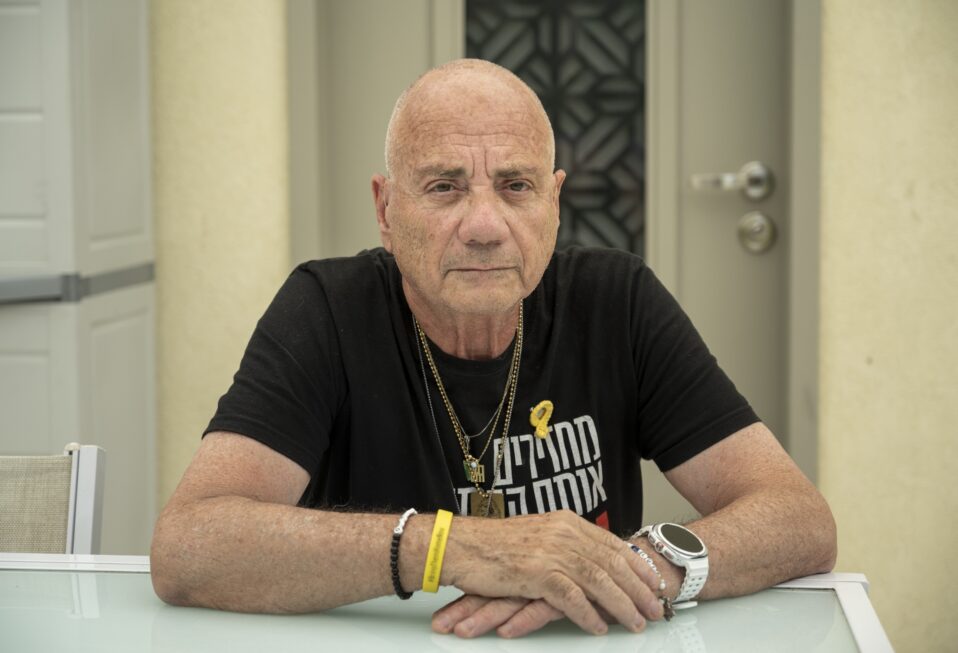
A few weeks ago, as I was in New York, Facetiming with my three children in Israel—our family routine whenever sirens go off alerting people to rush to nearby bomb shelters—our worst fear came true. An Iranian missile struck our family home. Through the phone, my wife and I heard an explosion too loud to be in the distance. Our children, though shaken, survived, but as they left the shelter, they witnessed our house and yard engulfed in flames.

It is during these challenging times that I am reminded that true friendship is not merely spoken, it is demonstrated. Soon after I made my way to Israel to be with my children, I received meaningful messages from my friends at CBN—phone calls and emails of support. My family’s home was in ashes, but our spirits were intact.

The bond between Christians and Jews, forged through spiritual kinship, is more vital today than ever before. Israel is facing a battle on multiple fronts, but in our darkest hours following the horrific day of October 7, we have also seen the brightest lights—many of them coming from our Christian brothers and sisters across the United States.

As the President and CEO of Development Corporation for Israel/Israel Bonds, I have had the privilege of witnessing firsthand this outpouring of support not only in words and prayers, but in meaningful action. Since the attacks of October 7, individuals and institutions have invested over $5 billion globally in Israel through Israel bonds. And a growing share of these investments has come from Christian supporters who understand that supporting Israel economically is one of the most concrete ways to stand with the Jewish people, and secure Israel’s future.

On May 10, 1951, in New York’s Madison Square Garden, Israeli Prime Minister David Ben-Gurion launched this extraordinary initiative with a simple but powerful idea: allow friends of Israel, wherever they may live, to invest in her future. Seventy-four years later, Israel Bonds continues to offer that same opportunity—not just to invest in a bond, but to invest in a nation, a people, and a promise. Since that historic day, Israel Bonds has generated over $54 billion in sales from around the world.

For many Christians, this commitment to Israel stems from deeply held beliefs. As Psalm 122:6 commands, “Pray for the peace of Jerusalem: ‘May those who love you be secure.’” But prayer must be accompanied by action. In the Book of Ruth, we find a moving declaration of loyalty from Ruth, a non-Jewish Moabite woman, recently widowed, to her mother-in-law Naomi: “Where you go, I will go, and where you stay, I will stay. Your people will be my people and your God my God.” That enduring message of solidarity has echoed across generations and faith traditions. Today, it resonates once again.

I write not only as the leader of a financial institution but also as someone who has lived through decades of Israeli history. I served in government as an Israeli cabinet minister during years when peace felt within reach and during times when war knocked on every door.

In recent months, I’ve traveled across the United States, meeting with Christian pastors, lay leaders, business executives, and families. Many have asked me: What can we do for Israel right now? My answer is always the same—continue to pray, continue to speak truth, and when you are able, invest in Israel’s future. Buying an Israel bond is not only a smart financial decision—it is a deeply spiritual one. It is a tangible declaration that you stand with Israel not only in words, but in deeds.

Israel Bonds is not a charitable contribution. It is a smart financial investment, backed by the full faith and credit of the State of Israel. But more than that, it is a moral investment—one that allows individuals to stand on the side of life, democracy, and shared values. As talks of ceasefires and peace unfold, the fight for Israel’s future continues, supported by communities around the world.

Let us walk this path together, in covenant and in courage. Join us. Invest in Israel. Not for politics. Not for headlines. But for hope, for peace, and for a future rooted in shared faith.

As Psalm 133:1 says: “Behold, how good and how pleasant it is for brothers to dwell together in unity.” May our unity be not only in spirit, but in action.

Dani Naveh is President and CEO of the Development Corporation for Israel/Israel Bonds. Since 2021, Mr. Naveh has steered the organization to record-breaking sales. Under Mr. Naveh’s leadership, Israel Bonds has brought in unprecedented support, raising over $5 billion in investments since October 7, 2023. Mr. Naveh previously served in various governmental roles including as Israel’s Minister of Parliamentary Affairs, Minister of Health and Cabinet Secretary. After his tenure in government, Mr. Naveh transitioned to the business sector, leading major financial groups like Clal Insurance and founding ventures in medtech, insurtech, and fintech.

Read more

Bringing Hope to Missile Strike Survivors

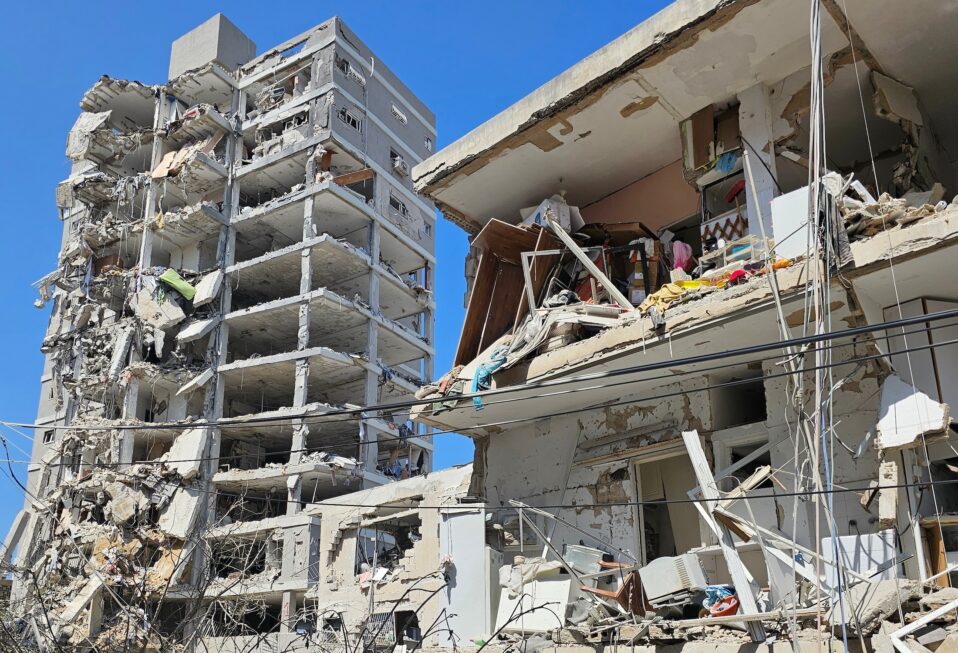
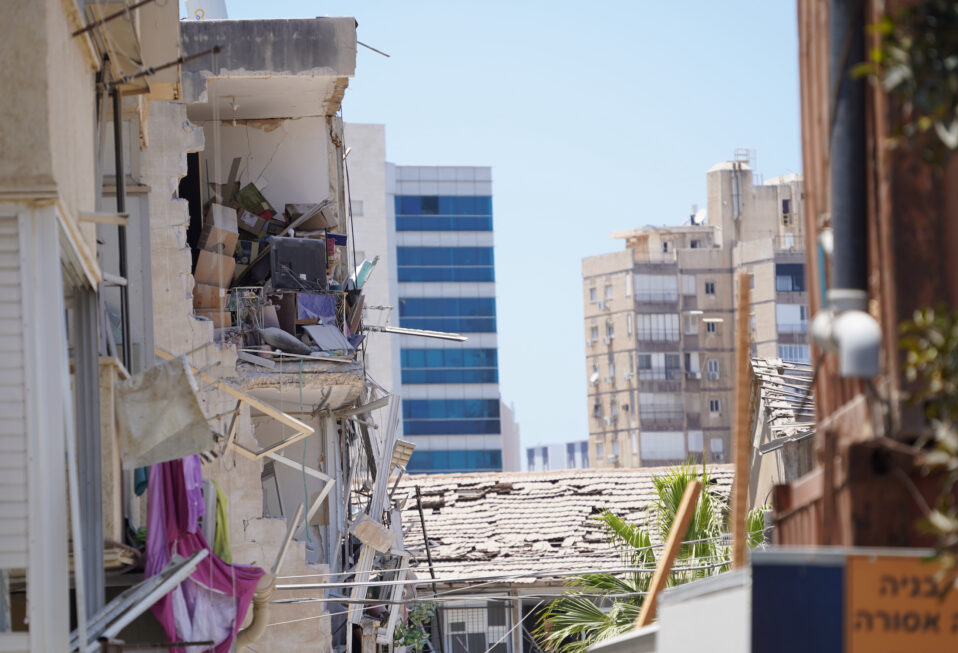
In Bat Yam, a coastal city south of Tel Aviv, terror struck an entire neighborhood when an Iranian missile destroyed a residential building. Hundreds of residents were displaced. It was a direct hit which obliterated that building, and damaged nearby buildings for blocks, making them unlivable.

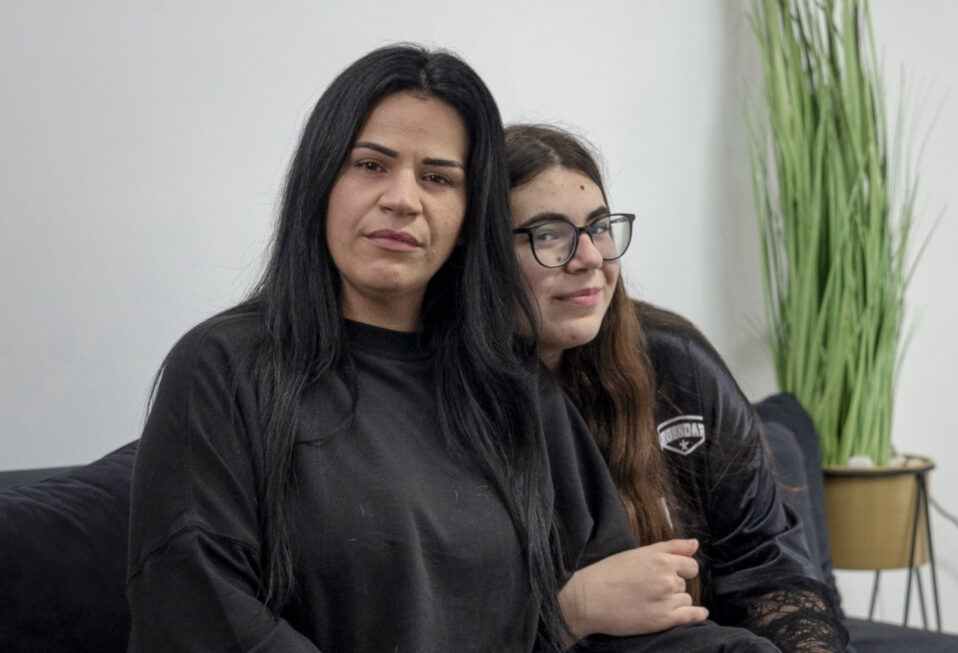
One frightened survivor recalled the horror, saying, “The building was shaking, and I was holding the door shut. And it felt like the door would fly out.”

Since the beginning of the war with Iran, Israel faced relentless missile and drone attacks, leaving communities in a state of upheaval and despair. With so many people left homeless and traumatized, where could they turn for help?

Fortunately, friends like you came to their rescue, through CBN Israel. Thanks to the support of generous donors, a bus arrived in Bat Yam to take the elderly, Holocaust survivors, and those with disabilities to safer places, including temporary shelter in a hotel.

And in the wake of the attacks, their gifts helped to launch a trauma hotline, offering counseling, comfort, and hope to those reeling from loss.

At a time when it seems that so many forces in the world are aligning against Israel, it means a great deal to the Israeli people to know caring partners are standing with them. And your support can convey volumes to those who are hurting.

You can be there for terror victims with hot meals, safe lodging, professional trauma therapy, and encouragement. And you can bring ongoing relief to refugees and new immigrants, single moms, Holocaust survivors, and others in need.

Please consider a special gift to support those in crisis across the Holy Land!

GIVE TODAY

Read more

Magdala: Faith by the Lake

By Stephen Faircloth

Nestled along the western shore of the Sea of Galilee, just a few miles north of Tiberias, the ancient settlement of Magdala offers a remarkable window into Jewish life during the time of Jesus. Known by multiple names, Magdala or Migdal Nunaya in Hebrew and Aramaic, and Taricheae in Greek and Latin, this city played a central role in the economy and culture of the region.

Greek sources called it Taricheae, meaning “factories for salting fish,” a reminder that everyday labor and community life were part of God’s provision. The bustling harbor connected smaller villages, including Capernaum, to wider trade networks, illustrating how God often uses ordinary places to accomplish extraordinary purposes. When the Gospels describe Jesus arriving by boat in the region of Gennesar, He likely stepped ashore in Magdala’s thriving port.

Though tradition has long identified Magdala as the hometown of Mary Magdalene, there is no conclusive historical proof of this connection. Still, her life shows how God can redeem any story, and how an encounter with Christ transforms us from the inside out.

Modern excavations have brought Magdala to life in vivid detail. Archaeologists uncovered streets laid out in a precise grid, elegant homes with expertly cut stone, intricate mosaic floors, and fine pottery and glassware—all signs of a prosperous community. Many of these homes contained private ritual baths (mikva’ot), even though the Sea of Galilee was just steps away. This dedication reveals how seriously the people of Magdala took purity and devotion, weaving faith into the fabric of daily life.

Among the most significant discoveries is Magdala’s ancient synagogue—one of the earliest ever found. Though modest in size, it was rich with spiritual meaning. The main hall was ringed with benches, frescoed walls, and mosaic floors. At its center stood a beautifully carved stone, likely supporting the sacred Torah as it was read aloud. The carvings include the seven-branched menorah from the Jerusalem Temple, reminding worshipers that even in Galilee, their faith was anchored in God’s promises and presence.

While the Gospels do not specifically mention Jesus teaching in Magdala, He traveled throughout Galilee, proclaiming the Kingdom and opening the Scriptures in synagogues just like this one. It is entirely possible, perhaps even likely, that He stood in this very space, reading and explaining the Word of God, calling people to repentance, hope, and new life.

Magdala is a powerful reminder that faith is not reserved for holy places alone. It flourishes in workshops, fishing boats, kitchens, and markets, wherever people choose to honor God with their lives. Like the men and women of Magdala, we are called to integrate worship into our work, to pursue purity of heart even in ordinary routines, and to welcome Jesus into every corner of our day.

Are there areas of your life where you have separated faith from daily tasks? What would it look like to invite Jesus into your own “harbor,” your own “workshop,” and live every moment for His glory?

Stephen Faircloth is the President of CBN Israel, an initiative dedicated to sharing the true story of the Jewish nation and inspiring a global community of Christians to stand with Israel and support her people in need. Our vision is to reshape the global conversation about Israel by fostering understanding, hope, and healing between Jews and Christians around the world. For more than 50 years, the Christian Broadcasting Network has supported Israel. By joining CBN Israel, you become part of this enduring legacy, transforming lives today and strengthening Christian support for Israel for generations to come.

Read more

Does the Cyrus Cylinder Hold Hope for the Jewish Community in Iran?

By Arlene Bridges Samuels

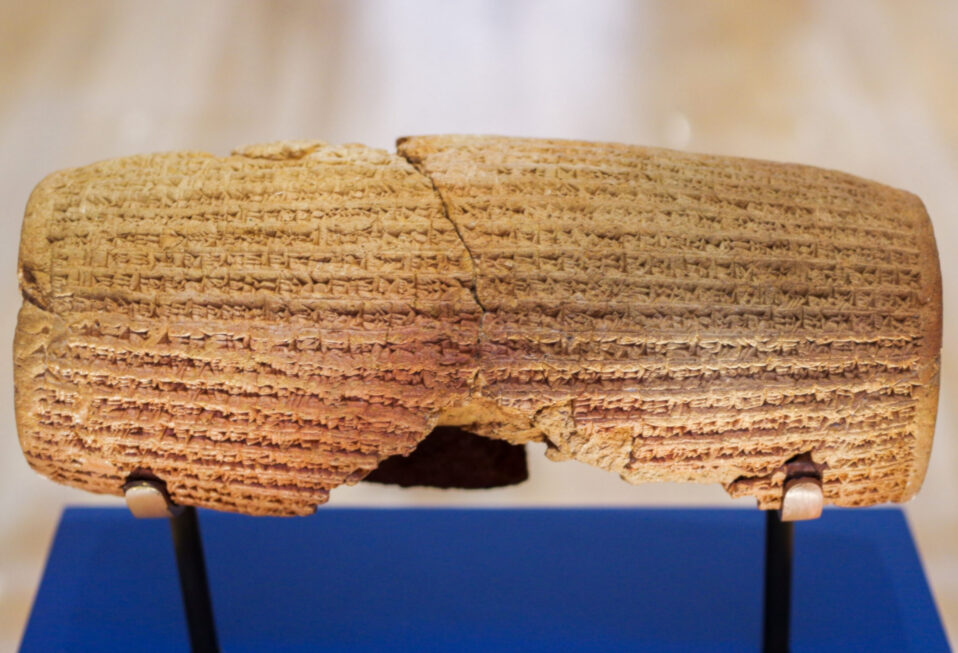
The Islamic Republic of Iran is home to some 10,000 to 15,000 Jews, who remain as the modern remnants of ancient Jews captured in Jerusalem and forcibly deported to Babylon in 587/586 B.C. While it’s not common knowledge, even now Iran’s Jewish population is the second largest in the Middle East after Israel. Also not well known is the existence of the Cyrus Cylinder, an archaeological treasure dating from the sixth century B.C. and displayed in London’s British Museum.

Discovered in Babylon (modern-day Iraq) in 1879, the clay cylinder draws a straight line from ancient Persia to Jewish people and their history with inscriptions from King Cyrus. In part, Cyrus observes in the cuneiform text, “I took up my lordly abode in the royal palace amidst rejoicing and happiness. … My vast army marched into Babylon in peace; I did not permit anyone to frighten the people.”

Scholars often call Cyrus’s decrees for the Jews the “first charter of human rights.” Cyrus, a pagan king, allowed all the people he conquered—including Jews—to keep their religions and cultures. Today, in exploring the destiny of modern Iranian Jews we find another Middle Eastern set of complicated facts and questions.

Let’s take a moment to revisit the 70-year Jewish exile in Babylon. The annals of biblical and archaeological history recount Nebuchadnezzar’s destruction of Solomon’s Temple and eventually the rise of Cyrus the Great in 539 B.C. Why is Persian King Cyrus described as “great?” Apart from his military achievements, tolerant rule, and political astuteness, God tapped this secular ruler to liberate the Jewish exiles by repatriating Jews to their homeland.

Some 50,000 exiled Jews undertook the grueling 900-mile journey to Jerusalem. Most remained behind, however, possibly because many felt they were too old, or they preferred their good lives in Cyrus’ kingdom. The prolific prophet Isaiah mentioned Cyrus by name in Isaiah 44:28 and 45:1—some 150 years before Cyrus freed and financed not only the return of the Jews but also the wherewithal to rebuild the second Temple!

Cyrus’ words are not only inscribed in the Cyrus Cylinder but also in Ezra 1:2-3 “This is what Cyrus king of Persia says, ‘The LORD, the God of heaven, has given me all the kingdoms of the earth and he has appointed me to build a temple for him at Jerusalem in Judah. Any of his people among you may go up to Jerusalem in Judah and build the temple of the LORD, the God of Israel, the God who is in Jerusalem, and may their God be with them.”

This link gives added historical insights: [view here].

In modern times, millennia after the human-rights King Cyrus, the Islamic Regime conquered what was called Persia in 1979 and rebranded the country with its Shia Islam. Its apocalyptic ayatollahs are bent on welcoming the so-called Twelfth Imam to rule the world in the end times, an oppressive, one-sided religious governance. Their theology is light years away from the freedom-loving historic King Cyrus.

That said, surprisingly the Jewish community has lived a somewhat unrestricted life under the Islamic Regime. With 30 synagogues, Jewish schools, youth sports, kosher butcher shops, restaurants, and a matzah factory, Jews are an official religious minority and hold one seat in the Iranian parliament. Nevertheless, with upwards of 100,000 Jews living in Iran in 1979, numerous individuals and families fled to Israel and the United States before and after the revolution in waves of mass immigration.

The continuation of comparative calm for the Jewish community is now highly questionable since the Twelve Day War started on June 13. The Iranian Jewish community’s concerns are multiplying by the day. The Regime is arresting dozens of Jews, and some are held without any outside contact. Detainees include rabbis and other Jewish leaders amid a sobering headline in Israel’s Ynet Global News: “Anyone Can Disappear.”

The Regime is focusing right now on Jews with relatives in Israel. The Persian Human Rights News Agency HRANA mentions a November 2011 law that had already restricted family ties between Israeli and Iranian Jews. The Iranian Parliament banned Iranian Jews from travel to Israel. The punishment is up to five years in prison and passport ineligibility. A leader in the Tehran Jewish Association commented anonymously, “We’ve seen limited summonses during previous crises, but the current scale is unprecedented and has raised serious concerns about the psychological and social well-being of our community.”

As the world’s largest sponsor of terror, the Islamic Regime has a track record of fostering horrific evil outside its borders. But it also holds another world record: the second-highest number of executions inside Iran, according to Amnesty International. Only China outpaces Iran in that regard. I daresay all Iranians are aware of the prisons, public hangings, and hateful cries against Israel and the United States even now—in their parliament and funerals after their recent widespread losses in weapons, nuclear sites, and leadership.

I am puzzled now about the Islamic Regime’s leaders amid their war losses. When I recall the total defeat of Japan and Germany in World War II, I have concluded that Iran’s culture is so vastly immersed in cruelty and domination that it has transitioned into more than its Shia Religion. It is a literal Religion of Evil. They will not give up. Even now.

The 2,700-year-old Jewish community is walking an incredibly fragile tightrope. Some diaspora Iranians tend to think Iran’s Jews voicing support for the Regime is a survival strategy. On the other hand, the Central Jewish Committee of Tehran states that “Judaism is a religion, not a political ideology,” adding that Iranian Jews are completely separate from the Zionist (Israel) regime.

Yasmin Shalom Mottahedeh, an Israeli who made Aliyah in the 1980s, put it this way in an interview a few years ago: “The country can never be empty of Jews. It’s a community that has survived since the Babylonian exile after the destruction of the First Temple.” Yasmin concluded, “Jews have had the opportunity to leave, but those who are there have chosen to stay for a reason.”

It is impossible for us to know or understand why every Jew did not flee Iran both leading up to and following 1979. But we do know that the Islamic Regime is a deadly one. Prayers for the Iranian Jews are necessary, as the oppressive leaders attempt to rebuild the country by murdering anyone who stands in their way, Jews and non-Jews. And the ultimate prayer: That all Iranians will rise in freedom to rebuild their beautiful Persian country.

Our CBN Israel team welcomes you to join us in prayers for Iranian Jews by reflecting on King Cyrus’ quote in Ezra 1:3—“And may their God be with them.”

Prayer Points:

  • Pray the God of Abraham, Isaac, and Jacob will reveal His fullness to the Jews of Iran.
  • Pray that God’s heavenly armies will surround the Iranian Jewish families with safety.
  • Pray that the Islamic Regime will release the Jews they arrested back to their families.
  • Pray Iranian Jews will not suffer the evils leveled against Israeli Jews on October 7, 2023. 

Arlene Bridges Samuels is the weekly feature columnist for CBN Israel since 2020. Working on the staff of the American Israel Public Affairs Committee (AIPAC) as their SE Regional Outreach Director for nine years, International Christian Embassy Jerusalem USA engaged her as the Leadership Outreach Director part-time for their project American Christian Leaders for Israel. Arlene is an author at The Blogs-Times of Israel, is published at AllIsrael.com and The Jerusalem Connection, and has traveled to Israel since 1990. By invitation, she attends Israel’s Government Press Office Christian Media Summits as part of Christian media worldwide. In 2024, Arlene and her husband Paul co-authored Mental Health Meltdown: Illuminating the Voices of Bipolar and Other Mental Illnesses. www.TheMentalHealthMeltdown.com.


Read more

Read more

Torah Reading Devotional: Parashat Shoftim (שֹׁפְטִים)—“Judges”

This week’s Torah reading is Parashat Shoftim (Deuteronomy 16:18-21:9). Read on Shabbat, August 30, 2025 / 6 Elul 5785. The following is a special devotional drawn from this week’s reading.

“Appoint judges and officers in all your towns that the LORD your God is giving you, according to your tribes, and they shall judge the people with righteous judgment. You shall not pervert justice; you shall not show partiality; and you shall not accept a bribe, for a bribe blinds the eyes of the wise and subverts the cause of the righteous” (Deuteronomy 16:18-19).

Moses lays before Israel the foundational call for justice. Leadership, in God’s eyes, begins with integrity. Judges and officials are entrusted not to wield power for themselves, but to uphold righteousness without favoritism or corruption.

The portion continues with laws for kings, priests, prophets, cities of refuge, false witnesses, and warfare. Each is given to ensure accountability, to protect the vulnerable, and to remind Israel that no one stands above the law of God.

Justice is not a distant ideal; it is meant to be lived daily, in every town, family, and community. When rulers cling too tightly to power, or when compassion is sidelined for expedience, the entire nation and society suffers.

Shoftim reminds us that justice is not only the duty of leaders. It is a call upon every heart. How we treat coworkers, how we speak of neighbors, and how we handle resources all reveal whether we reflect the justice of God.

To act justly requires humility, vigilance, and courage. It means noticing the quiet needs around us, protecting those who cannot protect themselves, and speaking truth even when silence would be easier.

In our own lives, injustice can sometimes feel too large to confront, whether in society or within our own hearts. Yet Shoftim calls us to see that justice begins in the small choices.

Ask yourself: where can I uphold justice today? Perhaps in refusing to cut corners, in offering a fair word instead of gossip, or in welcoming someone who is often overlooked. These moments may seem small, but they are seeds of blessing, for each act of integrity reflects the heart of God.

If you are weary of injustice, do not lose hope. God calls His people to embody a different way. Even one choice to act with fairness and compassion can bear witness to His kingdom.

And if you are in a season of blessing, remember that gratitude must be joined with responsibility. To receive much is also to be entrusted with much, and justice is one of the surest ways we honor that trust.

This week, seek one intentional way to bring fairness into your space—at home, at work, or in your community.

Let your words and actions align with the vision God set before Israel: a people known not for power or wealth, but for righteousness, mercy, and truth.

PRAYER
Lord, please open my eyes to see injustice. Give me wisdom to act with fairness, courage to speak with integrity, and humility to walk in Your ways. Amen.

Read more

Israel’s Lion Rises—and the U.S. Hammer Strikes at Midnight

By Arlene Bridges Samuels

On Thursday afternoon, June 12, Israeli Prime Minister Benjamin Netanyahu walked to the Western Wall (Kotel) with his prayer shawl draped over his suit and the customary kippah on his head. He wedged a note from Numbers 23:24 into the crevice, “Behold, the people shall rise up as a great lion.”

The note in the Kotel was made public the next day—after Netanyahu’s address during Israel’s Operation Rising Lion ascending out of ancient Jewish history before the air strikes on Iran early the next morning. Indeed, the Lion is rising with God’s Hand—evident in extraordinary plans and miracles, despite the faltering Islamic Regime that deliberately targeted Israeli civilians and infrastructure.

Days passed during which Israel fought alone with extraordinary success against the Islamic Regime, the world’s largest terror threat. Global news outlets and commentators declared that division existed between President Trump and Prime Minister Netanyahu. Would the U.S. commander-in-chief utilize our B-2 stealth bombers to drop the Massive Ordnance Penetrator (MOP), often dubbed the “bunker buster” bomb—on Fordow, Iran’s deepest underground nuclear production site?

The answer exploded into headlines in the early hours of Sunday, June 22. Our commander-in-chief, President Donald J. Trump, who earlier gave the Islamic Regime a final two-week ultimatum for diplomacy, acted militarily after the Regime’s pointed refusal. The United States B-2 Spirit stealth bombers struck Iran’s nuclear facilities at Fordow, Natanz, and Isfahan. The operation was code-named Midnight Hammer, and President Trump enacted his covert maneuvers with his words and schedule. He spoke in nonspecific terms, presented a calm demeanor, and maintained a normal schedule—that is, until right before Midnight Hammer began.

Planned diversionary flights by U.S. stealth bombers headed east in an aerial fake. Other B-2s flew west toward Iran, their true destination to destroy three nuclear sites. In a cooperative goal to disable the terror regime, Midnight Hammer and Rising Lion implemented their own specialized skills and weaponry. Israel never asks the United States for boots on the ground, and during the B-2 attacks, Iran fired no missiles at our U.S. Air Force and no military personnel were harmed. The precision of the Israel and American air forces in targeting only military sites and Islamic Regime terrorists is admirable. In contrast, Iran’s leaders directly attack Israeli civilians, which is unsurprising since that is how Iran’s proxies Hamas, Hezbollah, and the Houthis have functioned during decades of evil.

At this writing, a ceasefire is in place between Iran and Israel, brokered by President Trump. Currently described as the Twelve Day War, Israel extraordinarily met its goal to disable Iran’s nuclear dream of destroying the world’s only Jewish state. Since 1979, the Islamic Regime and its surrogates have attacked and killed Americans upwards of 45 times. In the Iran hostage crisis of 1979, 66 Americans were held captive for 444 days in the U.S. Embassy in Tehran. In 1983, Iran-backed Hezbollah drove a truck bomb into a U.S. Marine compound in Beirut, Lebanon, killing 220 Marines. In the Iraq War, Iran-backed terrorists killed at least 603 American soldiers. In 2020, an Iranian ballistic missile hit an American air base, leaving 100 American soldiers with traumatic brain injuries. President Trump not only aided Israel with our precision stealth bombers, he enacted justice for our country!

Although the U.S. Department of Homeland Security (DHS) and our State Department have issued domestic and global alerts for our vigilance, it seems the U.S., Israel, and the world can rest a little easier for now. 

Oppressed Iranian citizens are celebrating the possibility of freedom after more than four decades of Islamic tyranny. Nevertheless, almost immediately, outrage against President Trump was voiced by Democrats, leftists, and Islamist imams in the United States. President Trump has remained consistent since he first ran for president, repeatedly declaring, “Iran cannot have a nuclear weapon.” He added on May 13, “Iran can have a much brighter future—but we’ll never allow America and its allies to be threatened with terrorism or a nuclear attack. The choice is theirs to make. We really want them to be a successful country.” Although he preferred demonstrated diplomacy smartly done, he acted on peace through strength as the only solution to disarm Iran’s goal of destroying Israel and America to gain worldwide dominance.

President Trump’s stance is the opposite of past American leaders’ appeasement. Their disastrous 2015 Joint Comprehensive Plan of Action Joint (JCPOA) was based on their inability or refusal to recognize the difference between evil and good. During the Obama and Biden eras, Hillary Clinton and John Kerry directed an operation of deception to foist it onto Americans. Obama made a $400 million cash transfer to the Ayatollahs. Biden as president gave huge sanctions relief that amounted to $16 billion. When John Kerry ran the State Department, he blocked FBI arrests of Iranian operatives in the U.S. to protect the misguided JCPOA agreement.

When you hear less-than-reliable versions about the decisions of President Trump or Prime Minister Netanyahu, recall these examples of free speech hatred in the United States. Yasir Qadhi—a Muslim cleric in Plano, Texas, who is considered the “architect of Islamization in Texas”—pushes American Muslims to unite against non-Muslims, whom he refers to as Kaffir—“filthy unbelievers.” Praising the Islamic Regime, he is against Muslims who do not agree with his ideological warfare.

Say what you will, it does not change the fact that President Trump and Prime Minister Netanyahu know the vast difference between evil and good. They have acted in a war they did not ask for but which was necessary to gain peace for our world through strength. They are rational leaders seeking peace by disabling the irrational Islamist Regime instigating hate through terror. Polling varies, and while Americans are anxious about what’s next, three in four voters now see Iran as a real security threat.

On June 21, when President Trump gave his speech after the U.S. Air Force’s precision strikes to cut off the head of the Iranian snake, he declared in closing: “I want to just say we love You, God.” On June 22, PM Netanyahu returned to the Kotel to give thanks for President Trump and pray for the IDF. Again referring to Numbers 23:24, he commented: “Today I return to the same place—and there is a new note: ‘And a nation rose as a lion.’”  

Our CBN Israel team welcomes you to join us with prayers reflecting on this verse: 

Revelation 5:5: “Behold, the Lion of the tribe of Judah, the Root of David, has prevailed to open the scroll and its seven seals.”

Prayer Points:

  • Pray for U.S. Army soldiers stationed in Bahrain, Egypt, Iraq, Jordan, Kuwait, Qatar, Saudi Arabia, Syria, and the United Arab Emirates. 
  • Pray for Israeli civilians under fire from Iranian ballistic missiles.
  • Pray for displaced Israeli families and for Israel Defense Forces.
  • Pray for Iranians longing for freedom.

Arlene Bridges Samuels is the weekly feature columnist for CBN Israel since 2020. Working on the staff of the American Israel Public Affairs Committee (AIPAC) as their SE Regional Outreach Director for nine years, International Christian Embassy Jerusalem USA engaged her as the Leadership Outreach Director part-time for their project American Christian Leaders for Israel. Arlene is an author at The Blogs-Times of Israel, is published at AllIsrael.com and The Jerusalem Connection, and has traveled to Israel since 1990. By invitation, she attends Israel’s Government Press Office Christian Media Summits as part of Christian media worldwide. In 2024, Arlene and her husband Paul co-authored Mental Health Meltdown: Illuminating the Voices of Bipolar and Other Mental Illnesses. www.TheMentalHealthMeltdown.com.

Read more

Read more

The Elah Valley: Where Faith Faced Fear

By Stephen Faircloth

Scripture often speaks not only through words, but through the land itself. The hills, valleys, and roads of ancient Israel weren’t just a backdrop; they were part of the message. To walk the land is, in many ways, to walk into the heart of the Bible’s message. One powerful example is the Elah Valley, a place etched forever in the memory of God’s people as the site where a shepherd boy’s faith overcame a giant’s threat.

This valley was not chosen at random. The biblical author of 1 Samuel 17 places the clash between David and Goliath right here for a reason. The geography tells a story that magnifies the miracle.

To picture it, imagine Israel as a loaf of bread: tall in the center and flat on either side. That center is the Hill Country, home to Bethlehem, where David was born. To the west lies the Coastal Plain, where the Philistines held power. Between them lies a transitional region called the Shephelah, a series of rolling hills and fertile valleys, natural highways between enemy territories. One such highway is the Elah Valley.

This valley was more than a battlefield. It was a threshold between light and darkness, between the people of God and the forces seeking to conquer them. On one end stood Gath, Goliath’s hometown, symbolizing defiance and brute strength. On the other stood Bethlehem, the city of David, symbolizing covenant, promise, and God’s chosen future.

When the Philistines encroached upon the Elah Valley, their aim wasn’t just a skirmish; they were advancing toward Bethlehem, toward the heart of Judah. Their movement was strategic, their goal clear: to gain a foothold in Israel’s highlands and disrupt the plans of God’s people.

Enter David.

Sent by his father Jesse to check on his brothers, David didn’t arrive at the battlefield by chance. He walked a path his ancestors had known, through a valley his enemies coveted. What began as an errand quickly became a divine appointment. Where others saw a giant, David saw an opportunity for God to be glorified. His courage was not rooted in military prowess but in a deep, immovable trust in the Lord of hosts.

Even today, you can stand in the Elah Valley and trace the brook where David chose five smooth stones. You can see where the Philistine forces gathered and where Saul’s army waited. The very land still whispers of that unforgettable moment when faith stepped forward, and fear fell.

The Elah Valley reminds us that battles, both ancient and personal, are often fought in in-between places. The terrain may feel uncertain, the threat intimidating. But it is precisely there, in that valley between opposing forces, that God often reveals His power.

As you read the story of David and Goliath, don’t just see a boy and a giant. See a valley of decision, where geography and destiny collided, and where God’s faithfulness shone through the courage of one who trusted Him completely.

When you understand the land, you begin to understand the heart of the story. And when you walk through the valleys of your own life, remember: the God of the Elah Valley still fights for His people.

Stephen Faircloth is the President of CBN Israel, an initiative dedicated to sharing the true story of the Jewish nation and inspiring a global community of Christians to stand with Israel and support her people in need. Our vision is to reshape the global conversation about Israel by fostering understanding, hope, and healing between Jews and Christians around the world. For more than 50 years, the Christian Broadcasting Network has supported Israel. By joining CBN Israel, you become part of this enduring legacy, transforming lives today and strengthening Christian support for Israel for generations to come.

Read more