

ARTICLES

Walking the Jerusalem Pilgrimage Road

By Stephen Faircloth

In the southern part of ancient Jerusalem, a remarkable stone road once led pilgrims on a sacred journey. This road, often called the Jerusalem Pilgrimage Road, connected the Pool of Siloam to the Temple Mount. It was along this path that countless worshipers made their way upward, step by step, toward the presence of God.

The journey often began at the Pool of Siloam. Many believe pilgrims would pause there to wash and prepare themselves before ascending to the Temple. From that point, the road stretched upward for about 600 meters, wide and carefully paved with large stones. Its unique pattern of steps and landings created a steady rhythm for those making the climb.

This was not just a road. It was an experience. Imagine the sound of feet moving together, families and communities walking side by side. Songs of praise rising as people ascended. Hearts filled with expectation. Each step carried meaning, not only physically drawing them closer to the Temple, but spiritually preparing them to meet with God.

Today, portions of this ancient road have been uncovered, allowing us to glimpse the path once taken by worshipers in the time of Jesus. This was likely one of the routes He and His disciples walked as they went up to Jerusalem for the festivals. These stones, worn by countless footsteps, remind us that faith has always been a journey.

The pilgrimage road speaks to us in a deeply personal way. Our walk with God is not a single moment, but a series of steps. Sometimes the path feels steady and clear. Other times it feels uphill, requiring effort and perseverance. Yet each step matters. Each step draws us closer to Him.

The pilgrims did not simply arrive at the Temple. They approached it with intention. They prepared their hearts along the way. Their journey was as meaningful as their destination.

We are invited into that same kind of walk.

Are we moving toward God with purpose? Are we allowing each step of our lives to shape us, refine us, and prepare us for deeper fellowship with Him? Or are we rushing through, missing the sacredness of the journey?

The road to worship is still before us. It may not be paved with ancient stones, but it is marked by daily choices, quiet moments of prayer, acts of obedience, and steps of faith.

God meets us not only at the destination, but along the way.

Stephen Faircloth is the President of CBN Israel, an initiative dedicated to sharing the true story of the Jewish nation and inspiring a global community of Christians to stand with Israel and support her people in need. Our vision is to reshape the global conversation about Israel by fostering understanding, hope, and healing between Jews and Christians around the world. For more than 50 years, the Christian Broadcasting Network has supported Israel. By joining CBN Israel, you become part of this enduring legacy, transforming lives today and strengthening Christian support for Israel for generations to come.

Read more

Weekly Devotional: Finding God in Everyday Blessings

“Then our sons in their youth will be like well-nurtured plants, and our daughters will be like pillars carved to adorn a palace. Our barns will be filled with every kind of provision. Our sheep will increase by thousands, by tens of thousands in our fields; our oxen will draw heavy loads. There will be no breaching of walls, no going into captivity, no cry of distress in our streets. Blessed is the people of whom this is true; blessed is the people whose God is the Lord” (Psalm 144:12-15).

The psalmist paints a picture of a life filled with simple, meaningful blessings. Children growing strong and secure. Homes established with beauty and stability. Barns full, flocks multiplying, work flourishing. A community at peace, free from fear and distress. It is a vision not of luxury, but of wholeness.

These were the desires of everyday people in the biblical world. They longed for family, provision, security, and peace. And they recognized something essential: these blessings did not come from their own strength alone. They came from God.

At the heart of the psalm is a clear truth. “Blessed is the people whose God is the LORD.” The source of a full and flourishing life is not found in possessions or circumstances, but in relationship with Him.

In the Old Testament, God’s promises often touched the very practical areas of life. He provided rain for crops, growth for herds, strength for families, and peace within communities. These were not abstract or distant blessings. They were tangible, daily expressions of His care.

But these blessings were also connected to trust and obedience. When the people walked with God, they experienced His provision. When they turned away, they felt the consequences in very real ways. Their daily lives reflected the condition of their relationship with Him.

This can feel unfamiliar to us. We often separate the spiritual from the practical. We look for God in extraordinary moments, while overlooking His hand in the ordinary. We may even miss the quiet ways He provides for us each day.

Yet the psalm invites us to see differently. God is present in the daily rhythms of life. In the provision of food, the stability of home, the relationships we cherish, and the peace we experience. These are not small things. They are signs of His ongoing care.

True blessing is not found in having everything we want, but in recognizing the One who faithfully provides what we need. When we begin to see our lives through this lens, gratitude grows.

The ordinary becomes meaningful. The daily becomes sacred. We realize that God has been present all along, sustaining us in ways we may have overlooked.

The question is not whether God is providing. It is whether we are noticing. May we learn to see His hand in the everyday moments and find joy in His faithful care.

PRAYER

Father, open our eyes to see Your provision in our daily lives. Help us not overlook the ordinary blessings You give. Teach us to walk with You in trust and gratitude, recognizing that every good thing comes from Your hand. Amen.

Read more

Parashat Bamidbar (בְּמִדְבַּר) “In the Wilderness”

This week’s Torah reading is Parashat Bamidbar (Numbers 1:1-4:20). Read on Shabbat, May 23, 2026 / 6 Sivan 5786. The following is a special devotional drawn from this week’s reading.

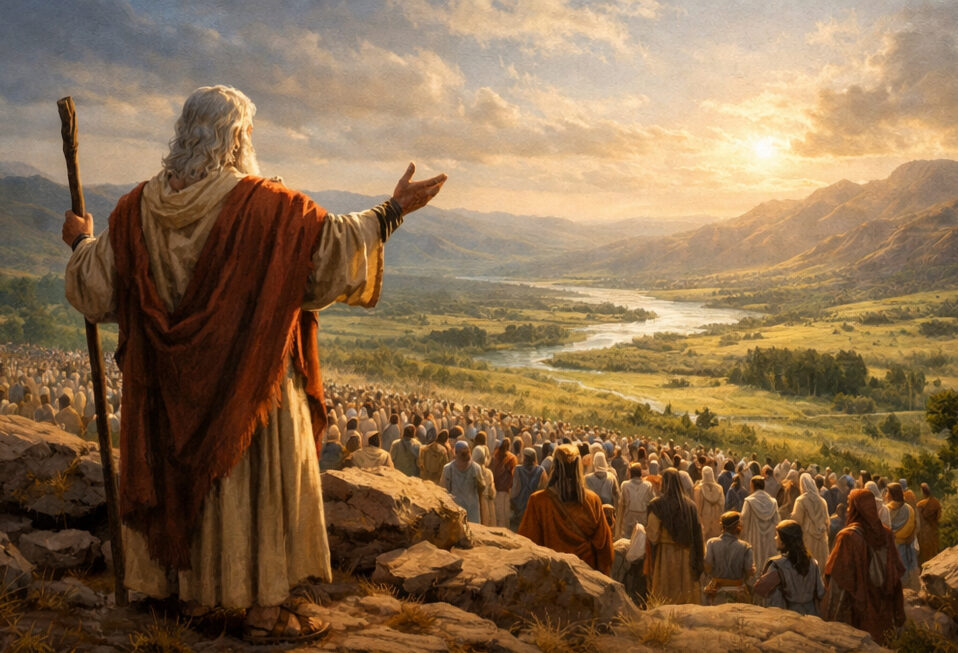
“The LORD spoke to Moses in the wilderness of Sinai, in the tent of meeting” (Numbers 1:1).

Parashat Bamidbar opens with a census of the people of Israel as they prepare to journey through the wilderness. Each tribe is counted, each family recognized, and every individual given a place within the community. This careful ordering reveals that God is attentive not only to the nation as a whole but to each person within it. No one is overlooked. Each life carries purpose and belonging.

The arrangement of the camp reflects both structure and relationship. The tribes are positioned around the Tabernacle, placing God’s presence at the center. This design teaches that identity and direction flow from nearness to Him. The people do not move randomly through the wilderness. They travel with intention, guided by God’s presence and anchored in His order.

Bamidbar reminds us that the wilderness is not a place of abandonment but a place of formation. Though it may appear uncertain and unstructured, God is actively shaping His people there. He organizes, assigns roles, and provides direction. The wilderness becomes a setting where dependence on God deepens and trust is refined.

Many experience seasons that feel like wilderness moments. Plans may be unclear, and the path forward may seem uncertain. This portion offers reassurance that God still speaks in such places. He sees each individual, knows their place, and provides guidance even when the journey is not fully understood.

There are also times when life feels structured and settled. Bamidbar invites reflection on what stands at the center. When God remains central, order brings peace and purpose. When He is pushed aside, even well-planned structures can lose their meaning.

As this Shabbat arrives, consider where God is calling you to recognize His presence more clearly. Reflect on your place within His greater purpose and the ways He has ordered your life. Trust that whether in clarity or uncertainty, He is guiding your steps and shaping your journey.

PRAYER
Lord, thank You for seeing me and calling me by name. Help me trust You in every season, especially when the path is unclear. Keep Your presence at the center of my life and guide me in the way I should go. Amen.

Read more

Rabbis and Pastors in the U.S. Unite in Advocating for Israel

By Arlene Bridges Samuels

Mainstream media coverage often leans toward negative narratives, leaving little room for stories of unity and cooperation. Yet a growing movement is taking shape across the United States, driven by rabbis, pastors, and faith leaders who are standing together in support of Israel.

In a time marked by uncertainty and division, many faith communities are seeking reliable information and meaningful ways to respond. Interfaith advocacy is emerging as a fact based and action-oriented effort that combines informed engagement, prayer, and hope. This collaboration reflects a renewed commitment to shared values rooted in Judeo Christian traditions.

A significant example of this momentum was seen recently in Washington, D.C., where 500 rabbis, pastors, and faith leaders from more than 37 states gathered for Israel Advocacy Day. Their presence in the halls of Congress demonstrated a unified voice and a growing commitment to constructive engagement.

This effort brought together a wide range of organizations. Christian participants included the International Christian Embassy Jerusalem USA, American Christian Leaders for Israel, Eagles’ Wings, Israel Christian Nexus, and the Israel Allies Foundation. Jewish organizations included the Jewish Federations of North America, the Orthodox Union, the Rabbinical Council of America, and the Zionist Rabbinic Coalition.

The cooperation between these groups reflects a shift from informal relationships to intentional partnerships. Faith leaders are working together to strengthen understanding, address misinformation, and support policies that reinforce stability and security.

The roots of Israel Advocacy Day can be traced to the aftermath of October 7, 2023, when faith leaders recognized the need for a coordinated response. In a short time, this initiative has developed into a structured platform that engages lawmakers from both major political parties. Participants meet with members of Congress and their staff to discuss issues related to Israel, rising antisemitism, and the protection of religious communities.

Shelley Neese, president of The Jerusalem Connection and coordinator for American Christian Leaders for Israel, has observed this transformation firsthand. She notes that Jewish and Christian leaders are no longer simply acquainted. They are working as allies. This partnership has strengthened communication and encouraged greater clarity in how both communities express their support for Israel.

During Israel Advocacy Day on May 6, mixed delegations of rabbis and pastors held 115 meetings across Capitol Hill. These discussions reflected broader public sentiment, including polling data that shows strong support for Israel among American voters. Faith leaders are helping to ensure that this support remains visible and active in the policy arena.

The advocacy agenda focused on reinforcing bipartisan support for Israel, addressing the rise in antisemitic incidents both in the United States and globally, and strengthening protections for houses of worship and faith-based communities.

The gathering concluded with remarks from public officials and community leaders, including Representative Don Bacon, Israeli Ambassador Yehiel Leiter, U.S. Special Envoy Yehuda Kaploun, and senior legal officials focused on civil rights. Their participation highlighted the importance of continued dialogue between faith communities and government leaders.

The evening before Advocacy Day, hundreds gathered for a gala that reflected both concern and hope. Eric Fingerhut, president and CEO of the Jewish Federations of North America, described the period since October 7 as deeply challenging. Yet he also pointed to the visible unity between Jews and Christians as a source of encouragement. Religious leaders emphasized the importance of expanding these partnerships in the years ahead.

For many Christian organizations, this level of collaboration represents the fulfillment of long-standing efforts to build meaningful relationships with the Jewish community. The breadth of participation from Jewish organizations signals a shared commitment to future cooperation.

Dr. Susan Michael, president of ICEJ USA, emphasized that support for Israel extends beyond any single community. She noted that it matters to millions of Americans. Jordanna McMillan of the Israel Allies Foundation affirmed that Jewish communities are not alone. Bishop Robert Stearns of Eagles’ Wings Ministries added a clear call to action, stating that passive concern is no longer sufficient and that people of faith must respond with purpose and conviction.

In a time when misinformation spreads quickly, this growing alliance offers a different path. It demonstrates that unity, informed advocacy, and shared purpose can shape meaningful outcomes.

Our CBN Israel team welcomes you to join us in prayer.

Prayer Points:

  • Pray for each Christian organization involved in this effort.
  • Pray for each Jewish organization participating in this growing partnership.
  • Pray for continued unity and active advocacy among Christians and Jews.
  • Pray for members of Congress to maintain strong and informed support for the United States and Israel relationship.
Read more

Answering the Cry of the Hungry

Before the war with Iran and its terror proxies in the region, more than 20 percent of Israelis lived below the poverty line. Since then, that number has more than doubled as families have been pushed into financial crisis.

Today, hundreds of citizens remain displaced across Israel. Many have lost jobs or been forced to close their businesses. Some are living in temporary housing without a way to cook a hot meal, while others struggle daily against rising prices that make survival even harder. Local charities now report a 60 percent increase in families asking for help since October 7.

The need is staggering. According to Israel’s alternative poverty report, more than 22 percent of families now live in poverty and nearly 40 percent of them are children. Over 10 percent of households face severe food insecurity, not knowing where their next meal will come from. And during holidays, when families should be celebrating around a full table, many experience the pain of empty cupboards and loneliness instead.

In the face of this crisis, CBN Israel and its partners are working every day to bring relief. With the help of generous supporters, monthly food packages, fresh groceries, and hygiene items are being delivered to tens of thousands of families. These efforts reach Jewish, Muslim, Christian, Druze, and Bedouin households alike, ensuring that no one is forgotten.

Supporters are also making possible large-scale food rescue initiatives, where surplus food from manufacturers and retailers is salvaged and redirected from waste into the hands of those in need. Families are receiving shelf-stable and fresh items, poultry, and other proteins that provide balanced nutrition and restore dignity.

One local partner shared heartfelt thanks, saying, “You made us feel we are not alone in a very lonely and scary time.”

The generosity of CBN Israel’s friends is already answering the cry of the hungry. But the need continues to grow, and there is room for you to join in this vital mission. By standing with Israel’s most vulnerable, you can help bring food to empty tables, relief to displaced families, and encouragement to those who feel forgotten during one of the hardest seasons in Israel’s history.

Your gifts to CBN Israel can give hope and aid to so many in need who feel alone. You can offer them hot meals, safe lodging, financial help, and more.

Please consider a special gift to bless others today!

GIVE TODAY

Read more

Seeing the Ministry of Jesus from the Heights of Arbel

By Stephen Faircloth

High above the northwest shores of the Sea of Galilee rise the cliffs of Arbel, a dramatic ridge of limestone that overlooks the fertile plain of Gennesar. From this vantage point, the view is breathtaking. The waters of the lake stretch out below, and the surrounding hills frame the very region where much of Jesus’ ministry unfolded. Standing here, one can take in the landscape where He taught, healed, and called His disciples.

Arbel is more than a scenic overlook. It is a place layered with history, faith, and human struggle. The settlement that developed here dates back to the second century B.C., likely part of a wave of Jewish life returning to the Galilee. Over time, it became a thriving village, known for its agriculture. The fertile valley below produced grain, while the people of Arbel cultivated flax and crafted linen, sustaining both their community and local trade.

Life here, however, was not always peaceful. The cliffs that now inspire awe once served as places of refuge and resistance. Caves carved into the rock provided hiding places during times of conflict. Armies clashed in this region, and those seeking escape would retreat into these natural strongholds. The history of Arbel includes moments of courage, desperation, and survival.

Yet as we reflect on Arbel today, our focus naturally shifts to what lies below. The shores of the Sea of Galilee hold the story of Jesus’ ministry. From these heights, we are reminded that the message of Christ was lived out in real places, among real people, in the midst of both ordinary life and great tension.

Imagine standing on these cliffs during the first century. Below, fishermen cast their nets. Villages buzzed with activity. Crowds gathered to hear a teacher whose words carried authority and grace. From places like this, one can better appreciate how close everything was, how interconnected the towns and landscapes were in the life of Jesus.

Arbel invites us to pause and gain perspective. From above, the details of life come into focus differently. What seems overwhelming up close can appear clearer from a higher vantage point. In the same way, God often invites us to step back and see our lives from His perspective. The challenges we face, the uncertainties we carry, and the paths we walk are all held within His greater view.

This place also reminds us that faith is lived out in the midst of real life. The people who once lived here worked the land, raised families, faced hardship, and sought God in their daily routines. Their lives were not removed from struggle, yet they were part of God’s unfolding story.

As we consider Arbel, we are encouraged to lift our eyes. To remember that God is at work not only in the dramatic moments, but in the ordinary rhythms of life. He meets us where we are, just as He did along the shores below. From the heights of Arbel, we are reminded that while our view is limited, His is not. And we can trust Him with every step we take.

Stephen Faircloth is the President of CBN Israel, an initiative dedicated to sharing the true story of the Jewish nation and inspiring a global community of Christians to stand with Israel and support her people in need. Our vision is to reshape the global conversation about Israel by fostering understanding, hope, and healing between Jews and Christians around the world. For more than 50 years, the Christian Broadcasting Network has supported Israel. By joining CBN Israel, you become part of this enduring legacy, transforming lives today and strengthening Christian support for Israel for generations to come.

Read more

Weekly Devotional: Extending the Mercy We Have Received

“For if you forgive others for their transgressions, your heavenly Father will also forgive you. But if you do not forgive others, then your Father will not forgive your transgressions” (Matthew 6:14-15).

At the heart of Jesus’ teaching is a simple but deeply challenging truth: those who have been forgiven are called to forgive. When He taught His disciples how to pray, He included these words, “Forgive us our debts, as we also have forgiven our debtors.” Forgiveness is not just something we receive from God. It is something we are meant to give.

This is where the message becomes personal. Each of us stands in need of grace. Through Christ, we have been offered complete forgiveness, not because we earned it, but because of God’s love. When we begin to grasp the depth of that mercy, it changes how we see others. The offenses we carry are held in the light of the forgiveness we ourselves have received.

Jesus reinforced this principle again and again. “Blessed are the merciful,” He said, “for they will be shown mercy.” The measure we use with others often reflects the posture of our own hearts. When we choose mercy, we align ourselves with the heart of God.

Yet forgiveness is not easy. It is not pretending the hurt did not happen. It is not excusing wrongdoing. It is a decision to release the debt, to let go of the right to repay hurt with hurt. It is choosing to surrender our desire for control and entrust justice to God.

This kind of forgiveness does not come naturally. It flows from a transformed heart. Scripture reminds us that God’s love has been poured into our hearts. That means we are not left to forgive in our own strength. We draw from what God has already given us.

When we refuse to forgive, we often carry the burden ourselves. Bitterness takes root, and it shapes how we see people and situations. But when we choose forgiveness, even when it is difficult, we step into freedom. We reflect the very grace we have received.

Imagine the impact if we lived this way daily. Relationships would begin to heal. Communities would grow stronger. Families would experience restoration. Forgiveness has the power to change not only individual hearts, but entire environments.

Jesus calls us to live differently. Because we have been forgiven much, we are invited to forgive much. Who is God asking you to forgive today?

PRAYER

Father, thank You for the forgiveness You have given me. Help me extend that same mercy to others. Soften my heart, release any bitterness, and teach me to walk in grace and freedom. Amen.

Read more

Parashat Behar-Bechukotai (בְּהַר־בְּחֻקֹּתַי) “On the Mountain / In My Statutes”

This week’s Torah reading is Parashat Behar-Bechukotai (Leviticus 25:1-27:34). Read on Shabbat, May 9, 2026 / 28 Iyar 5786. The following is a special devotional drawn from this week’s reading.

“If you walk in My statutes and keep My commandments and do them, then I will give you your rains in their season, and the land shall yield its produce, and the trees of the field shall yield their fruit” (Leviticus 26:3-4).

Parashat Behar begins with the command of the sabbatical year, when the land itself is given rest. Every seventh year, the people are to step back from planting and harvesting, trusting that God will provide. This rhythm teaches that the land does not ultimately belong to them. It belongs to God. The people are stewards, called to live with humility and trust rather than control.

The portion continues with the Year of Jubilee, a time of release and restoration. Debts are forgiven, land is returned, and those who have fallen into hardship are given a new beginning. These commands reveal a vision of society shaped by mercy and justice. God’s desire is not for permanent inequality or endless burden, but for restoration that reflects His compassion.

Bechukotai then sets before the people a clear choice. Blessing follows obedience, while distance from God leads to hardship. Yet even within the warnings, there is a thread of hope. God promises that if the people turn back to Him, He will remember His covenant. His faithfulness remains, even when human faithfulness falters.

These chapters remind us that trust in God is expressed not only in belief but in how we live. Resting when it seems risky, giving when it feels costly, and obeying when it is difficult all reveal where our confidence lies. God invites His people to live differently, reflecting His character in their choices and priorities.

Some may be striving to hold everything together, hesitant to release control. Behar encourages a posture of trust, remembering that God is the true provider. Others may feel the weight of past mistakes or ongoing struggles. Bechukotai offers reassurance that turning back to God opens the door to restoration and renewed relationship.

As this Shabbat arrives, reflect on areas where God may be calling you to trust Him more deeply. Consider one way you can practice rest, generosity, or obedience this week. Let your actions declare that your security rests not in what you control, but in the faithfulness of God who provides and restores.

PRAYER
Lord, thank You for Your faithfulness and provision. Teach me to trust You with my resources, my time, and my future. Help me walk in Your ways and rest in Your promises. May my life reflect confidence in Your goodness and care. Amen.

Read more

New Alliances Strengthen Israel’s Global Position

By Arlene Bridges Samuels

In an age where deception can spread across social media in seconds, truth remains steady and enduring. While harmful narratives about the United States, Israel, and their alliance continue to multiply, there is another reality that deserves attention. Truth must be spoken clearly and confidently. As Isaiah 62:1 declares, “For Zion’s sake I will not keep silent, for Jerusalem’s sake I will not remain quiet, till her vindication shines out like the dawn, her salvation like a blazing torch.”

Even as headlines focus on conflict with Iran, important developments are unfolding that highlight strengthening alliances and meaningful progress. Two such developments offer encouraging news for Israel and its global relationships.

The first is the emergence of the Isaac Accords. In 2025, Argentina’s president, Javier Milei, launched this initiative to deepen ties with Israel, following the framework established by the Abraham Accords. The agreement was formally signed in Jerusalem on April 19 by Prime Minister Netanyahu and President Milei, marking a significant shift in Argentina’s foreign policy.

This moment stands in sharp contrast to Argentina’s past. In the years following World War II, the country provided refuge to thousands of Nazi war criminals, including Adolf Eichmann and Josef Mengele, both central figures in the Holocaust. Today, Argentina has taken a markedly different path. It is now home to the largest Jewish population in Latin America, where Jewish citizens play an active and influential role in society.

The Isaac Accords aim to strengthen cooperation across economic, security, cultural, and diplomatic areas between Israel and Latin American nations. Supported by the Genesis Prize Foundation and the nonprofit American Friends of the Isaac Accords, the initiative promotes shared democratic values and mutual interests.

At the signing ceremony, Prime Minister Netanyahu emphasized the importance of this partnership, noting the role of the United States in supporting free societies. President Milei’s leadership has been widely recognized, including his selection as a recipient of the Genesis Prize for his strong support of Israel.

Milei has also committed to relocating Argentina’s embassy to Jerusalem and has reversed his country’s previous voting patterns at the United Nations to align more closely with Israel. He has prioritized investigations into past terrorist attacks in Buenos Aires, including the bombings of the Israeli embassy and the Argentine Israelite Mutual Association in the 1990s. These attacks, carried out by Iran-backed operatives, resulted in over one hundred deaths and hundreds of injuries.

Other countries in the region are following Argentina’s lead. Ecuador, Costa Rica, and Paraguay have designated Hamas, Hezbollah, and the Islamic Revolutionary Guard Corps as terrorist organizations. Bolivia has restored diplomatic ties with Israel. Brazil has established a parliamentary caucus focused on strengthening relations with Israel, and Honduras and Chile are exploring similar steps.

These developments also highlight a broader concern. The influence of the Islamic Regime is not limited to the Middle East. Its presence in Latin America has been established over decades through diplomatic and cultural channels. Addressing this influence is increasingly seen as important for regional stability and security.

Another positive change comes from Switzerland. Traditionally known for its neutrality, Switzerland has taken several steps to address terrorism and financial misconduct. Last year, the Swiss parliament banned Hamas and related groups from operating within its borders and strengthened measures to combat terror financing.

These actions represent a shift from longstanding policies that allowed financial secrecy. For years, concerns have been raised about the misuse of funds intended for humanitarian purposes. New regulations aim to increase transparency and cooperation with international partners.

In another significant decision, Switzerland voted against recognizing a Palestinian state, citing the absence of the institutional criteria required for statehood. This position reflects a reassessment of long-standing diplomatic approaches.

Together, these developments from Argentina, Switzerland, and other nations suggest a changing landscape in international relations. They demonstrate that alliances can evolve and that policies can shift toward greater accountability and cooperation.

In a time when negative narratives often dominate, these examples offer a reminder that constructive partnerships and principled decisions are still taking place. Speaking truth with clarity and conviction remains essential.

Our CBN Israel team invites you to join us in prayer.

Prayer Points:

  • Pray with gratitude for the development of new international partnerships supporting Israel.
  • Pray for President Javier Milei for wisdom, protection, and continued leadership.
  • Pray for efforts to counter terrorism and destabilizing influences in Latin America.
  • Pray for wisdom and strength for leaders in the United States and Israel.

Arlene Bridges Samuels is the weekly feature columnist for CBN Israel since 2020. Working on the staff of the American Israel Public Affairs Committee (AIPAC) as their SE Regional Outreach Director for nine years, International Christian Embassy Jerusalem USA engaged her as the Leadership Outreach Director part-time for their project American Christian Leaders for Israel. Arlene is an author at The Blogs-Times of Israel, is published at AllIsrael.com and The Jerusalem Connection, and has traveled to Israel since 1990. By invitation, she attends Israel’s Government Press Office Christian Media Summits as part of Christian media worldwide. In 2024, Arlene and her husband Paul co-authored Mental Health Meltdown: Illuminating the Voices of Bipolar and Other Mental Illnesses. www.TheMentalHealthMeltdown.com.

Read more

From War to Refuge: Natalia’s Journey of Survival

At just 13 years old, Natalia’s childhood was shattered by war. Forced to flee her home in Ukraine as the Nazis advanced, she survived World War II by working in a factory tied to the war effort. Against overwhelming odds, she lived through one of history’s darkest chapters and eventually returned to rebuild her life.

Decades later, war once again invaded her world. As missiles struck Ukrainian cities and entire neighborhoods were reduced to rubble, Natalia found herself reliving memories she had spent a lifetime trying to overcome. “A rocket hit our neighborhood in the middle of the night,” she recalled. “More than 30 people in my community were killed.”

At 95 years old, Natalia made the difficult journey to Israel, seeking safety and a new beginning. But arriving as a frail senior with limited mobility brought new challenges. Confined to a wheelchair, she needed an apartment with elevator access. She had no proper furniture, limited resources, and struggled to secure enough food. In a new country, far from everything familiar, she faced her later years alone.

That is when compassionate friends stepped in.

Through CBN Israel, caring supporters began delivering regular food packages and essential groceries. More than nourishment, those visits brought comfort and connection. Donors also provided a special bed and basic furniture, transforming her empty apartment into a place of dignity and rest.

“Thank you so much for your generous help,” Natalia shared. “I am overjoyed to receive the food and groceries, and so grateful for the furniture. Your kindness means more than you know.”

Because of faithful friends like you, Holocaust survivors, refugees, and vulnerable seniors in Israel are not forgotten. Your compassion provides meals, shelter, and hope to those rebuilding their lives after unimaginable loss.

Thank you for standing with Israel’s survivors and bringing light into their darkest moments!

GIVE TODAY

Read more