



By Stephen Faircloth
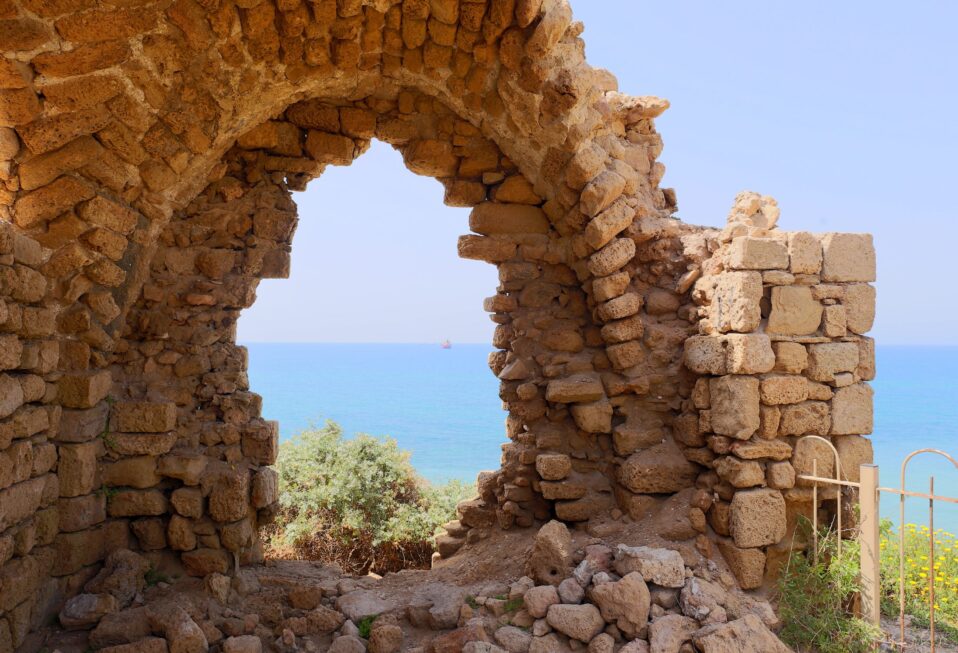
Ashkelon stands along the southern Mediterranean coast of modern Israel, positioned between Gaza and Ashdod. In the Bible it is named as one of the five major Philistine cities. Built on a ridge of hardened coastal sandstone, the city overlooked both the sea and the trade routes that connected great regions of the ancient world.
Though the coastal plain received only modest rainfall, Ashkelon had enough to sustain vineyards and gardens. Beneath the surface, a high water table provided a steady source of fresh water. More than one hundred ancient wells have been uncovered there, reminding us how essential water was for life in a dry land.
Ashkelon’s location made it a place of movement and exchange. Ships passed along its shores, and caravans traveled nearby routes linking Egypt with lands to the north and east. It became a meeting point of cultures, goods, and ideas. People came and went, and the city prospered because of its position at the crossroads.
Yet like many places shaped by opportunity and success, Ashkelon also experienced change, conflict, and eventual destruction. Empires rose and fell around it. Armies came and went. Though it was rebuilt more than once, its long history reminds us how temporary even the most strategic and flourishing cities can be.
The Bible mentions Ashkelon only briefly, often in the context of prophetic warning. It was a place known for influence, yet not always for faithfulness. Its story quietly echoes a truth we see throughout Scripture: significance in the world does not always mean alignment with God.
Standing at a crossroads can be a place of blessing, but it can also be a place of decision.
In many ways, our lives resemble Ashkelon. We stand at intersections of influence, opportunity, and choice. We are shaped by the environments around us, the voices we hear, and the paths we take. Like that ancient city, we can become busy, productive, and outwardly successful, yet still miss what matters most.
Ashkelon’s ruins remind us that everything built on human strength alone will one day fade. Trade routes shift. Wealth disappears. Cities fall silent. But God’s purposes continue beyond every rise and fall of history.
The question for us is not how prominent our place may be, but how faithful we are within it.
Where has God placed you? What crossroads are you standing at today? In the midst of activity, responsibility, and opportunity, are you attentive to His voice?
God works not only in great movements of history but also in the quiet decisions of individual lives. When we choose to walk in His ways, we align ourselves with something that endures far beyond the moment.
Ashkelon once stood as a powerful and thriving center of the ancient world. Today, its remains invite us to reflect on what truly lasts. Our calling is not simply to stand at the crossroads, but to choose the path that leads to life with God.
Stephen Faircloth is the President of CBN Israel, an initiative dedicated to sharing the true story of the Jewish nation and inspiring a global community of Christians to stand with Israel and support her people in need. Our vision is to reshape the global conversation about Israel by fostering understanding, hope, and healing between Jews and Christians around the world. For more than 50 years, the Christian Broadcasting Network has supported Israel. By joining CBN Israel, you become part of this enduring legacy, transforming lives today and strengthening Christian support for Israel for generations to come.





Post a comment