


ARTICLES

Weekly Devotional: Living Water or Empty Cisterns

“For My people have committed two evils: They have forsaken Me, the fountain of living waters, and hewn themselves cisterns—broken cisterns that can hold no water” (Jeremiah 2:12-13).

In the dry land of ancient Israel, water was the difference between life and death. From November through April, rains nourished the land, but for the rest of the year people depended on springs, rivers, wells, or cisterns.

Springs and rivers offered fresh, flowing water that renewed life wherever it went. Cisterns, on the other hand, were pits dug into rock to collect runoff. They required plaster to keep the water from seeping out. The water inside was stagnant, often filled with sediment, sometimes even spoiled or poisoned. And when cracks formed, the water disappeared altogether.

Through Jeremiah, God compared the people of Judah to those who chose broken cisterns over fresh springs. Instead of trusting Him, the source of living water, they turned to false gods and empty substitutes that could never sustain them. They abandoned the fountain of life for pits that held nothing.

The prophet understood this image personally. His hometown of Anathoth had no natural spring, so the villagers relied on cisterns. He knew the taste of stagnant water, the disappointment of an empty reservoir, and the precious value of a fresh, flowing spring. His metaphor struck at the heart of Judah’s sin: rejecting God for lifeless idols.

The same temptation confronts us today. We are surrounded by cisterns that promise fulfillment such as success, wealth, relationships, and self-reliance. Yet they inevitably crack and fail. They cannot hold water. They cannot give life. Only God can. Jesus echoed Jeremiah’s message when He declared, “If anyone thirsts, let him come to Me and drink” (John 7:37).

Where do you turn when your soul is dry? Are you sipping from cracked cisterns, or are you drinking deeply from the fountain of living water? Substitutes will always leave us empty, but the life that flows from God never runs dry.

What cisterns have you been tempted to dig for yourself? How might you turn instead to the One who is the true source of living water?

PRAYER

Father, forgive me for the times I have turned to empty substitutes instead of You. Refresh my heart with Your living water, and let Your Spirit flow through every dry place in my life. Amen.

Read more

Torah Reading Devotional: Parashat Ki Teitzei (אם־תֵּצֵא)— “When You Go Out”

This week’s Torah reading is Parashat Ki Teitzei (Deuteronomy 21:10-25:19). Read on Shabbat, September 6, 2025 / 13 Elul 5785. The following is a special devotional drawn from this week’s reading.

“You shall not see your brother’s ox or his sheep going astray and ignore them; you shall take them back to your brother. And if he does not live near you, or you do not know who he is, you shall bring it home to your house, and it shall stay with you until your brother seeks it; then you shall restore it to him” (Deuteronomy 22:1-2).

This commandment teaches that responsibility in God’s community goes beyond refraining from harm. It requires us to act with care and intentionality toward the well-being of others. Returning a stray animal may seem small, but it is no small matter to the one who lost it. In God’s eyes, such an act of attention and kindness reflects the deeper character of His people.

When Moses gave this instruction, he reminded Israel that the covenant was not just about worship at the sanctuary or great moments of sacrifice. It was also about how people treated each other in daily life. A community where neighbors return what is lost, rather than looking away, is one where trust is preserved, dignity is honored, and love is made visible.

In our own lives, the spirit of this commandment still applies. Perhaps we do not find a neighbor’s ox wandering the road, but we do encounter people who have lost something of value, whether a belonging, an opportunity, or even their peace of mind. Faithfulness calls us not to ignore these needs but to step in with care, even when it requires time or effort.

There are moments when we may be tempted to say, “It is not my problem,” and walk past. Yet God’s word teaches us otherwise. His people are not meant to live with indifference. Each act of care, no matter how ordinary, bears witness to a God who restores the lost and heals the broken.

If you are in a place of blessing, consider how your stability can serve others. A listening ear, a helping hand, or an act of fairness can become a form of returning what is lost. In these ways, we mirror the heart of God who restores His children to wholeness.

This week, ask yourself where you might put this teaching into practice. Perhaps you can return something misplaced, repair a relationship that has drifted, or restore someone’s sense of hope with an encouraging word. When we choose to notice and respond, we embody the covenant call to love our neighbor as ourselves.

PRAYER
Lord, open my eyes to see what is lost around me. Give me the courage and compassion to restore what I can, whether possessions, peace, or dignity. Let my actions reflect Your faithfulness and love. Amen.

Read more

Read more

Read more

Read more

Weekly Devotional: The Mark of True Discipleship

“Carry one another’s burdens; in this way you will fulfill the law of Christ” (Galatians 6:2).

What does it mean to truly follow Jesus? Paul’s answer in Galatians is both simple and profound: we fulfill the law of Christ by carrying one another’s burdens. This is not an optional suggestion but a central mark of discipleship.

Jesus Himself said, “By this all will know that you are My disciples, if you have love for one another” (John 13:35). Love is the evidence of true discipleship. But this love is not abstract. It takes the shape of action. To love in this way means entering into another person’s struggle, offering support, encouragement, and compassion when life feels too heavy for them to carry alone.

Such love requires more than polite words or surface-level relationships. It calls for proximity and presence. It means choosing to walk alongside others, listening to their pain, sharing in their struggles, and letting them know they are not forgotten. This kind of burden-bearing only happens when we slow down, notice those around us, and allow our lives to intersect in genuine care.

The law of Christ stands in stark contrast to the values of our self-centered, fast-paced culture. Yet if we are not daily seeking to love one another as Jesus commanded, can we honestly call ourselves His disciples? Loving others is not about comfort or convenience. Jesus’ parable of the Good Samaritan reminds us that being a neighbor means showing mercy, even to those who are different from us or difficult to love (Luke 10:29-37).

To be a disciple is to imitate the heart of Jesus, who bore the greatest burden of all on the cross. As His followers, we are called to bear the burdens of others, whether they are friends, neighbors, or even enemies. This is what sets His people apart. This is the mark of true discipleship.

Who around you is weighed down today? Are there practical steps you can take to help carry their burden, even if only for a moment? Loving well may be the clearest testimony of your faith.

PRAYER

Father, open my eyes to the needs of those around me. Fill my heart with compassion so I may share in their burdens and reflect the love of Christ. Teach me to walk in Your way of love each day. Amen.

Read more

Torah Reading Devotional: Parashat Shoftim (שֹׁפְטִים)—“Judges”

This week’s Torah reading is Parashat Shoftim (Deuteronomy 16:18-21:9). Read on Shabbat, August 30, 2025 / 6 Elul 5785. The following is a special devotional drawn from this week’s reading.

“Appoint judges and officers in all your towns that the LORD your God is giving you, according to your tribes, and they shall judge the people with righteous judgment. You shall not pervert justice; you shall not show partiality; and you shall not accept a bribe, for a bribe blinds the eyes of the wise and subverts the cause of the righteous” (Deuteronomy 16:18-19).

Moses lays before Israel the foundational call for justice. Leadership, in God’s eyes, begins with integrity. Judges and officials are entrusted not to wield power for themselves, but to uphold righteousness without favoritism or corruption.

The portion continues with laws for kings, priests, prophets, cities of refuge, false witnesses, and warfare. Each is given to ensure accountability, to protect the vulnerable, and to remind Israel that no one stands above the law of God.

Justice is not a distant ideal; it is meant to be lived daily, in every town, family, and community. When rulers cling too tightly to power, or when compassion is sidelined for expedience, the entire nation and society suffers.

Shoftim reminds us that justice is not only the duty of leaders. It is a call upon every heart. How we treat coworkers, how we speak of neighbors, and how we handle resources all reveal whether we reflect the justice of God.

To act justly requires humility, vigilance, and courage. It means noticing the quiet needs around us, protecting those who cannot protect themselves, and speaking truth even when silence would be easier.

In our own lives, injustice can sometimes feel too large to confront, whether in society or within our own hearts. Yet Shoftim calls us to see that justice begins in the small choices.

Ask yourself: where can I uphold justice today? Perhaps in refusing to cut corners, in offering a fair word instead of gossip, or in welcoming someone who is often overlooked. These moments may seem small, but they are seeds of blessing, for each act of integrity reflects the heart of God.

If you are weary of injustice, do not lose hope. God calls His people to embody a different way. Even one choice to act with fairness and compassion can bear witness to His kingdom.

And if you are in a season of blessing, remember that gratitude must be joined with responsibility. To receive much is also to be entrusted with much, and justice is one of the surest ways we honor that trust.

This week, seek one intentional way to bring fairness into your space—at home, at work, or in your community.

Let your words and actions align with the vision God set before Israel: a people known not for power or wealth, but for righteousness, mercy, and truth.

PRAYER
Lord, please open my eyes to see injustice. Give me wisdom to act with fairness, courage to speak with integrity, and humility to walk in Your ways. Amen.

Read more

Gaslighting: A Deceptive Psychological Tool Taking Aim at Jews Today

By Arlene Bridges Samuels 

Recently, the topic of gaslighting has been gaining enormous interest worldwide. In fact, in 2022 the Merriam-Webster Dictionary chose gaslighting as its Word of the Year—based on an increase of 1,740 percent over internet searches the year before. That increase reflected widespread concern about wild conspiracy theories, “fake news,” and rampant misinformation being disseminated.

The term comes from the 1944 suspense film Gaslight, in which a man uses diabolical techniques to convince his wife that she’s going mad. And, after Hamas’s horrific invasion on October 7, 2023, instances of gaslighting have continued to explode across social media accessible worldwide—lies reaching approximately 5.24 billion people, or nearly 64 percent of the global population.

Interestingly, the Gaslight film was released during Hitler’s reign of terror. Hitler’s appointed media architect, Joseph Goebbels, controlled all the media that existed at the time—radio, newspapers, and film. Goebbels’ official title, German Reich Minister of Propaganda and Public Enlightenment, was not obscure; the word “propaganda” proclaimed his purpose. Nevertheless, Germans did not grasp reality—or the fact that Goebbels had gradually manipulated them with lies about Germany’s and Europe’s Jewish population. 

Hitler coined the phrase “the big lie” during his 1924 imprisonment, while writing Mein Kampf. He described the big lie as “so colossal” that no one would believe that someone “could have the impudence to distort the truth so infamously.” And indeed, Hitler and Goebbels—with too few brave exceptions—deceived the public. As experts in gaslighting the German population, they watched their lies eventually shape the culture into allowing or denying the Holocaust (Shoah).

Too many in our modern world are imitating most Germans 80 and 90 years ago—people who readily swallowed Goebbels’ dangerous lies against Jews. As a case in point: For nearly two years, Hamas media has successfully manipulated facts about the events of October 7. The world’s mainstream media cooperates in this travesty by disseminating Hamas-created “facts.” 

They do no research, nor do they question Gazan press releases—and so the staged photos of emaciated children from other countries play on public emotions rather than credible facts. Those emotions transition into irrational rage against Jews and Israel worldwide. Moreover, millions of minds packed with Jew-hatred choose not to question the fact that they are ingesting so-called “news” promoted by the evildoers themselves. Gaslighting reverses accusations against the perpetrators and blames the victims instead. The Nazi demonic spirit is overactive today. 

Reviewing the film Gaslight helps us understand various strategies. A psychological thriller, Gaslight featured superstars Ingrid Bergman (Paula) and Charles Boyer (Gregory) as newlyweds. Gregory’s romantic pursuit of Paula concealed his real plan. Gregory had murdered her famous opera-singer aunt years before. His marriage to Paula, the now-wealthy niece living in a Victorian London home that she inherited from her aunt, enabled him to continue his search for her aunt’s hidden jewels. He manipulated his unsuspecting wife into questioning her own sanity by creating peculiar happenings in their home. His elaborate strategies began in simple ways, such as when the home’s gaslights dimmed and then brightened repeatedly, thus the film’s name. 

Whenever Paula noticed odd events, Gregory convincingly charmed her into thinking she was imagining things—time after time. Gregory escalated by adding bullying to his deception. In her presence, with a smile, he placed small objects in her purse like his mother’s “alleged” brooch. He later removed it and then accused Paula of losing it. The deceptions climaxed dramatically when a perceptive detective reopened the Scotland Yard cold case. He investigated Gregory, discovered his crime, and arrested him. Paula was not losing her mind. She had been gaslighted. 

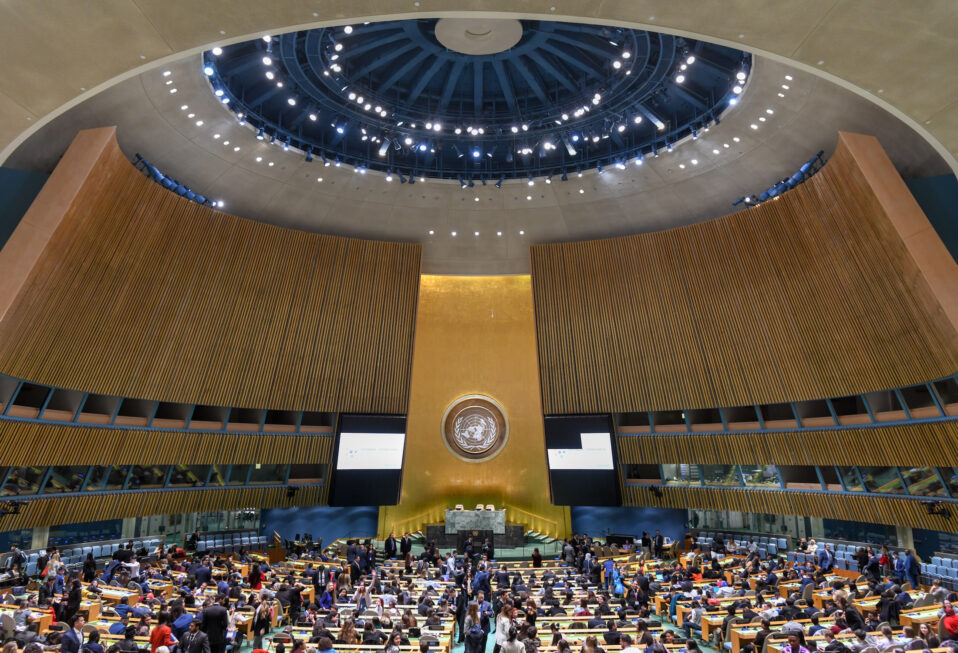
Countries and broad swaths of people are also targets deceived about Jews and Israel. Globally—in streets, on campuses, and at various events—psychological methods designed to manipulate facts are rampant. The method takes various forms—whether outright lying, blaming Israel for starting the Hamas war, or denying the October 7, 2023, massacre and atrocities despite massive evidence. Even when confronted with proof, gaslighters will deny their actions outright. Those wielding power, whether in mainstream media, Hamas terrorists, institutions like the United Nations, or politicians, can use their power for good or evil. Back in the eighth century B.C., the prophet Isaiah described our prevalent strategic chaos in Chapter 5, verse 20: Woe to those who call evil good and good evil, who put darkness for light and light for darkness

One example of gaslighting is denying reality when proof exists. Nowhere is this better explained than after Hamas terrorists used their body cams to record their own brutality on October 7, 2023—footage that later came to light. Israel’s Government Press Office and the Israel Defense Forces spokesperson’s unit invited over 100 members of international media—among them French, British, American, Australian, Indian, and Argentinian—to view the horrific Hamas recordings. The graphic footage was so sickening, some viewers left quickly because they found the brutal footage to be nauseating. Yet what was the outcome of that presentation? Where are those irrefutable facts now? In a dustbin of denial and neglect. 

Blaming Israel for Hamas evil is isolating Jews anywhere possible—questioning the credentials of supportive Jewish and Christian Israel advocates, as well as our perceptions. Another example of such gaslighting lies in the frequent photos from reliable sources that show tons of food for Gazans sitting inside Gaza, not distributed by the United Nations, which was tasked with delivering it. Accusing Israel of preventing food delivery? That’s gaslighting again, this time from the UN.

Psychologists deem gaslighting to be a learned trait. The hatred exhibited by the Islamic Regime, as well as by its surrogates like Hamas and among the Palestinian Authority, is a destructive lesson in brainwashing a population with loathing, which is then used to gaslight a naïve world. 

Clear-eyed individuals and certain nations are generally not vulnerable to gaslighting, but vigilance is essential. Bible-believing Evangelicals who view God’s covenants with Jews and Israel as eternal, embrace God’s biblical truths and trust His redemptive plan when it comes to Israel. Although not a perfect nation or a perfect people, Israel is the nation God chose to birth the Christian faith in the cradle of Judaism. After all, God is the original Zionist. 

Ingrid Bergman won an Academy Award for her performance in Gaslight. Her scene where Paula fully comprehended Gregory’s murder of her aunt and his ongoing deception was brilliant. In the end, filmmakers exposed Gregory’s convoluted schemes. 

After reading more about gaslighting, I encourage you to ask yourselves questions about the source of news you are reading. If it is the Gazan Health Ministry or Al Jazeera, the Qatar TV network, dismiss it. Remember that mainstream media’s sources are highly questionable. 

Consult reliable media based on facts, such as CBN Israel, CBN News, Jerusalem Dateline, Allisrael.com, The Watchman on TBN, and International Christian Embassy Jerusalem. I hope that all who have fallen under the spell of gaslighting will imitate Ingrid Bergman when she woke up to deception.

Our CBN Israel team welcomes you to join us in prayer and to share this article with anyone you believe may have been a victim of gaslighting—or who might benefit from its insights.

Prayer Points 

  • Pray for more Evangelicals to share reliable news about our spiritual homeland, Israel.
  • Pray for the Israel Defense Forces in their current operations in Gaza City.
  • Pray for 60,000 reservists deployed to Gaza to free hostages and bring Gideon’s Chariots II to a successful conclusion.

Arlene Bridges Samuels is the weekly feature columnist for CBN Israel since 2020. Working on the staff of the American Israel Public Affairs Committee (AIPAC) as their SE Regional Outreach Director for nine years, International Christian Embassy Jerusalem USA engaged her as the Leadership Outreach Director part-time for their project American Christian Leaders for Israel. Arlene is an author at The Blogs-Times of Israel, is published at AllIsrael.com and The Jerusalem Connection, and has traveled to Israel since 1990. By invitation, she attends Israel’s Government Press Office Christian Media Summits as part of Christian media worldwide. In 2024, Arlene and her husband Paul co-authored Mental Health Meltdown: Illuminating the Voices of Bipolar and Other Mental Illnesses. www.TheMentalHealthMeltdown.com.

Read more

Lessons from the Jordan

By Stephen Faircloth

The land of Israel is marked by one of the most dramatic geographical features on earth—the Rift Valley. Carved by shifting tectonic plates, this great scar runs through the land as part of the Syro-African Rift, the longest fracture line on the planet. In Israel, this valley is best known as the Jordan River Valley, for the river that winds its way through its depths.

The Jordan begins south of Mount Hermon, where three streams join together to form its headwaters. From there, the river flows through the fertile Huleh Valley, pours into the Sea of Galilee, and then continues its southward journey. Over just sixty-five miles of descent, the Jordan drops more than 1,900 feet before emptying into the Dead Sea. Along the way, it twists and meanders nearly two hundred miles, shaping both the land and the biblical story.

The river plays a central role in Scripture. Israel crossed the Jordan at flood stage to enter the Promised Land, a moment of faith and fulfillment (Joshua 3-4). Elijah and Elisha crossed its waters on the prophet’s final day before being taken into heaven, and Elisha later parted the waters again with Elijah’s mantle (2 Kings 2).

Naaman the Syrian dipped seven times in the Jordan and was healed of his disease (2 Kings 5:14). Centuries later, John the Baptist carried out his ministry in the region of the Jordan, calling Israel to repentance and baptizing Jesus in its waters.

The Jordan often served as a boundary, marking transitions between wilderness and promise, between old life and new. For the Israelites, crossing the river meant leaving behind the wandering years and stepping into God’s inheritance. For Naaman, it was obedience in humility that led to cleansing. For Jesus, the waters marked the beginning of His public ministry and the Father’s declaration, “You are My beloved Son.”

Today, pilgrims still gather along the Jordan to remember and to renew. The river’s winding course reminds us that God often leads us on unexpected paths, yet always toward His purposes. The waters of the Jordan invite us to trust Him at the thresholds of our own lives.

The Jordan River serves as one of the central geographic boundaries and features that plays so prominently in so many biblical stories.

What “Jordan” lies before you today? Is God calling you to step into something new, to trust Him in transition, or to let Him cleanse what you cannot heal on your own?

Stephen Faircloth is the President of CBN Israel, an initiative dedicated to sharing the true story of the Jewish nation and inspiring a global community of Christians to stand with Israel and support her people in need. Our vision is to reshape the global conversation about Israel by fostering understanding, hope, and healing between Jews and Christians around the world. For more than 50 years, the Christian Broadcasting Network has supported Israel. By joining CBN Israel, you become part of this enduring legacy, transforming lives today and strengthening Christian support for Israel for generations to come.

Read more

Read more