

By Arlene Bridges Samuels
Recently, the topic of gaslighting has been gaining enormous interest worldwide. In fact, in 2022 the Merriam-Webster Dictionary chose gaslighting as its Word of the Year—based on an increase of 1,740 percent over internet searches the year before. That increase reflected widespread concern about wild conspiracy theories, “fake news,” and rampant misinformation being disseminated.
The term comes from the 1944 suspense film Gaslight, in which a man uses diabolical techniques to convince his wife that she’s going mad. And, after Hamas’s horrific invasion on October 7, 2023, instances of gaslighting have continued to explode across social media accessible worldwide—lies reaching approximately 5.24 billion people, or nearly 64 percent of the global population.
Interestingly, the Gaslight film was released during Hitler’s reign of terror. Hitler’s appointed media architect, Joseph Goebbels, controlled all the media that existed at the time—radio, newspapers, and film. Goebbels’ official title, German Reich Minister of Propaganda and Public Enlightenment, was not obscure; the word “propaganda” proclaimed his purpose. Nevertheless, Germans did not grasp reality—or the fact that Goebbels had gradually manipulated them with lies about Germany’s and Europe’s Jewish population.
Hitler coined the phrase “the big lie” during his 1924 imprisonment, while writing Mein Kampf. He described the big lie as “so colossal” that no one would believe that someone “could have the impudence to distort the truth so infamously.” And indeed, Hitler and Goebbels—with too few brave exceptions—deceived the public. As experts in gaslighting the German population, they watched their lies eventually shape the culture into allowing or denying the Holocaust (Shoah).
Too many in our modern world are imitating most Germans 80 and 90 years ago—people who readily swallowed Goebbels’ dangerous lies against Jews. As a case in point: For nearly two years, Hamas media has successfully manipulated facts about the events of October 7. The world’s mainstream media cooperates in this travesty by disseminating Hamas-created “facts.”
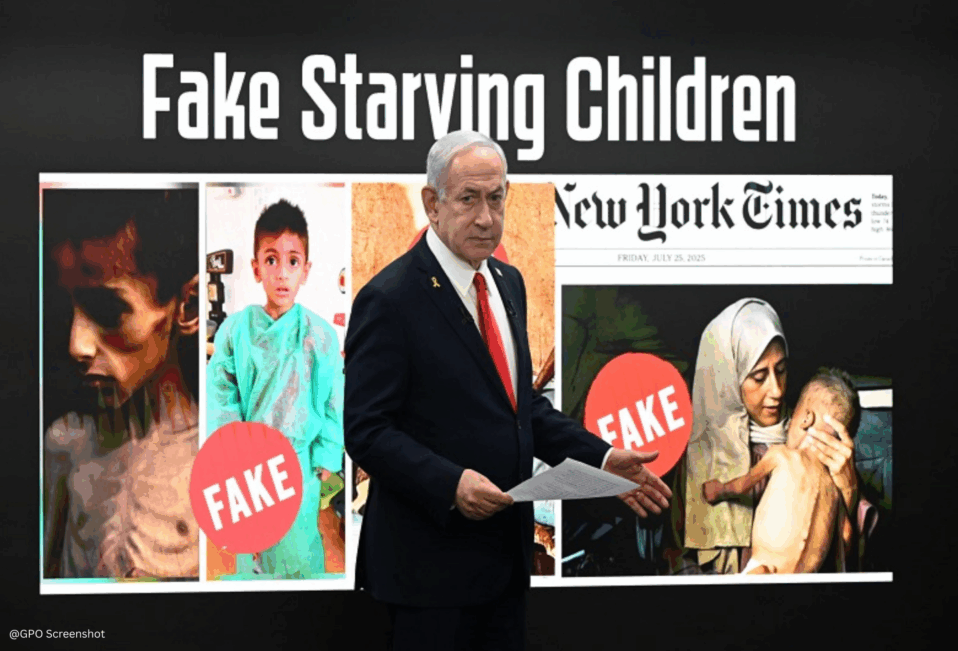
They do no research, nor do they question Gazan press releases—and so the staged photos of emaciated children from other countries play on public emotions rather than credible facts. Those emotions transition into irrational rage against Jews and Israel worldwide. Moreover, millions of minds packed with Jew-hatred choose not to question the fact that they are ingesting so-called “news” promoted by the evildoers themselves. Gaslighting reverses accusations against the perpetrators and blames the victims instead. The Nazi demonic spirit is overactive today.
Reviewing the film Gaslight helps us understand various strategies. A psychological thriller, Gaslight featured superstars Ingrid Bergman (Paula) and Charles Boyer (Gregory) as newlyweds. Gregory’s romantic pursuit of Paula concealed his real plan. Gregory had murdered her famous opera-singer aunt years before. His marriage to Paula, the now-wealthy niece living in a Victorian London home that she inherited from her aunt, enabled him to continue his search for her aunt’s hidden jewels. He manipulated his unsuspecting wife into questioning her own sanity by creating peculiar happenings in their home. His elaborate strategies began in simple ways, such as when the home’s gaslights dimmed and then brightened repeatedly, thus the film’s name.
Whenever Paula noticed odd events, Gregory convincingly charmed her into thinking she was imagining things—time after time. Gregory escalated by adding bullying to his deception. In her presence, with a smile, he placed small objects in her purse like his mother’s “alleged” brooch. He later removed it and then accused Paula of losing it. The deceptions climaxed dramatically when a perceptive detective reopened the Scotland Yard cold case. He investigated Gregory, discovered his crime, and arrested him. Paula was not losing her mind. She had been gaslighted.
Countries and broad swaths of people are also targets deceived about Jews and Israel. Globally—in streets, on campuses, and at various events—psychological methods designed to manipulate facts are rampant. The method takes various forms—whether outright lying, blaming Israel for starting the Hamas war, or denying the October 7, 2023, massacre and atrocities despite massive evidence. Even when confronted with proof, gaslighters will deny their actions outright. Those wielding power, whether in mainstream media, Hamas terrorists, institutions like the United Nations, or politicians, can use their power for good or evil. Back in the eighth century B.C., the prophet Isaiah described our prevalent strategic chaos in Chapter 5, verse 20: Woe to those who call evil good and good evil, who put darkness for light and light for darkness.
One example of gaslighting is denying reality when proof exists. Nowhere is this better explained than after Hamas terrorists used their body cams to record their own brutality on October 7, 2023—footage that later came to light. Israel’s Government Press Office and the Israel Defense Forces spokesperson’s unit invited over 100 members of international media—among them French, British, American, Australian, Indian, and Argentinian—to view the horrific Hamas recordings. The graphic footage was so sickening, some viewers left quickly because they found the brutal footage to be nauseating. Yet what was the outcome of that presentation? Where are those irrefutable facts now? In a dustbin of denial and neglect.
Blaming Israel for Hamas evil is isolating Jews anywhere possible—questioning the credentials of supportive Jewish and Christian Israel advocates, as well as our perceptions. Another example of such gaslighting lies in the frequent photos from reliable sources that show tons of food for Gazans sitting inside Gaza, not distributed by the United Nations, which was tasked with delivering it. Accusing Israel of preventing food delivery? That’s gaslighting again, this time from the UN.
Psychologists deem gaslighting to be a learned trait. The hatred exhibited by the Islamic Regime, as well as by its surrogates like Hamas and among the Palestinian Authority, is a destructive lesson in brainwashing a population with loathing, which is then used to gaslight a naïve world.
Clear-eyed individuals and certain nations are generally not vulnerable to gaslighting, but vigilance is essential. Bible-believing Evangelicals who view God’s covenants with Jews and Israel as eternal, embrace God’s biblical truths and trust His redemptive plan when it comes to Israel. Although not a perfect nation or a perfect people, Israel is the nation God chose to birth the Christian faith in the cradle of Judaism. After all, God is the original Zionist.
Ingrid Bergman won an Academy Award for her performance in Gaslight. Her scene where Paula fully comprehended Gregory’s murder of her aunt and his ongoing deception was brilliant. In the end, filmmakers exposed Gregory’s convoluted schemes.
After reading more about gaslighting, I encourage you to ask yourselves questions about the source of news you are reading. If it is the Gazan Health Ministry or Al Jazeera, the Qatar TV network, dismiss it. Remember that mainstream media’s sources are highly questionable.
Consult reliable media based on facts, such as CBN Israel, CBN News, Jerusalem Dateline, Allisrael.com, The Watchman on TBN, and International Christian Embassy Jerusalem. I hope that all who have fallen under the spell of gaslighting will imitate Ingrid Bergman when she woke up to deception.
Our CBN Israel team welcomes you to join us in prayer and to share this article with anyone you believe may have been a victim of gaslighting—or who might benefit from its insights.
Prayer Points
- Pray for more Evangelicals to share reliable news about our spiritual homeland, Israel.
- Pray for the Israel Defense Forces in their current operations in Gaza City.
- Pray for 60,000 reservists deployed to Gaza to free hostages and bring Gideon’s Chariots II to a successful conclusion.
Arlene Bridges Samuels is the weekly feature columnist for CBN Israel since 2020. Working on the staff of the American Israel Public Affairs Committee (AIPAC) as their SE Regional Outreach Director for nine years, International Christian Embassy Jerusalem USA engaged her as the Leadership Outreach Director part-time for their project American Christian Leaders for Israel. Arlene is an author at The Blogs-Times of Israel, is published at AllIsrael.com and The Jerusalem Connection, and has traveled to Israel since 1990. By invitation, she attends Israel’s Government Press Office Christian Media Summits as part of Christian media worldwide. In 2024, Arlene and her husband Paul co-authored Mental Health Meltdown: Illuminating the Voices of Bipolar and Other Mental Illnesses. www.TheMentalHealthMeltdown.com.