

ARTICLES

Parashat Pinchas (פִּינְחָס) “Phinehas”

This week’s Torah reading is Parashat Pinchas (Numbers 25:10-30:1). Read on Shabbat, July 4, 2026 / 19 Tammuz 5786. The following is a special devotional drawn from this week’s reading.

“Therefore say, ‘Behold, I give to him My covenant of peace’” (Numbers 25:12).

Parashat Pinchas begins in the aftermath of a national crisis. Following Israel’s rebellion at Peor, God responds to the zeal of Phinehas by establishing with him a covenant of peace. At first glance, the connection between zeal and peace may seem surprising. Yet Scripture reveals that true peace is not merely the absence of conflict. It is the restoration of right relationship with God. When sin is confronted and covenant faithfulness is renewed, peace can once again flourish among God’s people.

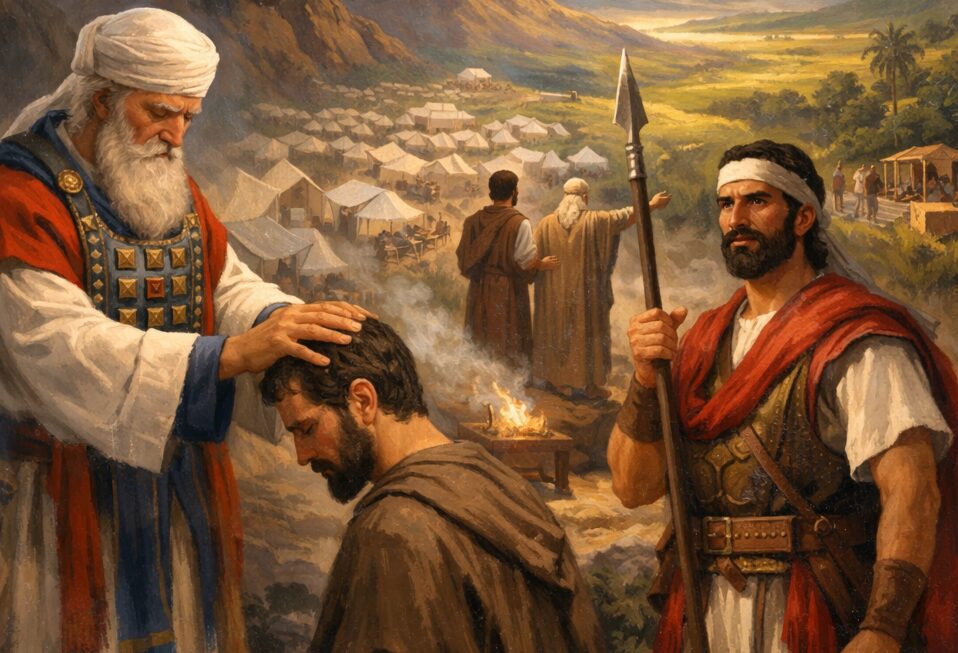
The portion quickly shifts from this moment to preparations for the future. A new census is taken as the next generation stands on the threshold of entering the Promised Land. Joshua is commissioned to succeed Moses, and the appointed festivals and offerings are reviewed once more. Together, these events point to God’s remarkable faithfulness. Though one generation passes away, His covenant continues. His purposes move forward, and His promises remain unchanged.

Pinchas reminds us that God’s work is never limited to the present moment. He is always preparing what comes next. Even during seasons of transition, uncertainty, or loss, He is raising up leaders, shaping hearts, and establishing His plans for future generations. His faithfulness extends beyond a single lifetime, inviting each generation to participate in His unfolding purposes.

This portion also challenges us to consider what kind of legacy we are leaving behind. Moses understands that he will not enter the Promised Land, yet his concern is not for himself but for the people who will continue after him. He asks God to appoint a faithful leader who will guide Israel well. His example reflects humility, selflessness, and confidence that God’s mission is greater than any one individual.

Some may find themselves entering a new season of life while others are bringing one chapter to a close. Pinchas reminds us that every season has purpose. God calls some to lead, others to encourage, and still others to prepare the way for those who follow. Each role matters when it is carried out with faithfulness and humility. Our greatest influence often comes through the people we equip, encourage, and inspire.

As this Shabbat arrives, reflect on the ways God has been faithful throughout your journey. Consider how you can invest in those around you through wisdom, encouragement, or faithful example. Trust that the God who has guided you in the past is already preparing the path ahead. His covenant endures, His peace remains available, and His purposes will continue from generation to generation.

PRAYER
Lord, thank You for Your enduring faithfulness and Your covenant of peace. Help me live with humility, serve with integrity, and invest faithfully in those who follow after me. May my life point others to Your unchanging promises and bring glory to Your name. Amen.

Read more

A Lifetime of Courage: Golda’s Story

Golda has overcome more hardship than most people could imagine. Born during World War II, she lost her father in the battle for Leningrad and spent her childhood fleeing war with her mother and sibling. Hunger, fear, and uncertainty became part of everyday life.

“My mother worried constantly about how she would feed us,” Golda remembered. “She lost everything, even the photographs of my father.”

Years later, Golda immigrated to Israel in search of a fresh start. Although building a new life was not easy, she found a place where she could finally belong. “Only in Israel did I truly feel accepted,” she said.

Today, at 84 years old, Golda lives alone after losing her husband. Living on a limited income has brought new challenges. When flooding damaged her apartment, it destroyed her washing machine, leaving her to wash her clothes by hand for years. Simple daily tasks became exhausting, and the repairs she needed were far beyond her means.

But caring friends like you made a difference.

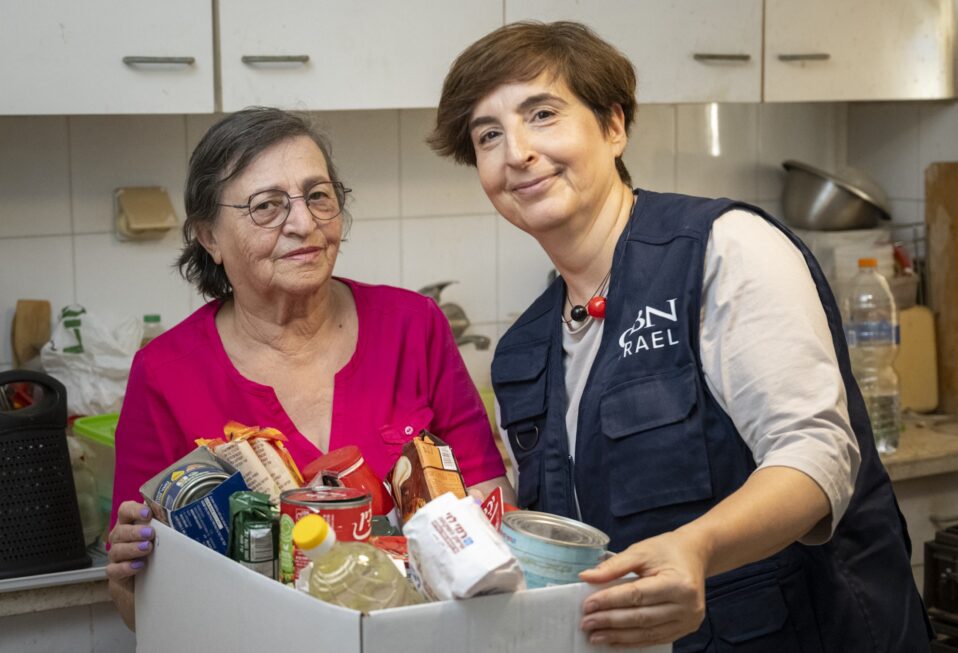
Through CBN Israel, Golda received a new washing machine along with much-needed repairs to her apartment. What seemed like a simple gift restored comfort, dignity, and hope to her daily life.

“I’m so happy,” Golda shared. “Now everything is so much easier. Thank you for your kindness. It means so much to me.”

Although the years have brought many losses, Golda no longer feels forgotten. She knows there are people who care about her and are standing beside her during this season of life.

Your support of CBN Israel is bringing practical help and heartfelt encouragement to elderly widows, Holocaust survivors, and vulnerable seniors throughout Israel. Thank you for reminding people like Golda that they are loved, valued, and never alone.

Please stand with the people of Israel today and bring hope to those in need.

GIVE TODAY

Read more

Magdala: Faith by the Lake

By Stephen Faircloth

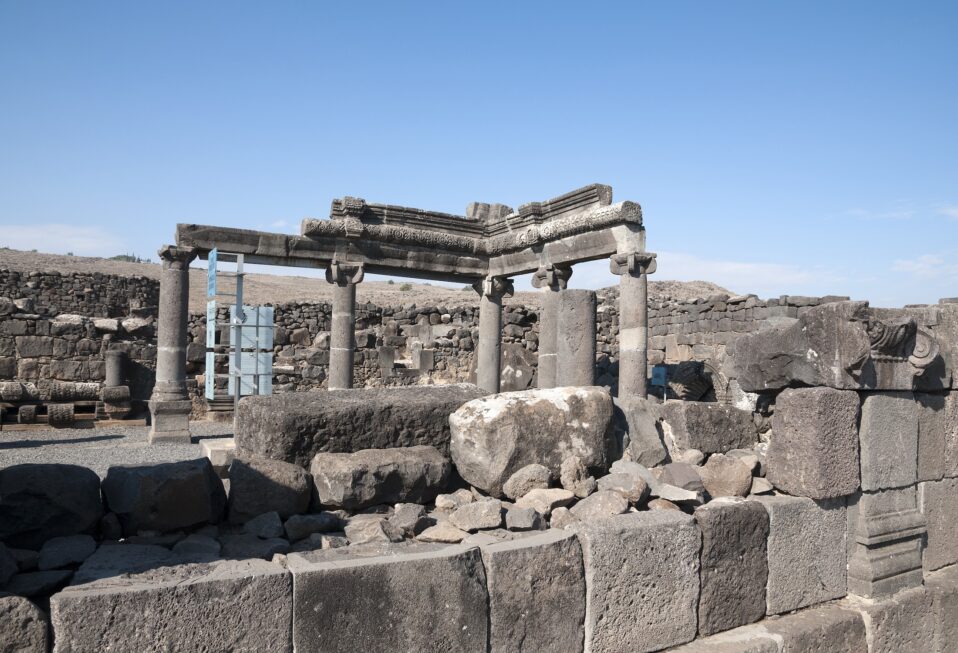
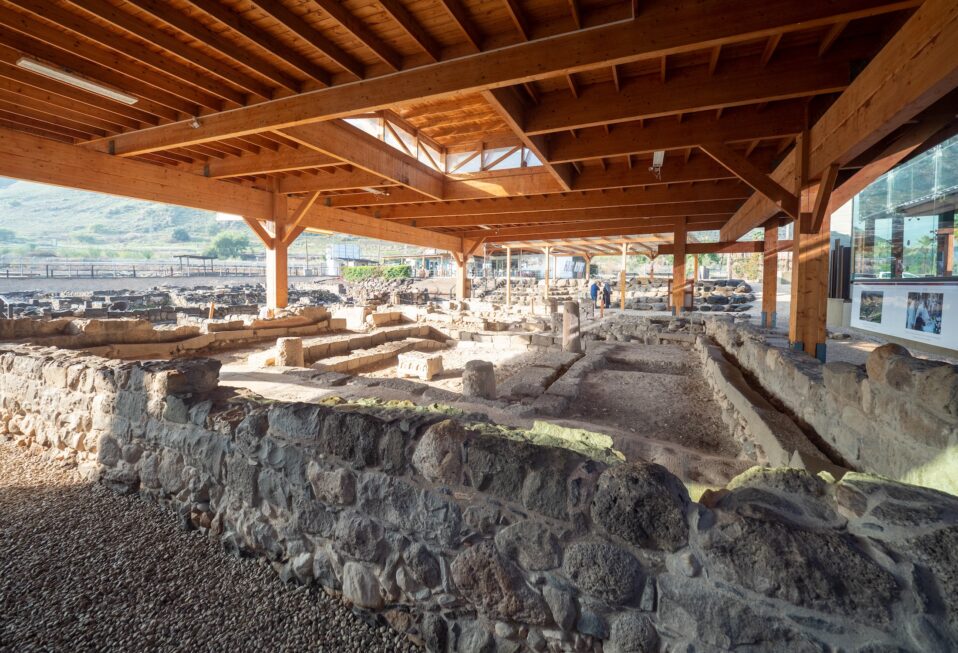
Nestled along the western shore of the Sea of Galilee, just a few miles north of Tiberias, the ancient settlement of Magdala offers a remarkable window into Jewish life during the time of Jesus. Known by multiple names, Magdala or Migdal Nunaya in Hebrew and Aramaic, and Taricheae in Greek and Latin, this city played a central role in the economy and culture of the region.

Greek sources called it Taricheae, meaning “factories for salting fish,” a reminder that everyday labor and community life were part of God’s provision. The bustling harbor connected smaller villages, including Capernaum, to wider trade networks, illustrating how God often uses ordinary places to accomplish extraordinary purposes. When the Gospels describe Jesus arriving by boat in the region of Gennesar, He likely stepped ashore in Magdala’s thriving port.

Though tradition has long identified Magdala as the hometown of Mary Magdalene, there is no conclusive historical proof of this connection. Still, her life shows how God can redeem any story, and how an encounter with Christ transforms us from the inside out.

Modern excavations have brought Magdala to life in vivid detail. Archaeologists uncovered streets laid out in a precise grid, elegant homes with expertly cut stone, intricate mosaic floors, and fine pottery and glassware—all signs of a prosperous community. Many of these homes contained private ritual baths (mikva’ot), even though the Sea of Galilee was just steps away. This dedication reveals how seriously the people of Magdala took purity and devotion, weaving faith into the fabric of daily life.

Among the most significant discoveries is Magdala’s ancient synagogue—one of the earliest ever found. Though modest in size, it was rich with spiritual meaning. The main hall was ringed with benches, frescoed walls, and mosaic floors. At its center stood a beautifully carved stone, likely supporting the sacred Torah as it was read aloud. The carvings include the seven-branched menorah from the Jerusalem Temple, reminding worshipers that even in Galilee, their faith was anchored in God’s promises and presence.

While the Gospels do not specifically mention Jesus teaching in Magdala, He traveled throughout Galilee, proclaiming the Kingdom and opening the Scriptures in synagogues just like this one. It is entirely possible, perhaps even likely, that He stood in this very space, reading and explaining the Word of God, calling people to repentance, hope, and new life.

Magdala is a powerful reminder that faith is not reserved for holy places alone. It flourishes in workshops, fishing boats, kitchens, and markets, wherever people choose to honor God with their lives. Like the men and women of Magdala, we are called to integrate worship into our work, to pursue purity of heart even in ordinary routines, and to welcome Jesus into every corner of our day.

Are there areas of your life where you have separated faith from daily tasks? What would it look like to invite Jesus into your own “harbor,” your own “workshop,” and live every moment for His glory?

Stephen Faircloth is the President of CBN Israel, an initiative dedicated to sharing the true story of the Jewish nation and inspiring a global community of Christians to stand with Israel and support her people in need. Our vision is to reshape the global conversation about Israel by fostering understanding, hope, and healing between Jews and Christians around the world. For more than 50 years, the Christian Broadcasting Network has supported Israel. By joining CBN Israel, you become part of this enduring legacy, transforming lives today and strengthening Christian support for Israel for generations to come.

Read more

Parashat Balak (בָּלָק) “Balak”

This week’s Torah reading is Parashat Balak (Numbers 22:2-25:9). Read on Shabbat, June 27, 2026 / 12 Tammuz 5786. The following is a special devotional drawn from this week’s reading.

“How beautiful are your tents, Jacob, your dwelling places, Israel!” (Numbers 24:5).

Parashat Balak offers a remarkable reminder that God sees His people differently than the world often does. Balak, the king of Moab, fears Israel’s growing strength and hires the prophet Balaam to pronounce a curse upon them. Yet every attempt to curse Israel is transformed by God into words of blessing. What human beings intend for harm, God turns into a declaration of His covenant faithfulness.

Standing on the hills overlooking the camp of Israel, Balaam sees more than a nation traveling through the wilderness. He sees a people chosen and sustained by God. His famous blessing celebrates the beauty of Israel’s orderly tents and the favor resting upon them. Without realizing it, Balaam becomes an instrument for proclaiming God’s unchanging purposes. No scheme, threat, or opposition can overturn what God has spoken.

This portion reminds us that God’s perspective is often very different from our own. We may focus on our weaknesses, failures, or uncertain circumstances. Others may misunderstand us or question God’s work in our lives. Yet God sees the whole picture. He remains faithful to His promises even when we cannot fully perceive His plan. His blessing is rooted in His character, not in shifting circumstances or human opinion.

Balak also teaches that not every battle is visible. While Israel is unaware of the conversations taking place between Balak and Balaam, God is already working on their behalf. He is protecting His people from dangers they cannot see and accomplishing His purposes beyond their knowledge. This truth invites deeper trust. God is always at work, even when His activity remains hidden from our eyes.

Some may be facing criticism, uncertainty, or spiritual opposition. Others may simply wonder whether God is still working behind the scenes. This portion encourages us to remember that God’s blessing cannot be undone by human plans. He is able to accomplish His purposes despite every obstacle and to guard His people in ways they may never fully understand.

As this Shabbat arrives, take time to thank God for His unseen faithfulness. Reflect on moments when He protected, guided, or provided for you without your realizing it at the time. Walk forward with confidence, knowing that the God who turned curses into blessings still watches over His people and fulfills every promise He has made.

PRAYER
Lord, thank You for Your faithful protection and unchanging promises. Help me trust You even when I cannot see what You are doing. Remind me that Your purposes cannot be overturned and that Your blessing rests upon those who walk with You. May I live each day with confidence in Your steadfast love. Amen.

Read more

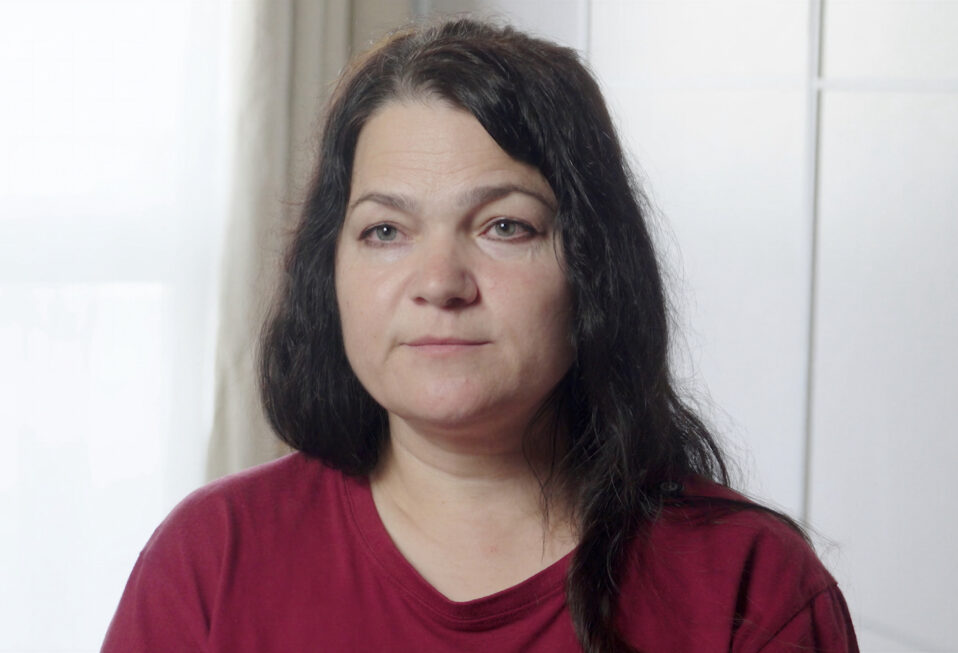
A Family Rebuilding After Loss

For Ortal, her home in Bat Yam was the center of family life. It was where she raised her three children and created years of cherished memories.

“That house was our anchor, our safe place,” she recalled.

Her serenity was shattered when a ballistic missile struck her neighborhood during the conflict between Israel and Iran. Ortal and her family survived only because they reached a shelter moments before impact.

“When I looked for the kids, they were screaming, and I screamed too,” she said. When the dust settled, their home was gone.

In the difficult days that followed, the family moved into temporary housing. Though grateful to be safe, they were now living in an unfurnished apartment and dealing with the emotional trauma of losing everything they had known.

That’s when caring friends like you stepped in.

Through CBN Israel, Ortal’s family received furniture, food, groceries, trauma counseling, and other essential support. Donors also provided a replacement computer for daughter Mika, allowing her to continue her studies after the attack.

Reflecting on the help she received, Ortal shared, “CBN has been that breath. They have been my first peaceful breath in a long time.”

Today, Ortal and her children are still rebuilding their lives, but they are doing so with renewed hope and the knowledge that they are not alone.

Please join us in helping families affected by war and terror find comfort, stability, and strength to move forward.

GIVE TODAY

Read more

Caesarea: Where the Gospel Penetrated the Gentile World

By Stephen Faircloth

Tucked along the sparkling coast of the Mediterranean, the ancient city of Caesarea wasn’t just a marvel of Roman engineering; it was a stage where God’s unfolding plan for the world stepped into the Gentile arena. For anyone walking its ruined streets today, it’s easy to imagine Roman chariots racing in the stadium or waves lapping against Herod the Great’s grand harbor. But the stones of Caesarea whisper of something greater: the unstoppable reach of the Gospel.

It was here, in Caesarea, that the Gospel of Jesus Christ broke through a cultural and spiritual barrier that had long divided Jews and Gentiles. In Acts 10, the apostle Peter was summoned to the house of Cornelius, a Roman centurion described as “God-fearing.” As Peter preached, the Holy Spirit fell upon Cornelius and his household—Gentiles receiving the same Spirit as the first Jewish believers in Jerusalem. In that moment, the family of God flung its doors wide open. No longer was the good news reserved for one people, but for all nations, just as Jesus had promised.

The city witnessed not only divine breakthroughs but also divine judgments. Herod Agrippa I, the grandson of Herod the Great, died in Caesarea, struck down after accepting the praises of the people as if he were a god (Acts 12:19-23). Both Scripture and the historian Josephus record this sobering event, reminding us of the peril of pride and the glory that belongs to God alone.

Caesarea also served as a crossroads for the apostle Paul. From here, he sailed on missionary journeys, faced trials under Roman rulers like Felix and Festus, and ultimately appealed to Caesar, setting the course for his voyage to Rome (Acts 23-27). During this time, Luke, Paul’s companion and the author of Luke and Acts, likely remained free to move about the land. It’s not hard to imagine Luke walking the streets of Jerusalem or sitting with eyewitnesses, gathering the material he would later weave into his Gospel (Luke 1:1-4). Even in chains, God’s servants were at work, and His Word was moving forward.

The city itself was a testament to Roman ambition. Herod the Great transformed a modest Phoenician port known as “Strato’s Tower” into a grand harbor he called Sebastos, honoring Caesar Augustus. Around it rose temples, palaces, theaters, and baths. Yet amid all this grandeur, a simple stone discovered by archaeologists stands out: the Pilate Inscription, a dedicatory plaque mentioning Pontius Pilate, the Roman governor who condemned Jesus. It’s a quiet reminder that even powerful men like Pilate lived in the shadow of a much greater King.

In A.D. 66, Caesarea again became a flashpoint—this time as the First Jewish Revolt ignited. The city’s tensions exploded in violence, and in its stadium, the Roman general Titus forced 2,500 Jewish captives to fight to the death in grisly celebration. What had once been a place of Gospel peace now echoed with the horrors of war and vengeance.

Yet God was not done with Caesarea.

In the centuries that followed, Caesarea became a beacon of Christian thought. The great teacher Origen spent over two decades here, establishing a theological school and one of the ancient world’s finest libraries. From this treasure trove of knowledge, Eusebius, the “Father of Church History,” would write his sweeping account of early Christianity, preserving the memory of martyrs, apostles, and faithful communities.

Caesarea reminds us that God’s story moves through unlikely places. It marched into a Roman stronghold, shattered cultural boundaries, and transformed a harbor of empire into a harbor of faith. Whether you’re standing in a grand city or feeling small in your corner of the world, remember this: the Gospel has never been confined by walls, rulers, or borders.

Like Peter, may we be ready to go where God sends us, even if it surprises us. Like Paul, may we be faithful—even in chains. Like Cornelius, may we hunger for truth and welcome it when it comes. And like those who walked the streets of Caesarea long ago, may we be part of God’s great story—anchored in Christ and carried by the Spirit to the ends of the earth.

Stephen Faircloth is the President of CBN Israel, an initiative dedicated to sharing the true story of the Jewish nation and inspiring a global community of Christians to stand with Israel and support her people in need. Our vision is to reshape the global conversation about Israel by fostering understanding, hope, and healing between Jews and Christians around the world. For more than 50 years, the Christian Broadcasting Network has supported Israel. By joining CBN Israel, you become part of this enduring legacy, transforming lives today and strengthening Christian support for Israel for generations to come.

Read more

The Power of Daily Surrender

“Father, if You are willing, remove this cup from Me; yet not My will, but Yours be done” (Luke 22:42).

The moment in the garden is one of the most powerful scenes in the life of Jesus. There, on the Mount of Olives, He faced the full weight of what lay ahead. The cross was no abstraction. It was near, real, and unavoidable. In that moment, we see His humanity clearly. He did not rush toward suffering. He wrestled with it.

And yet, He surrendered. “Not My will, but Yours be done.” We often focus on the intensity of that moment, the anguish, the prayer, the decision. But what made that surrender possible? How was Jesus able to choose the Father’s will when everything in Him recoiled from the cost?

The answer was not found only in that moment. It was formed over a lifetime. From a young age, Jesus would have recited daily the words of the Shema: “Hear, O Israel, the LORD is our God, the LORD is one.” These were not empty words. They were a daily declaration of loyalty, love, and submission to God. To speak them was to acknowledge God’s authority and to place oneself under His rule.

Day after day, in ordinary moments, Jesus lived a life of surrender. The Gospels give us only glimpses of His life, but those glimpses reveal a pattern. He withdrew to pray. He sought the Father’s will. He lived in obedience. The extraordinary moments we read about were built on a foundation of daily faithfulness.

Gethsemane was not the beginning of His submission. It was the culmination of it. In the quiet, unseen rhythms of life, Jesus trained His heart to trust the Father. So when the moment of crisis came, He did not need to learn obedience. He lived it.

This speaks directly to our lives. We often want to be faithful in the big moments, the defining decisions, the times of testing. But those moments are shaped by what we do every day. Faithfulness is not formed in the spotlight. It is formed in the ordinary.

Each time we choose to trust God, even in small things, we are being shaped. Each moment of obedience, each quiet prayer, each decision to align our will with His is preparing us for something greater.

When the difficult moments come, we will draw from what has already been formed within us. Jesus shows us that surrender is not a one-time act. It is a way of life. And because He chose the Father’s will, even at great cost, we are recipients of His obedience. His surrender brought life, redemption, and hope.

So we are invited to ask ourselves: how are we living in the ordinary? Are we allowing those moments to shape us? Are we practicing daily surrender? Do not underestimate the quiet moments. They are preparing you.

PRAYER

Father, today we submit ourselves to Your rule and reign. May Your will be done in our lives today. Prepare us daily to serve and submit to You. Amen.

Read more

Parashat Chukat (חֻקַּת) “Statute”

This week’s Torah reading is Parashat Chukat (Numbers 19:1-22:1). Read on Shabbat, June 20, 2026 / 12 Tammuz 5786. The following is a special devotional drawn from this week’s reading.

“Then Israel sang this song: ‘Spring up, O well! Sing to it!’” (Numbers 21:17).

Parashat Chukat contains some of the most challenging and mysterious passages in the Torah. It begins with the ordinance of the red heifer, a commandment that has puzzled generations because its full meaning remains beyond human understanding. As the narrative unfolds, Israel experiences loss, disappointment, conflict, and wandering. Miriam dies. Aaron dies. The people struggle with thirst and frustration. Yet in the midst of these difficulties, God continues to provide for them and guide them forward.

One of the most encouraging moments in the portion comes when God provides water in the wilderness. After seasons of hardship and complaint, a well springs forth, and the people respond not with grumbling but with song. For a brief moment, their focus shifts from their problems to God’s provision. Their gratitude becomes an act of worship.

This scene reminds us that God’s faithfulness is often most visible in the places where we feel most needy. The wilderness is not a place anyone would choose, yet it becomes the setting where God repeatedly demonstrates His care. The people may not understand every circumstance they face, but they can trust the One who leads them through it. The same God who provides water in the desert is able to meet every need according to His wisdom and timing.

Life often contains experiences that resemble the mysteries of Chukat. There are seasons when we do not understand why certain events occur or why prayers seem delayed. Questions may remain unanswered. Yet faith does not require complete understanding. It calls us to trust God’s character even when His purposes are not fully revealed.

Some may be walking through a difficult season marked by uncertainty, loss, or waiting. Others may be experiencing fresh evidence of God’s provision after a long period of struggle. Wherever you find yourself, this portion offers the same invitation: do not lose sight of God’s faithfulness. The well may not appear when expected, but God has not forgotten His people.

As this Shabbat arrives, take time to remember the ways God has sustained you in past wilderness seasons. Offer thanks for both the visible blessings and the hidden mercies that carried you forward. Let gratitude become your song, trusting that the God who provided yesterday remains faithful today and will continue to guide you tomorrow.

PRAYER
Lord, help me trust You even when I do not understand Your ways. Thank You for sustaining me through every wilderness season. Open my eyes to see Your provision and fill my heart with gratitude for Your unfailing faithfulness. Amen.

Read more

Hope Amid the Rubble in Arad

In the southern city of Arad, life changed in an instant when an Iranian ballistic missile struck a residential neighborhood just minutes away. Buildings were reduced to rubble. Families fled damaged apartments. Children were left frightened and displaced, unsure of what would come next.

The destruction was not only physical. It shattered routines, stability, and the sense of peace people once felt in their own homes. Many families suddenly found themselves without basic necessities, struggling to process both loss and trauma.

In the midst of this crisis, CBN Israel mobilized immediately. Partnering with a local ministry, our team arrived on the ground to deliver emergency food boxes and essential supplies to those most affected. For displaced families, these packages mean more than groceries. They represent comfort, dignity, and the reassurance that they are not facing this alone.

One recipient shared heartfelt gratitude: “We are deeply grateful for the tremendous support we have received from CBN. It is very important for us to feel that we are supported not only here, but all around the world as well. Your blessings and your support will certainly bear fruit. Thank you very much.”

Beyond food distribution, CBN Israel is connecting families to community support centers for trauma therapy and counseling. Special attention is also being given to vulnerable residents, including an elderly deaf couple who cannot hear the sirens. Because of caring friends like you, special alarm systems are being provided to help protect them.

This is what the compassionate support of faithful partners makes possible. In times of crisis, CBN Israel is helping deliver food, safety equipment, and emotional support to Holocaust survivors, immigrants, terror victims, and displaced families across Israel.

Through your generosity, hope can rise even in the shadow of devastation. Please join us today in standing with the people of Israel and bringing light in their darkest hours.

GIVE TODAY

Read more

The Elah Valley: Where Faith Faced Fear

By Stephen Faircloth

Scripture often speaks not only through words, but through the land itself. The hills, valleys, and roads of ancient Israel weren’t just a backdrop; they were part of the message. To walk the land is, in many ways, to walk into the heart of the Bible’s message. One powerful example is the Elah Valley, a place etched forever in the memory of God’s people as the site where a shepherd boy’s faith overcame a giant’s threat.

This valley was not chosen at random. The biblical author of 1 Samuel 17 places the clash between David and Goliath right here for a reason. The geography tells a story that magnifies the miracle.

To picture it, imagine Israel as a loaf of bread: tall in the center and flat on either side. That center is the Hill Country, home to Bethlehem, where David was born. To the west lies the Coastal Plain, where the Philistines held power. Between them lies a transitional region called the Shephelah, a series of rolling hills and fertile valleys, natural highways between enemy territories. One such highway is the Elah Valley.

This valley was more than a battlefield. It was a threshold between light and darkness, between the people of God and the forces seeking to conquer them. On one end stood Gath, Goliath’s hometown, symbolizing defiance and brute strength. On the other stood Bethlehem, the city of David, symbolizing covenant, promise, and God’s chosen future.

When the Philistines encroached upon the Elah Valley, their aim wasn’t just a skirmish; they were advancing toward Bethlehem, toward the heart of Judah. Their movement was strategic, their goal clear: to gain a foothold in Israel’s highlands and disrupt the plans of God’s people.

Enter David.

Sent by his father Jesse to check on his brothers, David didn’t arrive at the battlefield by chance. He walked a path his ancestors had known, through a valley his enemies coveted. What began as an errand quickly became a divine appointment. Where others saw a giant, David saw an opportunity for God to be glorified. His courage was not rooted in military prowess but in a deep, immovable trust in the Lord of hosts.

Even today, you can stand in the Elah Valley and trace the brook where David chose five smooth stones. You can see where the Philistine forces gathered and where Saul’s army waited. The very land still whispers of that unforgettable moment when faith stepped forward, and fear fell.

The Elah Valley reminds us that battles, both ancient and personal, are often fought in in-between places. The terrain may feel uncertain, the threat intimidating. But it is precisely there, in that valley between opposing forces, that God often reveals His power.

As you read the story of David and Goliath, don’t just see a boy and a giant. See a valley of decision, where geography and destiny collided, and where God’s faithfulness shone through the courage of one who trusted Him completely.

When you understand the land, you begin to understand the heart of the story. And when you walk through the valleys of your own life, remember: the God of the Elah Valley still fights for His people.

Stephen Faircloth is the President of CBN Israel, an initiative dedicated to sharing the true story of the Jewish nation and inspiring a global community of Christians to stand with Israel and support her people in need. Our vision is to reshape the global conversation about Israel by fostering understanding, hope, and healing between Jews and Christians around the world. For more than 50 years, the Christian Broadcasting Network has supported Israel. By joining CBN Israel, you become part of this enduring legacy, transforming lives today and strengthening Christian support for Israel for generations to come.

Read more