


ARTICLES

Biblical Israel: Dan Spring 

By Marc Turnage

The land of Israel did not merely provide the stage upon which biblical events too place, its flora, fauna, climate, and geology provide the images, metaphors, and vocabulary that biblical writers used frequently to communicate their message whether in narrative, poetry, or prophecy.

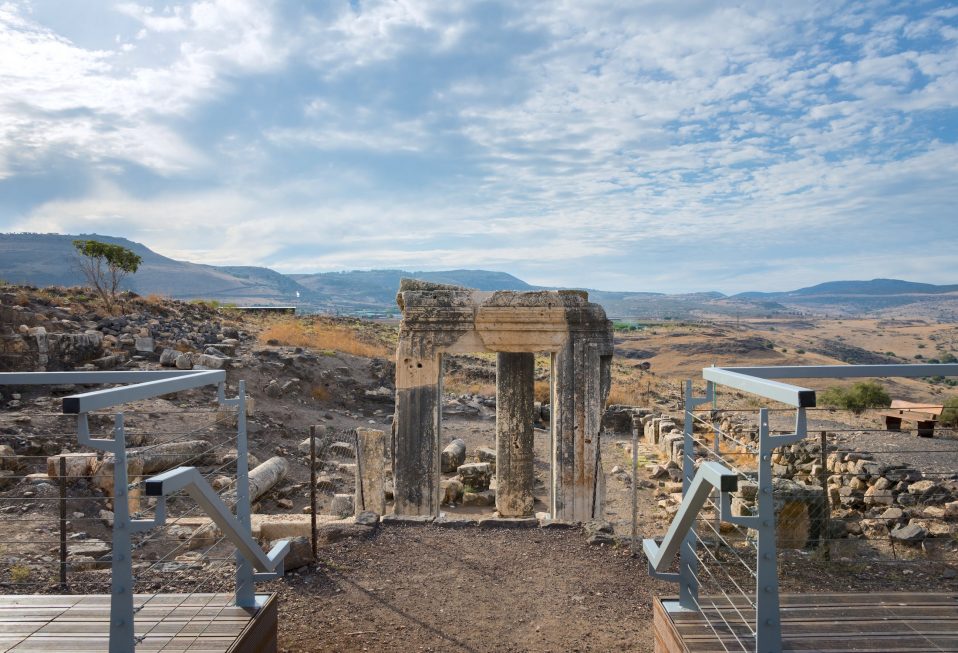
There are places within Israel today where one can stand within the geography used by the biblical writers and feel and hear, within the setting, the message they sought to communicate. The Dan Spring is one of those places. 

The spring acquires its name from the biblical site of Dan, the northernmost city within biblical Israel. Located at the base of the foothills of Mount Hermon, it provides the largest of the three springs whose tributaries come together south of the site of Dan to form the Jordan River.

The Dan Spring produces roughly 240 million cubic meters per year. With such a large amount of water coming from the spring, especially in the winter and spring of the year when the rains and snowmelt add to it, the sound of the Dan tributary roars as it flows towards the meeting point to form the Jordan.

The psalmists use this setting and the sound created by the waters in a couple places. Psalm 29 proclaims: “The voice of the LORD is over the waters; the God of glory thunders, the LORD, over mighty waters. The voice of the LORD is powerful; the voice of the LORD is full of majesty. The voice of the LORD breaks the cedars; the LORD breaks the cedars of Lebanon. He makes Lebanon skip like a calf, and Sirion like a young wild ox. The voice of the LORD flashes forth flames of fire. The voice of the LORD shakes the wilderness; the LORD shakes the wilderness of Kadesh. The voice of the LORD causes the oaks to whirl, and strips the forest bare; and in his temple all say, “Glory!” The LORD sits enthroned over the flood; the LORD sits enthroned as king forever. May the LORD give strength to his people! May the LORD bless his people with peace!” (29:2-9; emphasis added).

The highlighted bold type shows the psalmist’s use of the waters of the Dan spring to describe the voice and glory of the Lord. How do we know he meant the Dan Spring? Because of the geographic detail provided, which is italicized. These locations—Lebanon, Sirion, and Kadesh—surround the northern area of Israel and the Dan Spring.

When the psalmist listened to the raging waters of the spring and its tributary, he found himself moved to comparison with the voice and glory of the Lord. He communicated his message through the physical setting of the Dan Spring and the surrounding countryside.

In Psalm 42, we find another use of the Dan Spring for the psalmist’s poetry: “As a deer longs for flowing streams, so my soul longs for you, O God. My soul thirsts for God, for the living God. When shall I come and behold the face of God? … My soul is cast down within me; therefore I remember you from the land of Jordan and of Hermon, from Mount Mizar. Deep calls to deep at the thunder of your cataracts; all your waves and your billows have gone over me (42:1-7; emphasis added).

The psalmist begins by likening his desire for God to a deer craving the streams of water from springs, like the Dan. Although lush with vegetation, the summer heat and humidity of the region of the Dan Spring is difficult for animals and humans. He finds himself in the region of the Dan Spring (the italicized portions) and feels overwhelmed with the roar of the gushing spring. 

Traveling to the land of Israel is more than visiting sites. It should transform how we read and interact with the physical reality of the land of the Bible.

Marc Turnage is President/CEO of Biblical Expeditions. He is an authority on ancient Judaism and Christian origins. He has published widely for both academic and popular audiences. His most recent book, Windows into the Bible, was named by Outreach Magazine as one of its top 100 Christian living resources. Marc is a widely sought-after speaker and a gifted teacher. He has been guiding groups to the lands of the Bible—Israel, Jordan, Egypt, Turkey, Greece, and Italy—for over twenty years.

Website: WITBUniversity.com
Facebook: @witbuniversity
Podcast: Windows into the Bible Podcast

Read more

Mount Carmel: Where God Answered

By Stephen Faircloth

High above the Mediterranean coastline, the limestone ridge of Mount Carmel stretches like a natural stage, connecting the highlands of Samaria to the eastern sea. Fertile and green, it receives generous rainfall most of the year and has long symbolized agricultural abundance in the Bible.

But Carmel is remembered not just for its beauty. It is remembered for a decisive moment when God’s people were called to choose.

“If the Lord is God, follow Him. But if Baal, then follow him” (1 Kings 18:21).

Elijah the prophet stood on this very ridge and called for a confrontation. The people of Israel had turned away from God during the reign of King Ahab. In their fear of drought and desire for prosperity, they sought help from Baal, the Canaanite storm god, hoping he would bring the rain.

The fertility, precipitation, and location of Mount Carmel play a key role in the story of Elijah and the prophets of Baal. Agriculture in the land of Israel proved difficult in the ancient world. The people depended solely upon God for rain to water their fields and crops due to the topography of the land (see Deuteronomy 8; 11:10-20).

Mount Carmel was a fitting battleground. It was not only a high place often associated with pagan worship, but it also sat near the Phoenician region where Baal worship was born. The land itself, lush and well-watered, seemed to testify to Baal’s influence. But God was about to set the record straight.

The drought had not been an accident. According to God’s covenant in Deuteronomy, Israel’s disobedience would result in the heavens being shut. Their spiritual dryness was reflected in the parched ground beneath them.

Elijah proposed a simple test. The god who answered with fire would prove himself to be the true God. Baal’s prophets called on him all day, but there was only silence. Then Elijah called on the Lord, and fire fell from Heaven. The sacrifice was consumed completely. The people fell face down and cried out, “The Lord, He is God.”

Shortly after, the skies broke open and the rain returned.

This moment on Mount Carmel was not just about power. It was about loyalty. The setting, the drought, the silence from Baal, and the fire from Heaven all pointed to one truth. Only God is worthy of trust and worship.

Are there areas in your life where you are looking to something other than God for security or provision? Elijah’s question remains for each of us. If the Lord is God, will we follow Him?

Stephen Faircloth is the President of CBN Israel, an initiative dedicated to sharing the true story of the Jewish nation and inspiring a global community of Christians to stand with Israel and support her people in need. Our vision is to reshape the global conversation about Israel by fostering understanding, hope, and healing between Jews and Christians around the world. For more than 50 years, the Christian Broadcasting Network has supported Israel. By joining CBN Israel, you become part of this enduring legacy, transforming lives today and strengthening Christian support for Israel for generations to come.

Read more

Evil on Display in Gaza and Lebanon

By Arlene Bridges Samuels

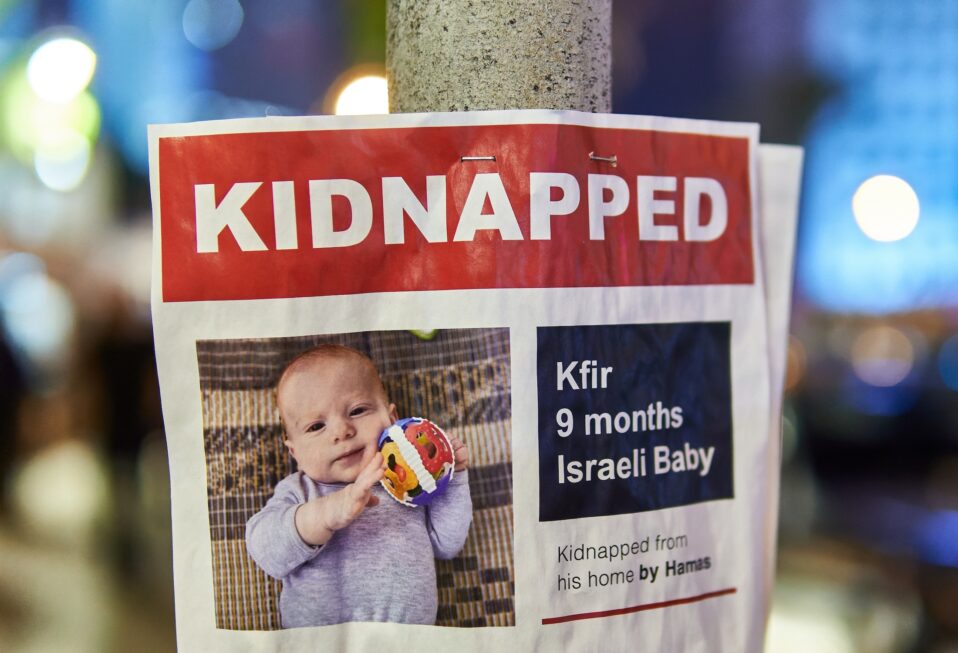
Hamas and other terror groups in Gaza sank even deeper into the depths of their demonic deeds last Thursday by exhibiting the unthinkable on their stage of horror. Four coffins sat in front of a large backdrop picturing Israeli Prime Minister Benjamin Netanyahu as a vampire salivating blood. A photo over his chest showed Oded Lifshitz, an 83-year-old man; Shiri Bibas, 32; and her two young sons, 4-year-old Ariel and 9-month-old Kfir. The poster’s headline read: “The War Criminal Netanyahu and his Nazi Army Killed them with Missiles from Zionist Warplanes.”

That headline has been flashed around the world by news outlets, horrified at the savage, inhumane treatment these innocent civilians were subjected to by their Hamas abductors—and at the way the perpetrators attempted to blame Israel for atrocities that Hamas committed. Not only was the global response quick and scathing, but Argentina announced two days of mourning for the boys who, like their parents, were dual Israeli-Argentinean citizens. In fact, that country is considering renaming “Palestine Street” to “Bibas Family Street.”

The real war criminals handed over the four coffins—deliberately locked—to the IDF with no keys provided. After the IDF had reverently transported the precious remains to Israel’s Abu Kabir Forensic Institute for identification, the woman in the coffin (labeled with Shiri’s head shot) proved to be someone other than Shiri Bibas. The monsters had purposely sent a coffin containing an unknown Palestinian woman—a move that threatened to derail the already fragile ceasefire agreement with the enraged Israelis. Hamas, like the Nazis, are experts in deliberately prolonging psychological warfare. They released Shiri’s body a day later.

When the forensic findings were made public, the professional scientists—who had previously examined every kind of injury—expressed profound shock. They said they had never seen any bodies so thoroughly mutilated.

The forensics revealed that mother and children were murdered in November 2023 in Gaza shortly after being kidnapped. Their captors first choked to death Shiri, Ariel and Kfir with their bare hands, then broke every bone in the captives’ bodies, and desecrated those precious bodies with knives.

Hearing the details from Behold Israel President Amir Tsarfati on his Telegram channel, I sat shocked just listening to it. My husband Paul prayed with faith that while this depth of evil is beyond comprehension, God is sovereign, and His Holy Spirit is our source of comfort and counsel. Psalm 147: 3-5. “He heals the broken-hearted and binds up their wounds. He determines the number of the stars and calls them each by name. Great is our Lord and mighty in power; His understanding has no limit.” 

Believers, we must continually embrace this verse so that we can remain strong. God has graciously invited us to serve as His emissaries in a world covered with darkness and desperate for the Light. Evil is on exhibit from the Islamic Regime and its willing proxies of hate. We must frequently pray Psalm 147:3-5 for our Israeli friends and remain alert and active on behalf of Israel. Leaning into our Lord, we must truly grasp as best we can the level of Israel’s national traumas. Christians must rise up amid hateful lawlessness counting on Jesus, our Jewish Redeemer, Whom we can trust in any crisis.

Switching to another exhibit of evil at a funeral: On February 23 in Beirut, Lebanon, a stadium crowded with tens of thousands of Hezbollah and Iranian supporters cried and worshipped their dead leader, Hassan Nasrallah, while chanting “Death to Israel!” They had called Nasrallah their “victorious hero.” Israel eliminated him in Beirut, hiding in a deep underground location on September 27, 2023. The citizens of tiny Israel are in truth the “victorious heroes”—who often miraculously decimate huge swaths of Hezbollah’s terror operations.

During the funeral, IDF fighter jets flew low over the stadium several times as a direct reminder of Israel’s vastly superior military strength. Teeming thousands of terrorists roared “Death to Israel.” Keep in mind, Israel could have dropped bombs into the stadium. Instead, the flyover exemplified the IDF’s military policy not to harm civilians—even at great danger to themselves.

Israel is not only defending its ancestral homeland from an onslaught of warmongers but stands  on the front lines of freedom for the world. These defensive measures will continue until Hezbollah is stopped from enacting the Islamic Regime’s plans against every “infidel”—be they Jewish, Christian, Israeli, from the U.S. and from other free nations.

Backtracking to a quote, the day before the release of the Bibas/Lifshitz murdered hostages, an Al-Mujahideen Brigade terrorist announced: “The bodies of the Bibas family members who were kidnapped by our people on 7.10 will be handed over. We guarded them properly according to Islamic religious customs.” The masked terrorist then claimed, “They were killed in an Israeli attack along with those who guarded them. We held the bodies throughout the war.” Once again, we see that the fanatics’ shameless propaganda has no end.

In an unexpected turnabout, Volker Turk, the United Nations High Commissioner for Human Rights, deviated from his and the UN’s habitual anti-Israel stance when he declared, “Under international law, any handover of the remains of deceased must comply with the prohibition of cruel, inhuman or degrading treatment, ensuring respect for the dignity of the deceased and their families.”

However, antisemitic hatred is still celebrated here in the U.S. by those chanting against Israel and glorifying terrorists holding Hamas flags and by other hateful propaganda celebrations. Ahmed Abu Daamus, also known as Abu Iyad, runs a popular Telegram channel with more than 800,000 followers. Iyad is an Arab lawyer in East Jerusalem. Israel arrested and placed him on administrative detention early in the war for “severe incitement” against that nation. Now released, he feeds propaganda to his fans. He mocked the return of the hostage coffins and shows a well-known video that his audience clearly loves. It features Palestinians dancing among coffins in happiness.

By now, I am hopeful that the anti-Jewish world clearly understands the nature of the Islamic Regime and its terror proxies. Lying is a malicious art form that the Islamic Regime has perfected—especially lying to those they consider to be infidels: non-Muslims. So: be wise. Be informed.

On her Substack, “Blacklisted,” gifted journalist Eve Barlow summed up the Bibas murders eloquently. “We held onto hope for Shiri, Ariel and Kfir. But our hope was just the toy of the Palestinians. There was no hope for them, because they were murdered long ago. They were murdered by savages. Yarden [husband and father] was kept alive, and starved in captivity to add salt into the wounds of an entire people. The Palestinians played with our hope. because that is what evil does.”

Our CBN Israel team welcomes you to pray Psalm 147:3-5 with us.

Prayer Points:

  • Pray for Israel—and U.S. leaders—to make the wisest decisions possible.
  • Pray for the ever-deepening traumas Israel is facing nationally.
  • Pray for more Christians to wake up to a profound reality of evil and get engaged under God’s direction.
  • Pray for all of us at the National Religious Broadcaster media convention to increase our messages from God’s heart to the world.

Arlene Bridges Samuels is the weekly feature columnist for CBN Israel since 2020. Working on the staff of the American Israel Public Affairs Committee (AIPAC) as their SE Regional Outreach Director for nine years, International Christian Embassy Jerusalem USA engaged her as the Leadership Outreach Director part-time for their project American Christian Leaders for Israel. Arlene is an author at The Blogs-Times of Israel, is published at AllIsrael.com and The Jerusalem Connection, and has traveled to Israel since 1990. By invitation, she attends Israel’s Government Press Office Christian Media Summits as part of Christian media worldwide. In 2024, Arlene and her husband Paul co-authored Mental Health Meltdown: Illuminating the Voices of Bipolar and Other Mental Illnesses. www.TheMentalHealthMeltdown.com.
Read more

Single Mother: Luba’s Story

Luba had high hopes for a better future, as she and her husband Yevgeny left Ukraine and immigrated to Israel in 2010. This fitness trainer and mother of two had overcome a number of challenges to make a home for her family. And then, Yevgeny relapsed back into drug addiction.

It took its toll on her kids. “He was very aggressive, and would verbally attack me and my children,” Luba recalled. “My youngest started having hysteria attacks, where he would become unresponsive. My oldest was constantly stressed—she didn’t want to see or talk to him.”

Soon, Yevgeny’s addiction worsened. When he lost his job, he deserted his family, taking whatever items he could. “He started taking things from home—my jewelry, even my wedding ring,” Luba cried. “With the war, I couldn’t find work.  It got so bad, I didn’t have enough money to pay for electricity or buy food.” Feeling alone and ashamed, she struggled for months.

Yet when a church friend pointed her to CBN Israel, friends like you were there for her. “I felt like I did not deserve it—but they helped me, and it was quick,” she exclaimed. “I could finally pay off debts, and they brought us food. It’s winter, and I couldn’t dry the children’s clothes. To my surprise, they bought me a dryer!” She added, “Your organization makes a big difference. You don’t leave people behind, or leave people hungry. Now I know everything will be alright!”

Your gifts to CBN Israel can help so many desperate Israelis survive and move forward with emergency aid, food, housing, and finances. You can extend hope to thousands!

And your support can offer life-giving assistance to more single moms like Luba, as well as Holocaust survivors, terror victims, and refugees.

Please join us in blessing Israel’s people today!

GIVE TODAY

Read more

Biblical Israel: Mount Carmel

By Marc Turnage

Mount Carmel is a limestone ridge that bisects the coastal plain of the land of Israel branching off from the mountains of Samaria west towards the Mediterranean coast. It is most famous as the location for the confrontation between Elijah and the prophets of Ba’al (1 Kings 18:19).

Today, the Carmelite monastery of Mukhraka (Arabic meaning “burned place”) remembers that event. The mountain’s geographic location along the Mediterranean coast makes it fertile for agriculture (600mm average rainfall a year), which also led biblical writers and prophets to herald Carmel as a place of agricultural abundance (Song of Solomon 7:6; Isaiah 33:9; 35:2; Amos 1:2). Its fertility, rainfall, and proximity to the Phoenician coast, just to its north, made Carmel an appropriate location for the worship of Ba’al, the Phoenician god of storms and fertility. Even after Elijah, people continued to worship Ba’al of Carmel. 

The fertility, precipitation, and location of Mount Carmel play a key role in the story of Elijah and the prophets of Ba’al. Agriculture in the land of Israel proved difficult in the ancient world. The people depended solely upon God for rain to water their fields and crops due to the topography of the land (see Deuteronomy 8; 11:10-20). 

For this reason, God promised that as long as Israel obeyed Him and His commandments, He would send rain in its season; if Israel disobeyed, He would shut the heavens, so it wouldn’t rain. The concern for rain in its season (at the appropriate time) lead the Israelites to often look also to other local deities, like Ba’al, to provide rain, just in case.

The people had turned from God by worshipping Ba’al during the reign of King Ahab, and therefore, God sent drought on the land. Elijah called the children of Israel, together with the prophets of Ba’al, to gather on Mount Carmel. Mount Carmel receives some form of precipitation 250 days a year; it sits on the southern edge of Phoenicia where Ba’al worship originated. It also provided a high place. 

Ba’al is often depicted walking on the mountains, a god of high places. The drought that God sent offered a direct challenge to the god of rain. Elijah’s challenge, the god who answered with fire was God; Ba’al’s symbol was a lightening bolt. The heart of the story lies within the geographic setting of Mount Carmel. 

Of course, after God sends the fire upon Elijah’s sacrifice, and the people turn to the Lord as God, then He sends the rain. The setting and background of this story underline the challenges of daily life faced by the ancient Israelites; these challenges that raised the fundamental question that Elijah posed to the people, “If the Lord is God, then serve Him.”

Marc Turnage is President/CEO of Biblical Expeditions. He is an authority on ancient Judaism and Christian origins. He has published widely for both academic and popular audiences. His most recent book, Windows into the Bible, was named by Outreach Magazine as one of its top 100 Christian living resources. Marc is a widely sought-after speaker and a gifted teacher. He has been guiding groups to the lands of the Bible—Israel, Jordan, Egypt, Turkey, Greece, and Italy—for over twenty years.

Website: WITBUniversity.com
Facebook: @witbuniversity
Podcast: Windows into the Bible Podcast

Read more

Weekly Devotional: When Adversity Strikes

“Now, Lord, look on their threats, and grant to Your servants that with all boldness they may speak Your word, by stretching out Your hand to heal, and that signs and wonders may be done through the name of Your holy Servant Jesus.” And when they had prayed, the place where they were assembled together was shaken; and they were all filled with the Holy Spirit, and they spoke the word of God with boldness (Acts 4:29-31 NKJV).

When the chief priests of Jerusalem commanded Peter and John to no longer speak in Jesus’ name, the two disciples had a choice to make. They went to their community and together they prayed. 

They did not pray for favor with the rulers. They did not pray for deliverance. They did not pray for protection. They prayed for boldness to continue in their way.

They asked God to show forth His glory through signs and wonders. As a result of their prayer, they were filled with the Holy Spirit and spoke the Word with boldness. 

How do you respond to adversity? Do you seek a way out or the removal of the problem? The followers of Jesus did not see adversity as a problem to be avoided or from which to be delivered.

They did not reason, “If we just gained favor with the ruling powers.” Rather, they sought to stay their course faithfully in doing what God had called them to do. 

Adversity does not mean we are out of God’s will, nor should we seek to avoid it. They sought boldness to do the task they had been given and believed that ultimately God would glorify Himself and His servant Jesus. 

When you find yourself confronted with adversity, how do you pray? Our true submission to God seeks His glory above our comfort; it submits to the challenges we face, recognizing that how we handle them provides an opportunity for Him to show forth His wonders. 

The followers of Jesus did not pray a prayer that focused on themselves. They could have—they had just been threatened.

Rather, they sought God to glorify Himself through them, and they offered themselves as vessels for Him to use for that purpose.  

Our daily prayer should be that in our lives, no matter the situation or adversity we face, God will glorify Himself.

PRAYER

Father, glorify Your name through our lives. No matter the situation, we will stay faithful to You; glorify Yourself in this world through us. Amen.

Read more

Read more

Bringing Fresh Food and Produce to Israelis in Need

It’s hard to function well when you’re battling hunger. Yet, in Israel today, 20 percent of the population suffers from nutritional insecurity. Sadly, the most vulnerable tend to be the elderly, children, at-risk youth, and single parent families, usually living below the poverty line.

For many, it means skipping meals, going to bed hungry, or eating cheap, processed foods high in sugar and fat. This can lead to poor health, malnutrition, diabetes, and obesity. And low-income families often can’t afford fresh fruits and vegetables that are high in nutritional value. 

Meanwhile, according to a recent report, 2.2 billion pounds of nutritious food are wasted each year in Israel, even as 522,000 families struggle to put healthy meals on the table. In fact, 35 percent of all food produced in Israel ends up destroyed and not consumed, adding to environmental problems of waste disposal. Is there a smart way to solve both issues?

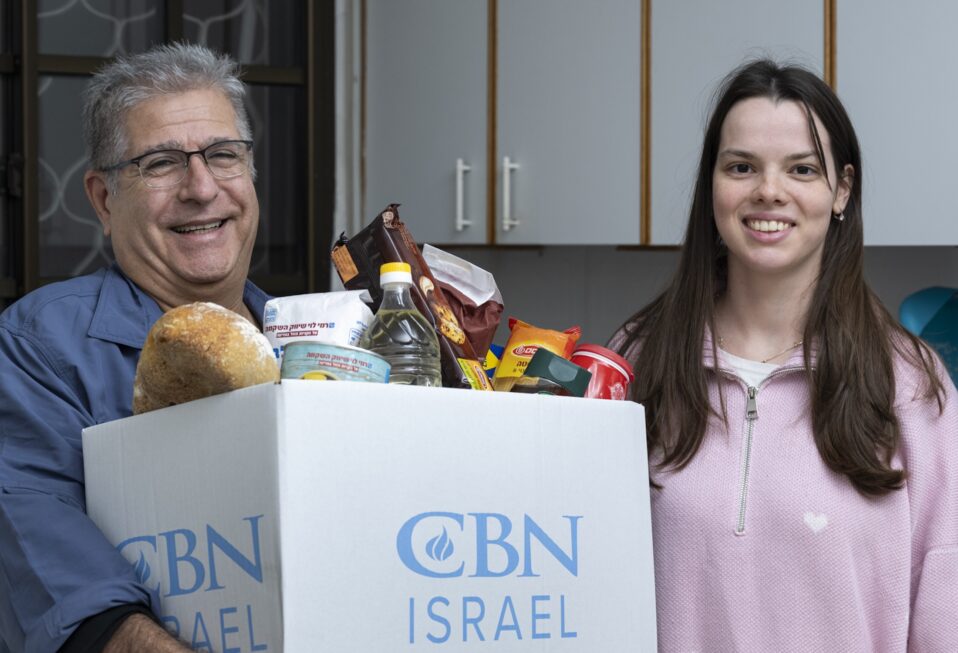
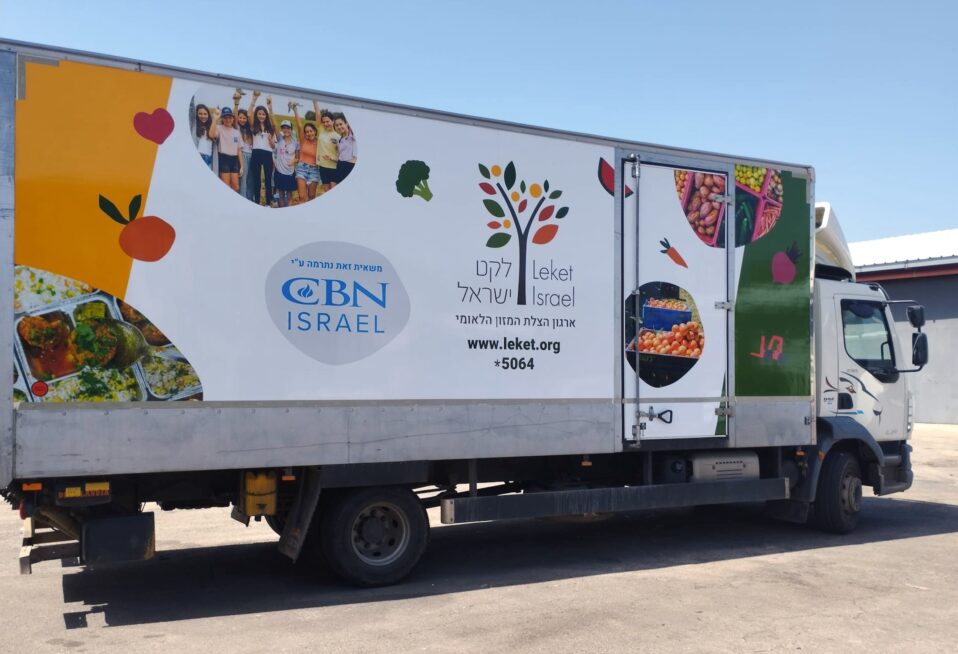
Fortunately, friends like you are an important part of a sustainable solution. Through CBN Israel’s strategic partnership with one of the country’s largest food banks, caring donors are rescuing quality foods, fruits, and vegetables that would otherwise go to waste, and bringing them to households that desperately need them.

This valuable project mobilizes tens of thousands of volunteers, hires professional pickers, and deploys drivers and vehicles to collect excess produce from fields, orchards, and packing houses. The rescued produce is then redistributed free of charge to partner non-profit organizations that bring it to local families and individuals.

And this is just one of the ways your gifts to CBN Israel can help those trying to survive in the Holy Land during these challenging times. You can supply groceries, housing, and other essentials to soaring numbers of refugees, Holocaust survivors, and war victims.

Please join us in reaching out to the people of Israel at this crucial time!

GIVE TODAY

Read more

Standing With Our Jewish Neighbors: A National Call to Confront Antisemitism

By Stephen Faircloth

In response to a troubling surge in antisemitism across the United States, The Christian Broadcasting Network (CBN), CBN Israel, and Regent University have partnered with JewBelong, a New York-based nonprofit known for bold public messaging, to launch a powerful nationwide awareness campaign. The initiative features visually arresting pink and white billboards delivering a simple but urgent message: standing against antisemitism is standing with America. More than a public display, this campaign is a call to action for Christians, students, alumni, and communities across the country to unite in solidarity with the Jewish people.

The campaign begins August 11 in Virginia, with three prominent billboards positioned along major thoroughfares near the CBN and Regent University campus in the Tidewater area. These messages are intended not just to inform, but to spark conversation, reflection, and ultimately, action. The billboards will remain in place through September 29. CBN will amplify the campaign’s reach through its influential television and digital platforms, engaging audiences nationwide.

Following the Tidewater launch, the campaign expands to four key Ivy League campuses: Harvard, Yale, Brown, and the University of Pennsylvania. These universities, long esteemed for their academic distinction, have increasingly become challenging environments for Jewish students. The Ivy League campaign aims to confront this reality with bold, unapologetic messaging. By bringing the conversation directly to these campuses, the effort seeks to break the silence that often follows antisemitic incidents and to encourage students, faculty, and administrators to stand as allies against hate.

At the same time, the campaign will engage students and alumni across Southeastern Conference universities through a coordinated strategy of billboard placements and digital outreach led by Regent University. This SEC-focused initiative invites campus communities throughout the South to take part in a growing national movement that refuses to look away from antisemitism and instead embraces shared responsibility and moral courage.

This campaign is driven by alarming data. The Anti-Defamation League’s 2024 Audit of Antisemitic Incidents ranks Virginia among the top ten states for such activity, with 266 incidents reported last year alone, representing a 19 percent increase from 2023. Nationally, antisemitic incidents have surged by 893 percent over the past decade. These are not isolated occurrences. They are part of a persistent and intensifying pattern that must be addressed with urgency and resolve.

College campuses, in particular, have become flashpoints for antisemitic rhetoric and behavior. Jewish students have reported harassment, exclusion, and threats, often met with silence or inaction from university leadership. That silence not only fails to protect, it emboldens those who propagate hate. This campaign seeks to challenge that silence and to empower campus communities to speak out in defense of their Jewish peers.

Gordon Robertson, President and CEO of CBN and Chancellor of Regent University, emphasized the moral and spiritual significance of this initiative. He said, “It is vital that Christians in Virginia and across the country stand in solidarity with the Jewish community. Antisemitism is not just a Jewish issue, it is a human issue and a spiritual one. We are called to stand against hatred, to defend our neighbors, and to reflect God’s love through our actions. This campaign is one important step in that direction.”

This effort builds upon JewBelong’s previous campaigns in major cities including New York, Los Angeles, and Las Vegas, and near academic institutions such as Harvard, Yale, Princeton, and the University of Pennsylvania. With this expansion and collaboration with faith-based and academic organizations, the campaign marks a growing movement determined to challenge antisemitism wherever it takes root.

The message is clear. In the face of rising antisemitism, especially on the campuses shaping the next generation, silence is no longer an option. Every billboard, broadcast, and digital message is a call to choose courage over complacency, to reject hate, and to stand unwaveringly with our Jewish neighbors. Christians and Americans alike are urged to raise their voices, because defending others is not only right, it is at the very heart of what it means to love our neighbor.

If you are a Christian who believes in standing with Israel and the Jewish people while confronting antisemitism, lies, and misinformation, we invite you to join CBN Israel in making a meaningful difference today.

GIVE TODAY

Stephen Faircloth is the President of CBN Israel, an initiative dedicated to sharing the true story of the Jewish nation and inspiring a global community of Christians to stand with Israel and support her people in need. Our vision is to reshape the global conversation about Israel by fostering understanding, hope, and healing between Jews and Christians round the world. For more than 50 years, the Christian Broadcasting Network has supported Israel. By joining CBN Israel, you become part of this enduring legacy, transforming lives today and strengthening Christian support for Israel for generations to come.

Read more

Weekly Devotional: Do Not Abandon Your Love

Write to the angel of the church in Ephesus: “The One who holds the seven stars in His right hand and who walks among the seven gold lampstands says: I know your works, your labor, and your endurance, and that you cannot tolerate evil. You have tested those who call themselves apostles and are not, and you have found them to be liars. You also possess endurance and have tolerated many things because of My name and have not grown weary. But I have this against you: You have abandoned the love you had at first. Remember then how far you have fallen; repent, and do the works you did at first. Otherwise, I will come to you and remove your lampstand from its place—unless you repent” (Revelation 2:1-5 HCSB).

We often read John’s letter to the community in Ephesus and think that they had lost their love for the Lord. But that doesn’t make sense within the context.

John commends the Ephesian community for testing those who call themselves apostles, not tolerating evildoers, and enduring patiently for the sake of Jesus’ name. They hadn’t lost their love for the Lord.

Rather, they had lost their love for one another. In their ardor for testing, not tolerating evil, and enduring in their faith, they had abandoned their love for others. It’s easy to do.

Throughout the New Testament, we are reminded to love one another and not judge, for in the manner we judge others, God will judge us (see Luke 6:37-38). We can become so focused on truth that we forget to love. It’s not an either-or, but as Paul says, without love, we are nothing (1 Corinthians 13).

The threat posed to the Ephesians is that if they do not change, they will eventually be removed. How we treat others is weighed seriously within the New Testament. In our zeal for truth, we can be both right and wrong. The Ephesians had lost the love for others that they’d had at first. 

Maintaining love is one of the hardest actions we do as humans. The gravity of life can tend to pull us in the opposite direction, and we can all too easily find our love gradually growing cold. 

Whether in marriages, families, friendships, or other relationships, we have to work and cultivate our love for others. In our fervor for the truth, we must guard against becoming cold and callous.

Let’s remember this powerful statement by Jesus to His disciples on the night He was arrested. “This is My command: Love one another as I have loved you. No one has greater love than this, that someone would lay down his life for his friends” (John 15:12-13 HCSB).

Jesus’ warning to the community in Ephesus serves as a sober reminder to us today in how we are to treat others. We must pursue loving rightly as much as we pursue doing right. May we follow the command of Jesus to love one another as He has loved us.

PRAYER

Father, we repent of those times that we have not loved others. We have judged when we should have been merciful. Forgive us, and may we be merciful as You are merciful. Amen.

Read more